
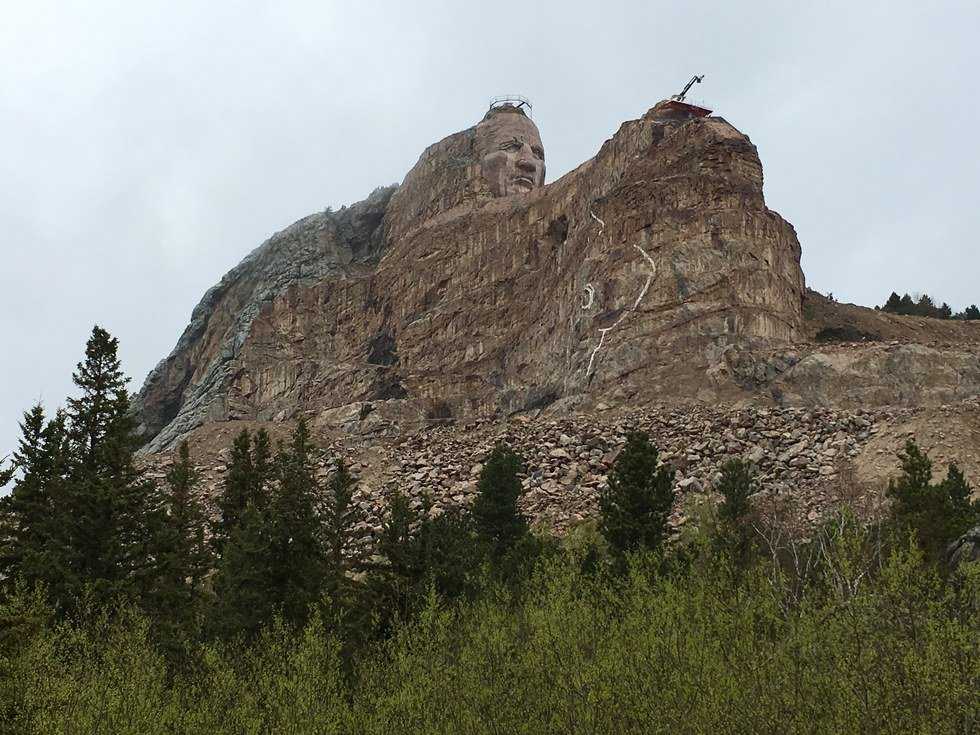
OK, let’s be honest. How much does the average South Dakotan know about the legendary Indian warrior Crazy Horse? And how much does the average American know about Native American history? If you’re anything like me, the answer is not as much as I should to both of those questions. Considering this culture is indigenous to our nation and has such a strong presence in the Dakota area, I found my lack of knowledge on the subject a little, well, lacking. This realization only dawned on me from my spot 500 feet below the granite mountain that is home to the awe-inspiring, unfinished Crazy Horse Memorial carving.
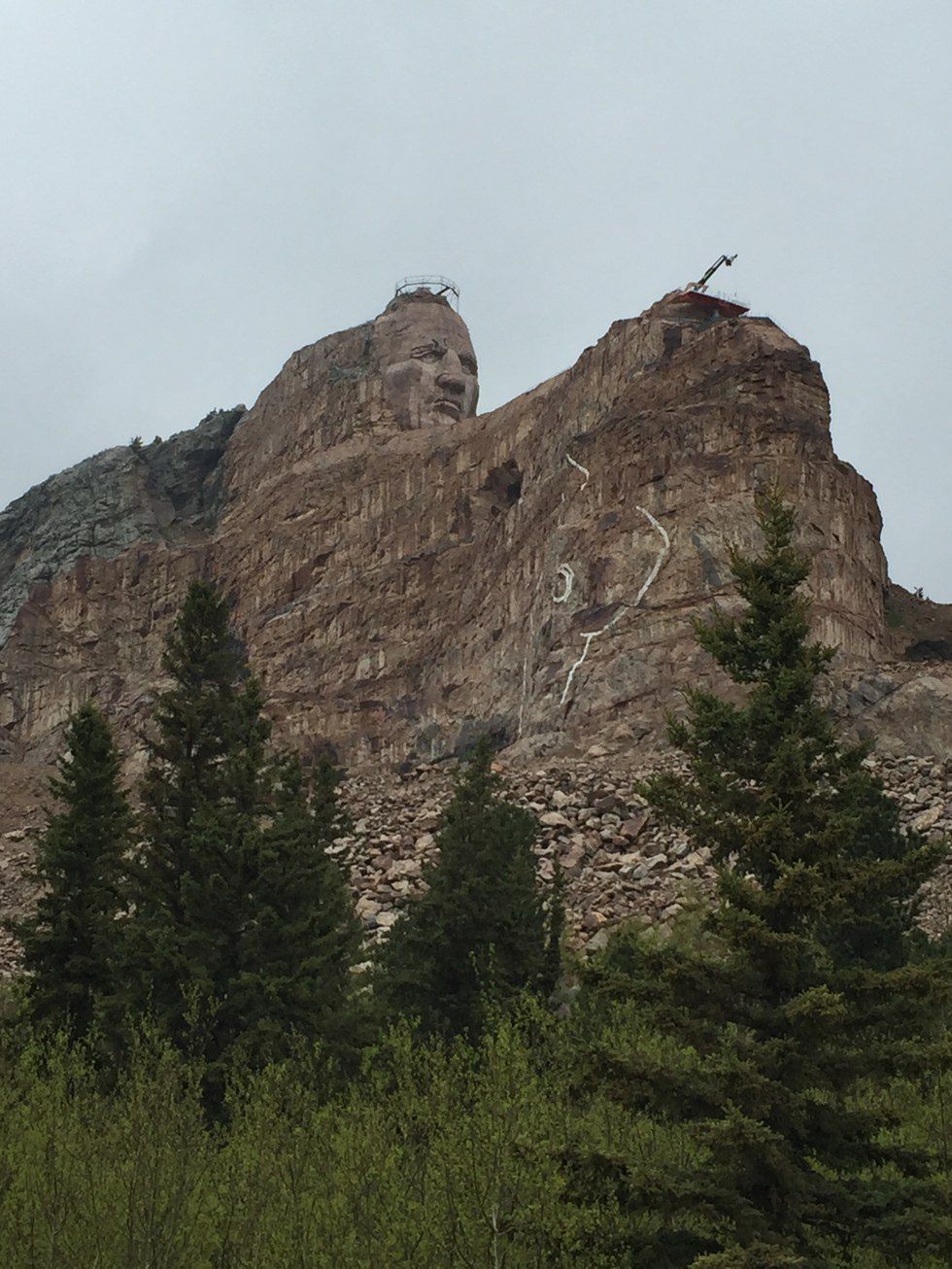
I took a trip out to see the giant statue–well, head of a statue that is–in celebration of my graduation and my mom’s first visit to South Dakota. We visited Mt. Rushmore and the Badlands, saw wild prairie dogs, antelope and bison. We ate local foods, drank local beers and I even introduced her to chislic (if you don’t know, now you know).
Surprisingly enough to me, my favorite memory of the weekend came from Crazy Horse’s unfinished memorial – a carving that began in the 1940s and that has no known or planned date of completion – talk about a project, right? Located deep in the heart of the Black Hills of South Dakota, Crazy Horse is more than just a giant rock honoring some forgotten Native American hero – it serves as a reminder to all Americans about the history of our nation’s past. Starting out my trip as a graduate with little to no knowledge of the Native American culture, I left feeling educated, impressed and, most importantly, inspired.
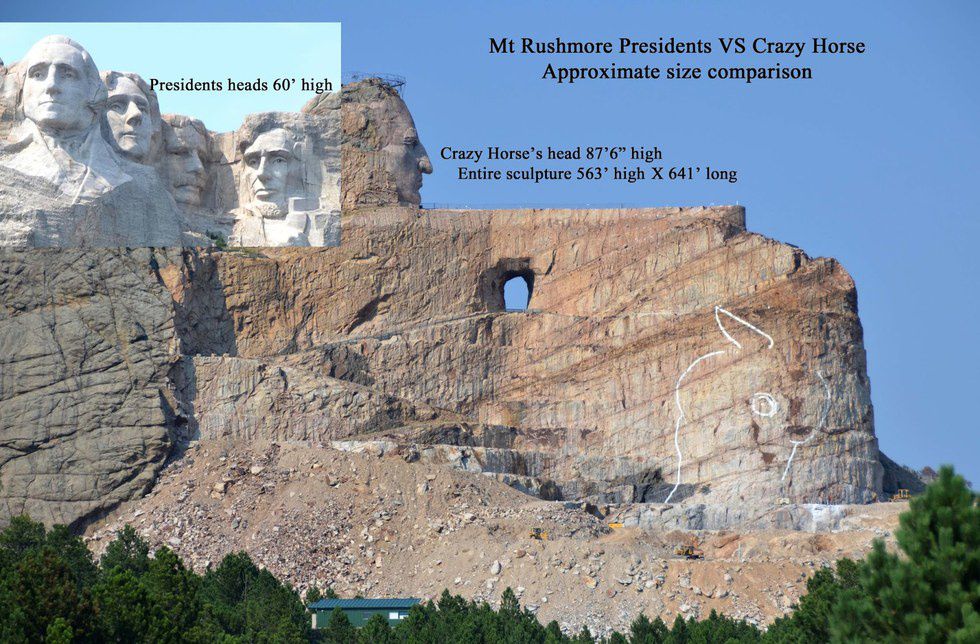
The sculpture is approximately a twenty minute drive from Mount Rushmore. Crazy Horse’s face seemed to come out of nowhere and even as we parked, I felt like I was so far away from that still-ginormous head. A short, and cheap, bus ride to the base of the mountain left me feeling mesmerized. Even without understanding the meaning behind the sculpture, it’s hard not to feel impressed when you see it in person. The head alone is almost nine stories tall and when the entire statue is finally completed, it will stand 550 feet tall. To put that into perspective, you could literally fit all of Mount Rushmore’s President’s heads into Crazy’s Horse hair and face. Whoa.
But why Crazy Horse? And what does it all mean? Simply put, Crazy Horse was a badass. When the U.S. Government tried to take his people’s land, Crazy Horse fought back. He refused to be moved from the present-day Rapid City area to a reservation in the Black Hills, and thus became a key warrior in the fights for freedom. He refused to be photographed and never signed his name on any document – he just wouldn’t be tamed. Despite a tragic death, Crazy Horse left behind a powerful legacy – he was a visionary leader for his people, a protector and preserver of his people’s traditions, and an inspiration to all Americans today fighting for their own worthy cause.
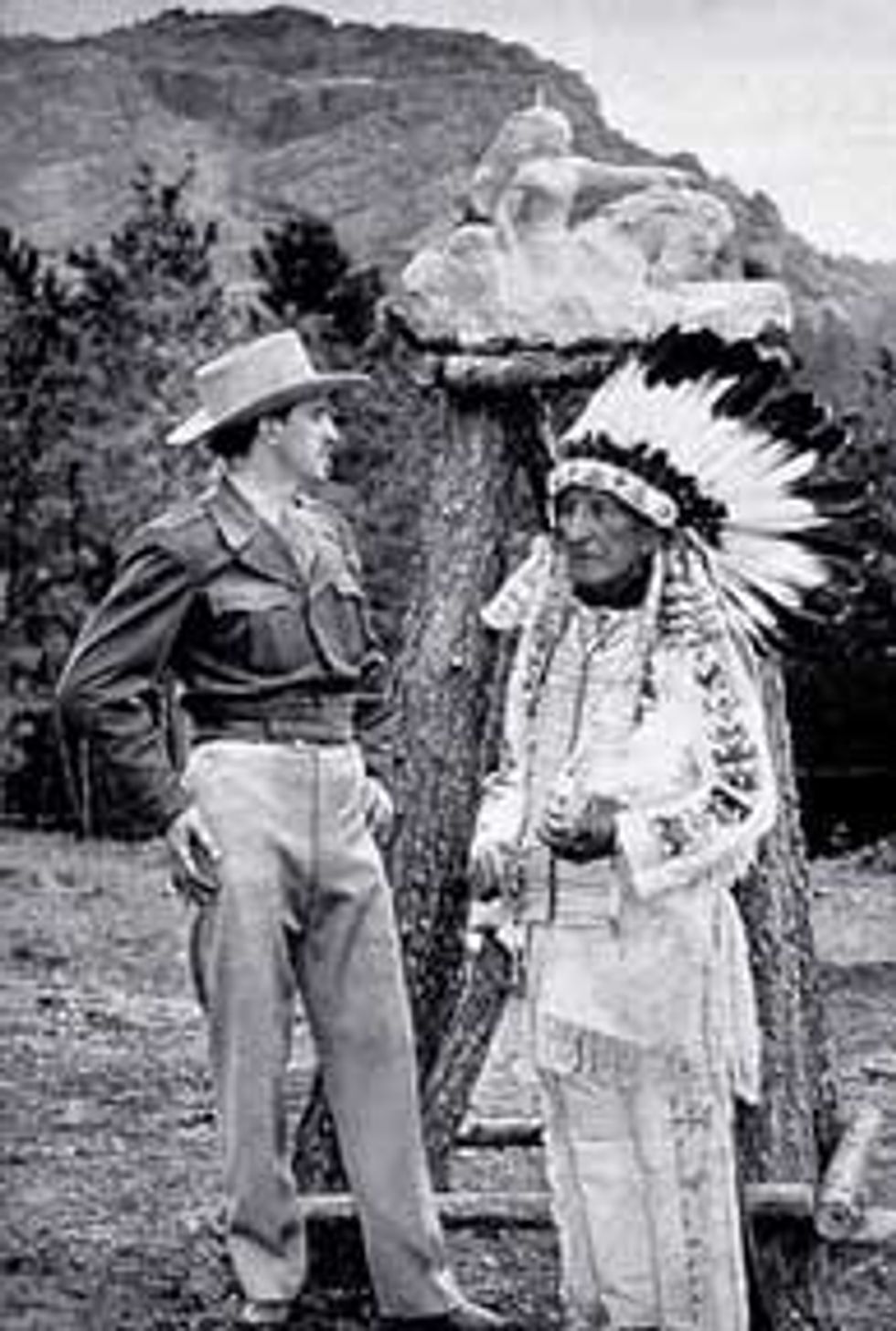
The story of how the Crazy Horse Memorial was made is a similarly moving narrative. Basically, this Polish guy by the name of Korczak (That’s pronounced like core-shack) Ziolkowski was asked by the Lakota Chief Henry Standing Bear to sculpt a monument. In a letter, the Chief sent these words: “My fellow chiefs and I would like the white man to know that the red man has great heroes, too.” If that isn’t chilling enough for you, there’s also the fact that Korczak literally dedicated the rest of his thirty years to the project, building a home and beginning a family on the site. A good man through and through, Korczak always let his children know that they had the option to get out of the family business – to leave the memorial site and start their own careers . However, he also told him that if they were going to pursue it, to “never let it go.” That’s a mentality of dedication that Korczak employed until his dying day and passed down. Eight of his 10 children spent their lives working on the mountain or for the Crazy Horse Foundation, and there are several grandchildren involved today.
But you’re not just paying an entry fee to get physically close to the Crazy Horse Memorial. Upon entering the grounds, visitors are greeted with several buildings, made out of a beautiful knotty pine wood, inside and out. Here is where the Indian Museum of North America, the Native American Education and Cultural Center, and in a separate location, the Indian University of North America are housed. Each room in the connected buildings portrays different aspects of Native American life; from a life-size tipi to ornate headdresses and an actual sweat lodge hut.
For Korczak, the memorial of Crazy Horse was not limited to a sculpture on a mountain. He truly wanted to portray the spirit of Native American people overall, and educate modern Americans about their history. He only viewed his life as worthwhile if he could give the Indians some pride and “create the means to keep alive his culture and heritage.” All entrance fees and donations are used to support this goal. Funding is completely private and does not rely on the government. If you’re going to give your money to something, I’d say this is a pretty commendable way to do it.
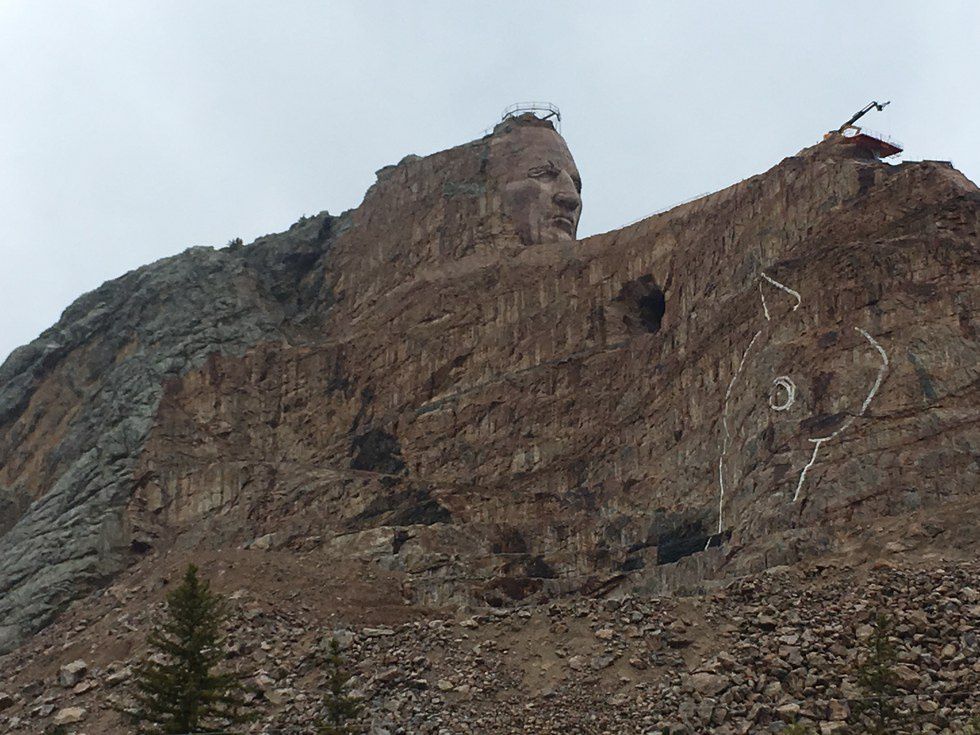
Exploring the Crazy Horse Memorial grounds is an experience I will not soon forget. More than just a mundane education on Native Americans, it is an obvious tribute to the people and their culture. It symbolizes bravery in the face of tyranny; it represents power and courage. Crazy Horse was a fighter; Korczak was a believer.
The legacy that both of them have created is one to respect, admire and emulate, if possible. I left the memorial with an admiration for both of these men and a desire to share their importance with my peers. Please, visit the Crazy Horse Memorial. It is a trip worth taking and a cause worth talking about. As Korczak once said, “When your life is over, the world will ask you only one question: ‘Did you do what you were supposed to do?’” He and Crazy Horse did. What about you?