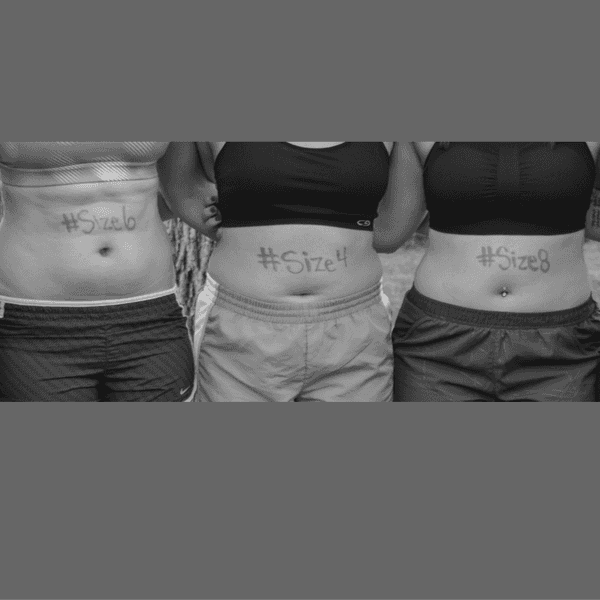

As a journalism student, I pay a lot of attention to media techniques and how they affect people. Lately I've been looking at Cosmopolitan magazine covers and analyzing them, and I've come up with some conclusions that are seriously concerning.
Cosmo's covers promote a lifestyle that revolves around looking good, or at least looking good in the eyes of the magazine's creators. Specific trends on the covers send subliminal messages that don't actually say that you should look a certain way, but implies it on a subconscious level. The first of these trends, which is probably the least obvious, are the design elements on the covers. The background is always bright and vibrant and the graphics make the cover easier to visually consume. The second trend is the wording of the headlines. The word "sex" or "sexy" appears an average of twice per cover, and other words like "hot" and "naked" are also used to draw attention. The third and most obvious trend is the photo of a thin, white female who is usually a singer, actress, or model.
All of these trends are used to convey one message: in order to be happy, you have to be beautiful like these cover models. This message is conveyed by a number of media outlets, and while my study focused specifically on Cosmo, it is clear that this mindset is common throughout mass media. And it's starting to cause some really serious problems for American women.
The epidemic of body dissatisfaction in America is widely ignored, but it is becoming a very real, very dangerous issue. Most women who deal with poor body image believe that they are overweight. This is not surprising, since models weigh an average of 23 percent less than the average woman and the media's idealized weight is achievable to only 5 percent of women. Women often try to diet in order to reach this weight, despite the vast majority of women seeing a distorted reflection when they look into the mirror.
The most severe issues that this body dissatisfaction can cause are eating disorders like anorexia and bulimia and psychological disorders like Body Dysmorphic Disorder. And if it wasn't already concerning enough that 80 percent of adult women deal with some degree of body dissatisfaction, one study found that 41% of elementary school girls as young as age 6 believe they are overweight.
These statistics show a troubling pattern in our society, and something has to be done. Magazines like Cosmo need to take responsibility for the message they are sending. Ideally, they would start featuring models with a variety of body types, stop photoshopping their models' photos, and place less emphasis on sex, fashion, and working out.
Some companies have already begun to take the first steps in fixing the problem. Modcloth, a clothing company, has decided to make a point of featuring models of all heights, weights, and races. Aerie has begun a campaign to celebrate all body types by not using photoshop on any of their models. Seventeen and Darling magazines have also stopped retouching photos.
While this is a good start, it will take a lot more work for the epidemic of body dissatisfaction to end. Women can help themselves and each other by speaking up about the unrealistic beauty standards set forth by the media. At the end of the day, it's important for women to remember that as long as their bodies are healthy, there is no reason to change them. After all, every woman's body is unique. Isn't that beautiful in and of itself?