

American citizens have repeatedly expressed dissatisfaction with all of the candidates for the 2016 presidential race, be they Democrats or Republicans. We as a people are asking for changes to be made in the practice of politics because we are displeased with the current system, yet the 2016 campaign is business as usual: the candidates are focusing on the same issues and maintaining the same partisanships to which we have become so accustomed. Why are we seeing the same opinions and beliefs being expressed by cookie-cutter candidates in each election when it is change for which we are searching?

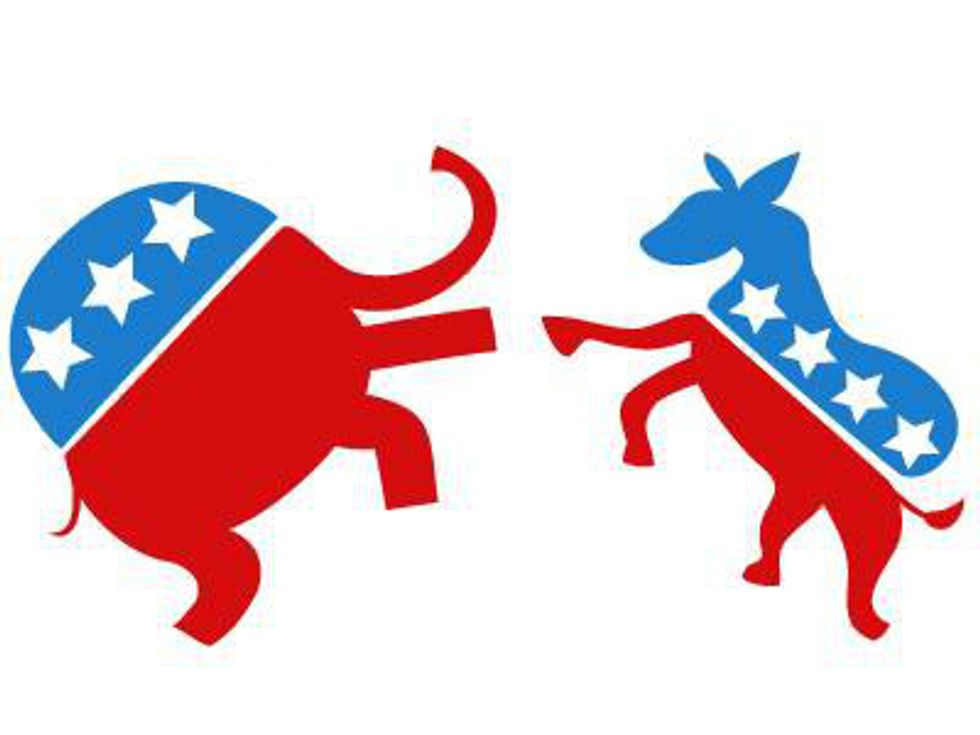
Candidates act as though they must strictly adhere to their party’s beliefs, simultaneously proving that the opposite party is negligent. Could it be that perhaps bipartisanism is to blame for these dueling dogmas and that we will never find the perfect candidate if the system progresses in splitting the parties so rigidly?
The bipartisan system puts constraints on candidates to fit an ideological mold. American politicians often act as though they have to be a paradigm of their party. They stick to the beliefs that their party has always held and if they deviate, they are reprimanded by media or each other for betraying the party. I believe this notion of loyalty to a party is at the heart of our cookie-cutter candidates.
For example, Republicans are not in favor of illegal entrance into the country, but do support legal immigration. They do not wish amnesty to be granted to undocumented immigrants. Hillary Clinton once claimed to be “adamantly against illegal immigrants,” but now that she is in the running as a Democratic candidate, she plans to protect President Obama’s DAPA and DACA immigration reforms. Clinton’s flip-flopping on the immigration issue is quite conveniently timed, considering she now seeks the support and approval of the Democratic Party.
Long before Donald Trump announced his candidacy, he asserted that he was pro-choice. Now that he seeks the Republican vote, Trump claims that he is pro-life, which the Republican Party typically supports, yet supplies many circumstances under which he adamantly believes abortion would be acceptable. It seems Trump would like to take the Republican stance, but cannot completely commit. Why else would he define his stance as pro-life if not to gain support from Republicans?
Hillary Clinton publicly accused Bernie Sanders of flip-flopping on his gun control stance, which he then obstinately denied. Merely weeks later, Sanders expressed his support for new legislation that would amend an issue regarding gun manufacturer liability, for which he had previously voted in support. Sanders altered what has been considered a fairly Republican view on gun control to a more typically Democratic view, perhaps in order to appeal to the Democratic crowd.
As the American people argue with each other over which party is right or wrong, candidates are forced to adhere to an ideological code. When a candidate starts to color outside of the partisan lines, people feel less attached to them because they no longer represent the epitome of their party. Perhaps the question is not, “What can we change about the candidates to make them more revolutionary?,” but, “What can we change about America to allow our candidates to be revolutionary?”

















