


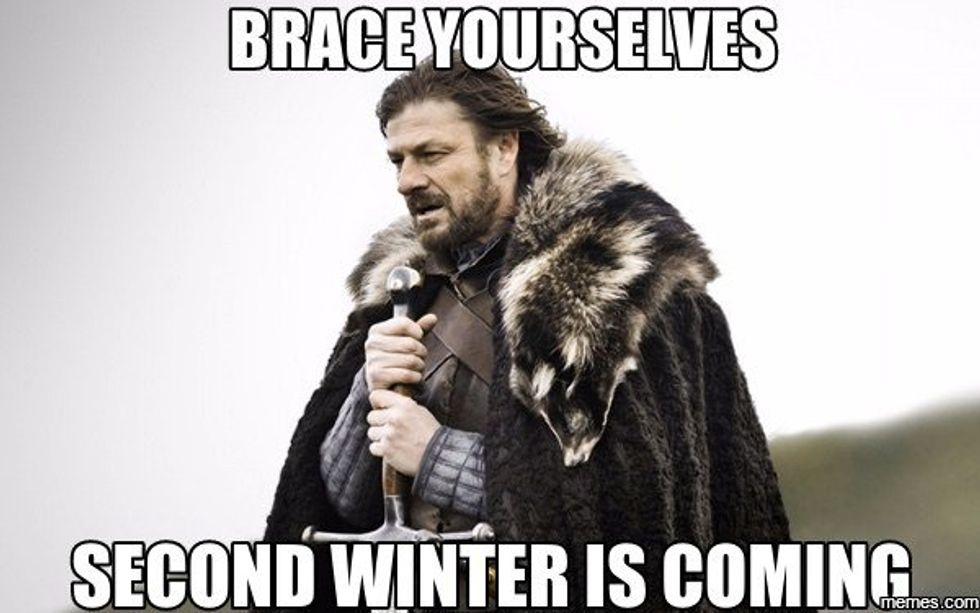
It’s spring! A time for long walks in the park, gardening and relaxing in the gentle sunshine with a cold drink. That might be the case elsewhere but here in Colorado, we have entered into the season known by natives as second winter.
For those of you out of staters who don’t know what second winter is, never fear, this article is your comprehensive guide to Colorado seasons.
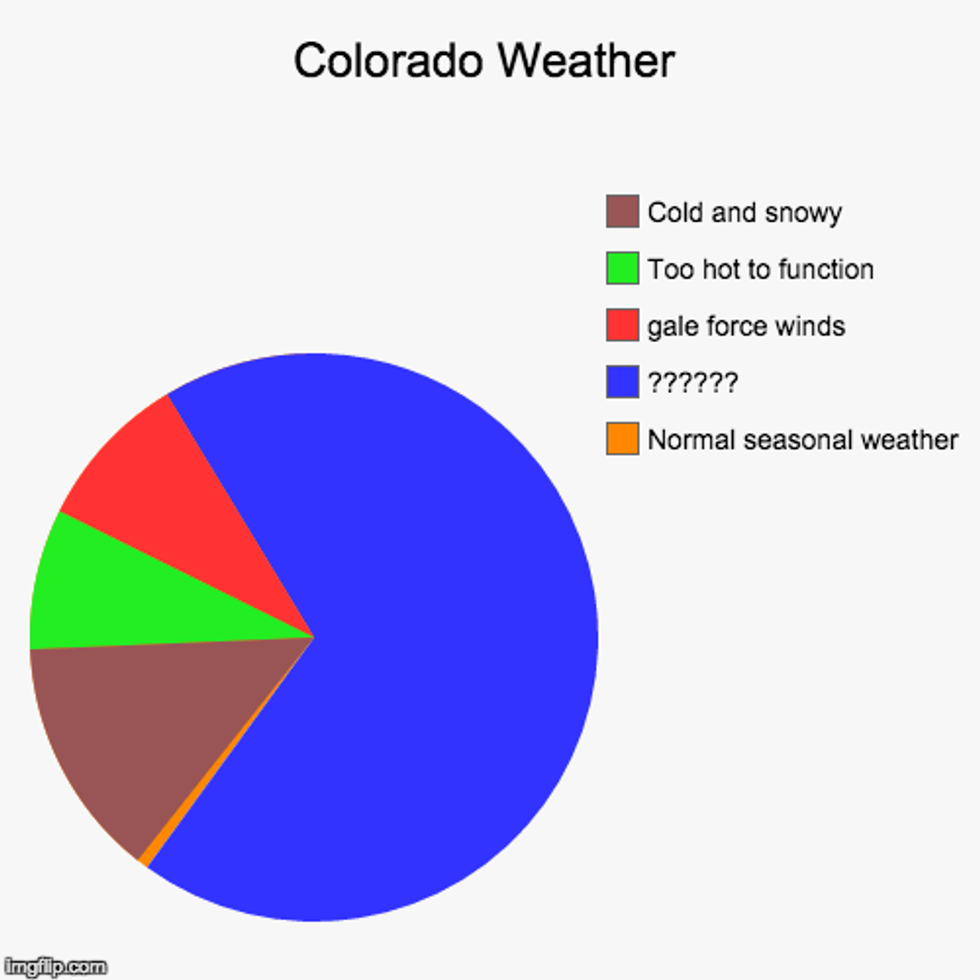
Let's start with the basics, if you will observe the chart below, you can see the five standard types of Colorado weather. Depending on the time of year, the alignment of the stars and what you had for lunch, you may experience any permutation of these basic weather types in any given day.
There are six standard seasons in Colorado: summer, fall, first winter, fake spring, second winter and real spring. Most of you have likely heard of the universal spring, summer, winter and fall, but we will still go over them for continuity’s sake.
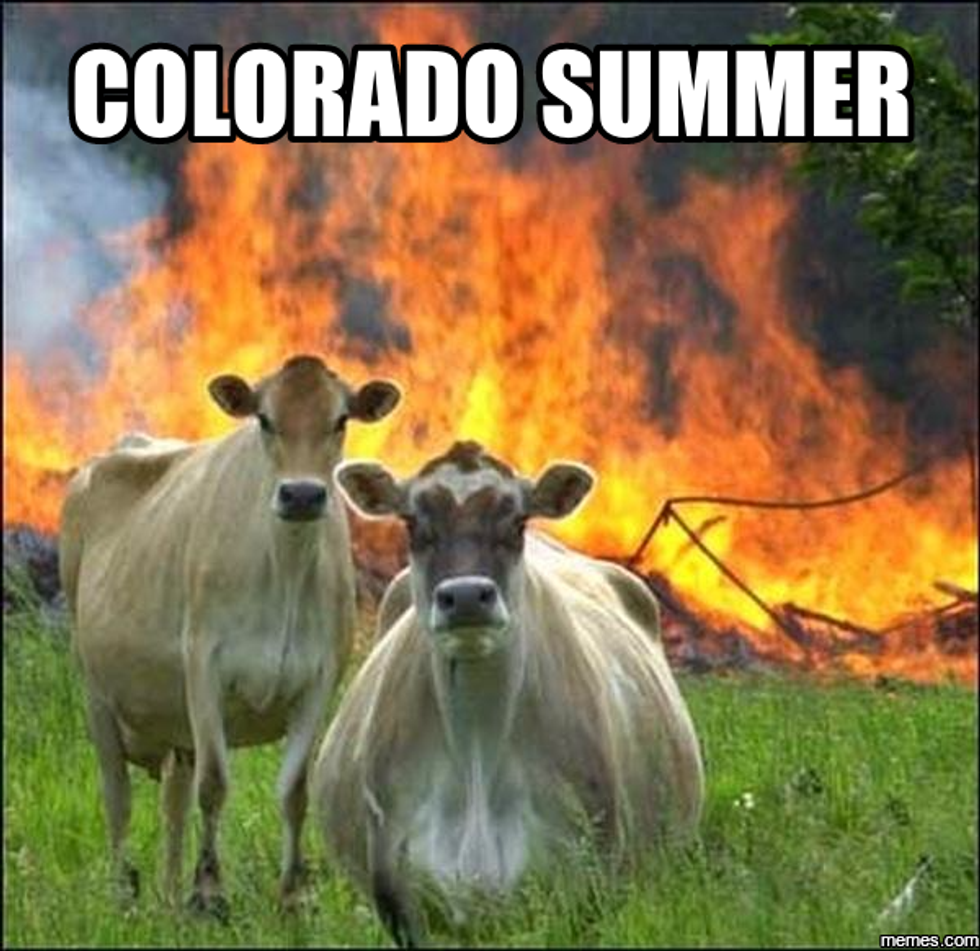
We will start with summer, mostly because it’s my favorite season, but also because it is typically the least complicated.
Known alternatively as fire season, summer in Colorado is marked by a three month stretch of hot dry weather. The grass of real spring remains green for approximately one week before fizzling up in the punishing sun and transforming the landscape into a bleak reminder that you are living in a tinder box. As the summer progresses thunderstorms will start to develop over the mountains in the afternoon. These storms are nature's equivalent of internet trolls in that they serve the sole purpose of starting lightning fires, and producing little to no moisture.
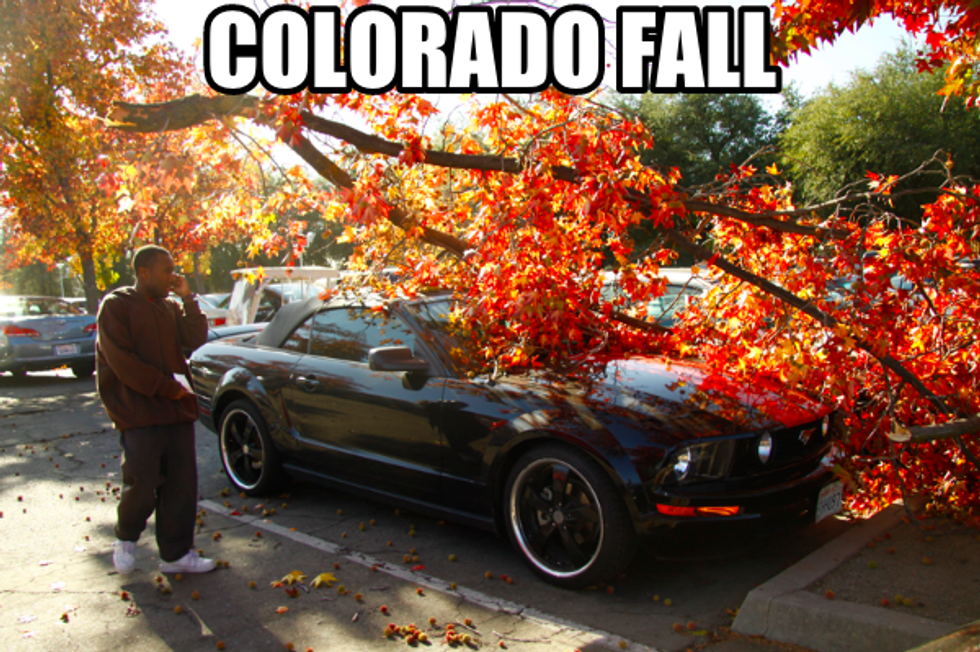
Fall in Colorado has two modes. Either it stays warm late into November before throwing you straight into the grips of winter, or it just gets it over with and snows in September, completely foregoing the process of allowing the leaves to change colors by just killing them on the trees instead. More often than not it is the latter that happens.
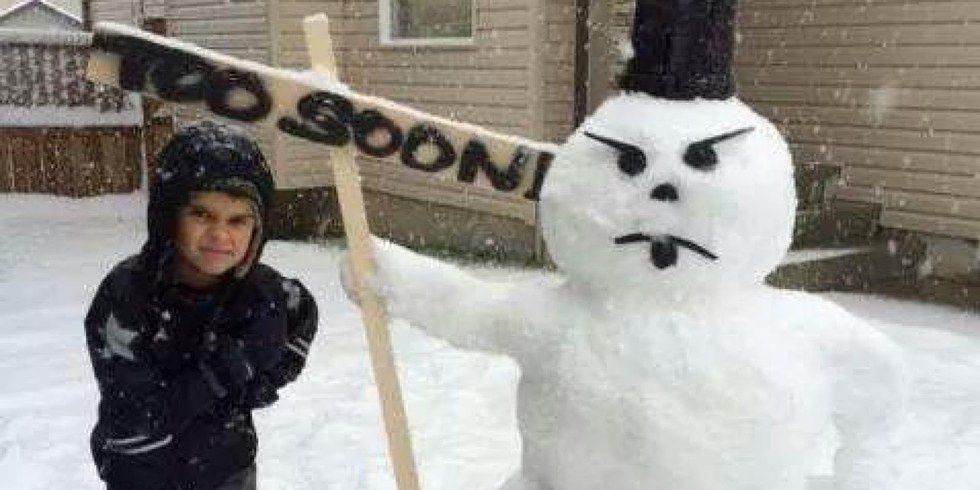
Same, kid; same.
After fall comes first winter. This season starts out exciting and then rapidly devolves into a mess of slush and bitter resentment.
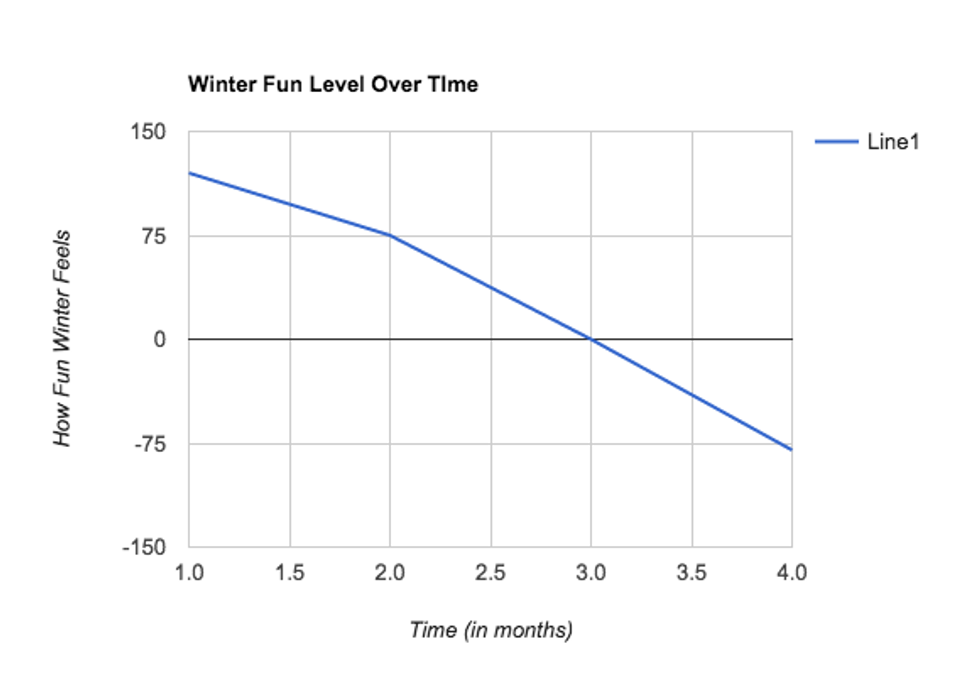
Next up is fake spring. At this point, you are so sick of winter that you will take anything as a sign of spring. This is how fake spring works, like fools gold, it plays on your hopes, and then like some sort of cruel practical joke it crushes them.
During fake spring, the weather will change with all the predictability of an angry toddler. It begins subtly, one day you will realize that the wind doesn’t have it’s usual bitter edge. Perhaps you will see a little green in the grass. Then it happens, a warm day, and then a warm week. You get comfortable, too comfortable. The trees start budding out and you may even see a few brave spring flowers. Surely this must be the real deal you think, but no, just as quickly as it came, it is gone, and all of the tender signs of spring are buried under a blanket of snow.

This brings us to second winter. Arguably the worst season of the year, second winter is everything bad about winter combined with the fact that it occurs when the rest of the hemisphere is experiencing spring. The weather is best described as a series of brief thaws punctuated by bouts of wet, heavy snow. This can continue for the better part of two months until mid-May.
At long last, it’s the last week in May, and it has finally gone more than one week without snowing. Everything that hasn’t been killed by the last four storms is finally starting to brighten up, and the giant patch of ice at the end of your driveway is beginning to melt. You have reached real spring. Savor it, next week it will be summer.

















