Whenever someone asks me what my religious affiliation is (which, thankfully, isn't often), I typically say something like, "My family is Irish Catholic" or "I was raised Irish Catholic." Both of these statements are true, but they take that to mean that I myself am Irish Catholic, which isn't the case. However, saying that I'm an atheist can trigger some very negative reactions, so if I admit anything, I just say that I'm not very religious.
My friends and most of my family know about my (lack of) religious identity. After all, I put it on my Facebook profile information, so it's not exactly hard to find. (If, for some reason, you didn't know that, now you do!) However, when it comes to acquaintances I've just met, I try not to divulge that particular piece of information too quickly.
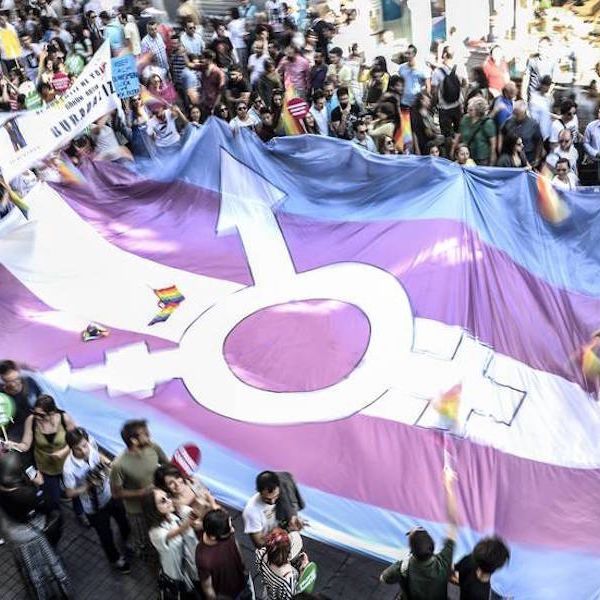
See, when I first came out as an atheist at 11, the reactions I got were not so great. I was told I was "too young to know what I wanted," that it was "just a phase," and that I was being a "typical, rebellious teenager." When I talked with some of my LGBT friends about their very different "coming out" stories, some of the responses they got were quite similar; as a result, they were pressured into being heterosexual or performing the gender they were assigned at birth.
Similarly, I was forced to attend church for several years after that, despite the fact that attending mass every week made me feel like I was living a lie. How could I sit there and say that I believed in and loved something that filled my heart with the utmost hate? Eventually, I was able to stop going, but only because the incessant arguing was too much for my parents to handle.
My purpose in comparing the LGBT coming-out experience with the atheist coming-out experience is not to equate the two. I'm not saying that coming out as an atheist is as hard or harder than coming out as gay, lesbian, bisexual, transgender, etc. I never was beaten up at school or disowned by my family because of my identity. Most importantly, my atheist identity is a choice that I very consciously made, whereas no one chooses their sexuality or gender identity; that's something innate.
However, I do compare the two to point out how adults enforce normativity upon children. If a child says that they have a different (sexual, gender, religious) identity than what's considered "normal," then their agency is completely denied. They can't possibly be that way, because they're too young to know what's best for them. Sure, this type of argument can apply if they ask to eat a bag of lollipops for dinner, but not when it comes to deciding who they are. Denying a facet of a child's identity can make them feel isolated and invalidated. Even if you don't agree with their decision, it's best to just accept it and to try to be understanding.
Ironically, I've become more open to religion since I became an atheist. At first, I was angry and hateful, because I thought my ideas were being patronized. However, once I met people who were religious and were not critical or dismissive of my own viewpoints, I began to be more accepting of theirs. Eventually, I realized how hypocritical it was for me to complain about how my opinions were being marginalized while doing the same exact thing to other people. I used to think that anyone who believed in God was delusional, but now I view it more as a coping strategy.
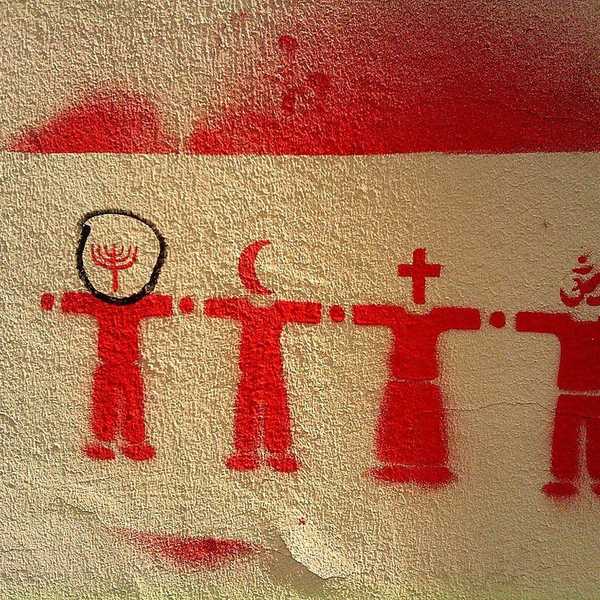
If believing in a higher power gets you through all the crap life inevitably throws your way, so be it. Christianity, Judaism, Islam, Wicca, and anything else is fine by me, as long as it isn't being used to subjugate someone else. As soon as the word "God" is used to support racism, sexism, homophobia, transphobia, or any other form of bigotry, I get quite irate.
Unfortunately, the word "atheist" still has a lot of negative connotations attached to it: We're immoral, Satan-worshipers, witches, Christian-haters, or worse. Clearly, that's not what atheism is to me, and I'm sick of having to hide or over-justify my position.