

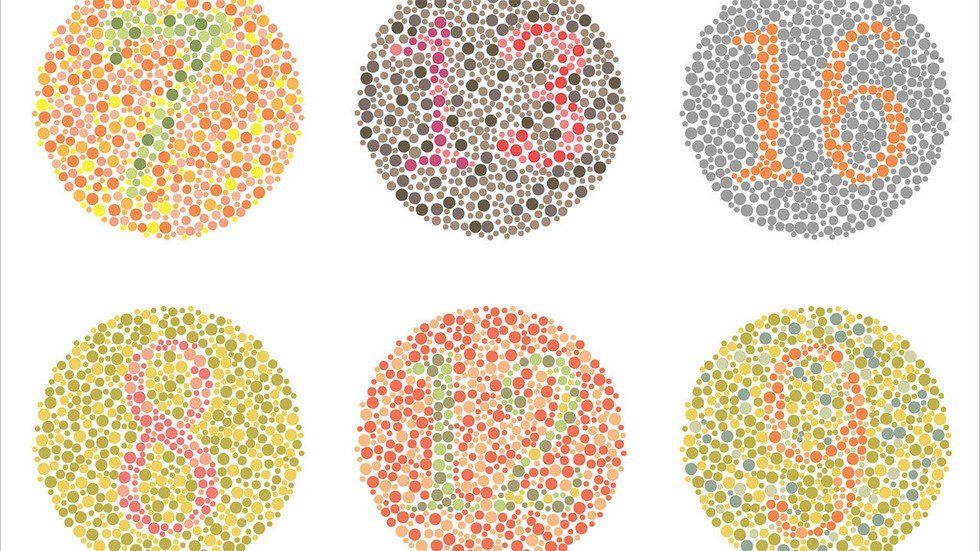
Colorblindness is a serious genetic eye problem that affects 2.7 million people in the world. The severity of this color deficiency ranges, depending on ethnicity and family health history.
Because colorblindness is inherited, most conditions cannot be treated. The only exceptions are cases of red-green colorblindness. For other types of this deficiency, colored lenses can be used to differentiate between colors. Your retina consists of red, blue and green cells, which should be be combined properly for an accurate image. You can also wear glasses to block a glare or prevent image distortion.
How do colorblind people drive?


The same way as they decide on colors when to drive, but due to a wider variation of colors, they just guess and wing it. These people are true risk-takers in terms of fashion.
Do both genders express the gene?

No. Since females are usually carriers of the gene, males are more likely to be affected.
Now, before you make fun of someone for dressing funny, or honk at them for taking too long to go at green, make sure that person isn't colorblind.
Specific information about this deficiency can be found here.