

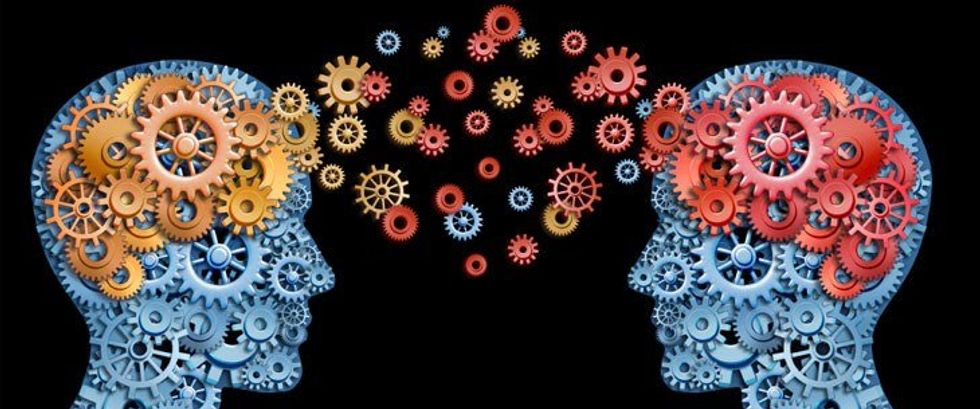
So I get it, Psychology isn't everyone's forte. However, after taking a psychology of personality course, I gained an understanding of not only psychology itself, but on developmental stages, social interactions, and different personality disorders. Initially, I found the lessons to be really interesting and informing, but as the course progressed, I realized there was more to social psychology than a mere academic standpoint.
Instructors serve the purpose to guide students to current and future success. Another major goal within the curriculum is to encourage students to make connections between the course content and the real world. Social Psychology provides a great amount of insight concerning human behavior and thought processes.
That being said, the class exposes you to the value of mindfulness. Evidently, having a concrete sense of self-awareness makes it easier to distinguish certain thoughts and actions. While feeling impulsive or depressed, the knowledge you obtained will allow you to reflect on the root of these emotions. As far as coping goes, the class provides students with resources if they consider treatment as an option.
Another crucial aspect of a social psychology course is understanding the developmental stages, their guardian's parenting styles, and how these factors affect them during adulthood. It may seem a bit bizarre, but a wide variety of relationship types are formed according to how you and your partner were raised. The theories are a bit complex, but to simplify it, relationships are characterized depending on these specific parenting styles: authoritative, neglectful, permissive, and authoritarian. Particular styles account for self esteem problems, trust issues, or even "clingyness" throughout a relationship. On the other hand, some parenting styles correlate with children having dependable partner characteristics. So, learning these theories provide insight on how you can improve your strengths and weaknesses when it comes to dating. A few steps to strive for in any relationship are recognizing issues and being able to communicate with one another about them.
Lastly, the discussion on personality disorders influences students to be empathetic towards people who do not exactly fit the norm. During a personality psychology class, you learn about several symptoms of personality disorders. With that in mind, avoid diagnosing yourself with a million disorders; leave that to a professional. However, people with these personality disorders are often misunderstood by others and become classified as weird, arrogant, selfish, narcissistic, etc. We are incapable of reading minds, knowing everybody's past and immediately recognizing emotional states. So, instead of being judgmental or interpreting certain actions as offensive, you can apply what you have learned in class to form a better understanding of their thought processes and behaviors.
I would encourage every student to take a social psychology class to learn how to better their relationships, as well as further their compassion for other people.