

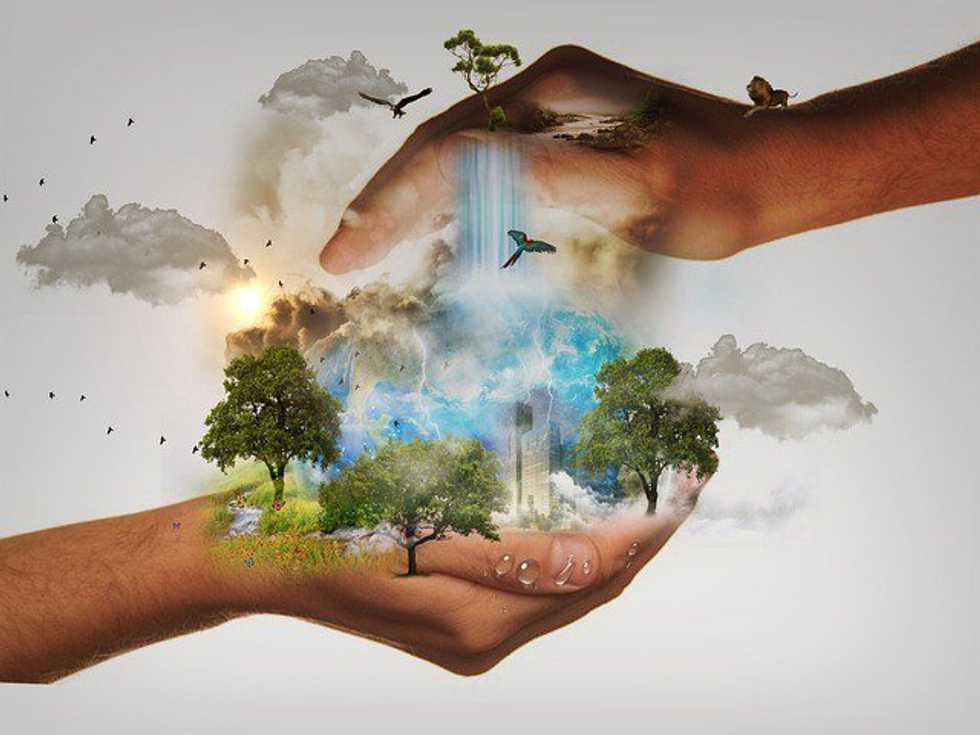
In recent years, it has become popular in our culture to have a strong opinion on environmental issues. It is a cultural movement to lean toward the mindset that mankind is generally oppressive of the rest of nature. This is the particular opinion that is held by many of the secular agenda. However, when it comes to those on the other side of the spectrum (Christians), the general public is often left scratching it’s head.
As a student majoring in Environmental Biology, I have experienced much of this confusion first hand. I am also a Christian, which adds to the issue. Many of the questions that have come my way have been in jest, but a few have been genuinely confused about what it means to study the environment in order to protect it. After some time of these questions, I realized that the Christian standpoint on conservation can seem quite unestablished to those on the outside looking in. I have divided the Christian standpoint on conservation into three main points based on my own thoughts and knowledge of the Bible:
1. Humans are responsible for caring for the environment.
When God created the earth and all of the living things on it, the first thing He said was “It is Good.” On the 6th day, God created man and put him over the other animals. Genesis 2:15 says, "The Lord God took the man and placed him in the garden of Eden to work it and watch over it.” Adam, the first human, was given the task of naming the animals and tending the garden of Eden, just as we should continue to take care of our world today.
2. The environment is a display of God’s glory and power and a reflection of His character.
This is expressed by David in Psalms 19:1: “The heavens declare the glory of God, and the sky proclaims the work of His hands.” The beauty of life is in it’s organization and complexity. Just as life is immeasurably complex, so is God. No one can know Him completely because He resides outside of the realm of human understanding. Just as life is organized in it’s operation, so is God. A large part of creation’s organization is condescension on the part of God so that humans may understand nature and God.
3. As important as nature is to protect and tend, it will never undercut the importance of mankind.
When God created nature, He said that it was good. However, when God created man and woman, He said that they were very good. It was said that God created man “according to His likeness” and that He breathed His spirit into Him. Man is the only created thing which is created in the likeness of God. Man is also the only created thing which God sacrificed a part of Himself for in the sacrifice of Jesus. Logically, this puts man at a much higher importance than any other living thing. The sum total of these thoughts brings the conclusion that no human life should ever be lost in the name of conservation, directly or indirectly. Mankind should not be wasteful, but should never put the interest of nature over the legitimate need of a human being. The current popular agenda insists that mankind is nothing more than a highly evolved animal. However, the Bible says that man is of far more importance than any other creature. A stewardship of nature can only extend as far as it does not ignore human need.