
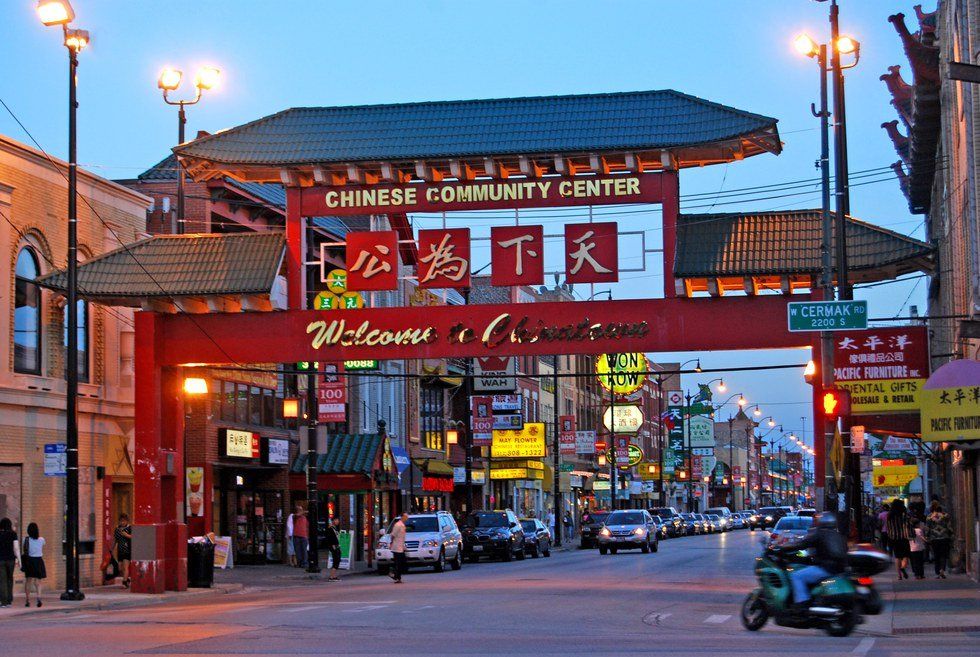
Chinatown in Manhattan, particularly near SoHo, the Financial District, and Tribeca is one of many Chinese enclaves within New York City. A place of education after the first steps of immigration, Chinatown has aided Chinese immigrants in becoming accustomed to the American hodgepodge of multiculturalism.
Chinatown was created when Ah Ken moved to the United States in 1858. Ah Ken was the first Chinese immigrant to NYC to establish a cigar store on Park Row, a street in present-day Chinatown, which sold cheaply priced goods. The cigar store was also the nexus for a powerfully-growing community. Around his cigar store, Ken rented rooms out to Chinese immigrants, and as a result, Chinatown quickly grew. It took one person to take risks and become an entrepreneur in order to create an environment where others could find work with like people. As New York continues to grow, Chinatown must consider how not to be prey to New York's willingness to consume.
In the early 1800's, Chinatown was a place of "self segregation". People who lived in Chinatown continued celebrating Chinese traditions, and practicing Chinese family businesses. This culture was so strong that the Chinese Exclusion Act of 1882 did not stop the flow of Chinese immigrants, and people still had arrived in Chinatown to work towards security of money, family, and community.
Despite the former street battles between the On Leong and the Hip Sing Tongs organized crime groups, Chinatown rose from the Great Depression. Nowadays, Chinatown is not as worried about internal disputes as much as it is about keeping its community afoot among New York's ever-changing environment.
With real estate being so scarce and so expensive in New York, Chinatown could come under threat of new developments. Organizations such as Asian Americans For Equality help protect the civil rights of Chinese immigrants. Eric Ng, head of the Chinese Consolidated Benevolent Association, admits that the Chinese people within Chinatown "didn't come to court, they came to us".
In a constant attempt to thrive, the Chinese community has modernized. For example one can go to Pearl City Market and buy t-shirts like at any other store, however the store also sells Chinese cuisine and treats that one cannot find at many other stores. Therefore, the community is adaptive to the New Yorker community, but still keeps its authenticity.
This is part of the reason why Chinatown in Manhattan is still triumphant; the Chinese immigrants co-operate with each other, stay aware of modern trends, and live in harmony and solidarity. Chinatown will most likely stay profitable and lucrative. Chinatown stands today as a sign of how when new to a place, one can find similar minded people and develop a shared culture which progresses with the surrounding populace.