Despite the development of our frontal cortexes, capacity for complex language, and intricate social structures, humans are mammals. For thousands of years, humans have raised and hunted animals for consumption however, today our evolutionary advancements have mutated our former rational and subsistence food culture to cater to a thoughtless, emotionless, and wasteful consumer society. The moment that the consumption of animals became a commercial industry was the moment where killing animals became immoral. Factories designed for efficient and effective killing clearly illustrate that humans do not value the life of animals, or equate the life of any animal to the life of a human and thus it appears as though it is morally irreprehensible to consume animals whatsoever. The sole caveat to this claim lies within the acceptance and practice of a specific kind of lifestyle: indigenous, subsistence farmers, hunters, gathers, and followers of similar ways of life who invariably understand that the value of animal life either morally equates and/or harnesses similar utilitarian purpose to that of human life. The reduction of pain, gratitude for loss of life, limiting of waste, and overarching respect for the cycle of necessary death for the emergence of new life are but a handful of reasons as to why one’s lifestyle can morally permit the consumption of animals. The conditions by which it is morally permissible for humans to eat animals are anything but concrete, however I believe that it is permissible for indigenous, subsistence farmers, hunters, gathers, and/or any individual that subscribes to a similar kind of lifestyle to consume animals; however, if those that fall into said categories do not treat the process of either raising, hunting, gathering, etc. of animals with shared respect, then the above conditions for the allowance of killing animals as morally permissible are contestable.
Firstly, it is necessary to derive the meaning of morality in this context. According to environmentalist and author Michael Pollan, “morality is an artifact of human culture, devised to help us negotiate social relations” and that the belief that morality exists for us to assign value to other forms of life is anthropocentric—meaning that the creation of morality in and of itself assumes that we have the power to judge all of the natural world [1]. The ability to postulate the morality of consuming other animals is a trait that appears to set humans apart from other sentient beings, however said ability does not give humans the right to casually end animals’ lives as frivolously as humans do today. It is often argued that if we kill animals because they are less valuable to us, than we should rid our species of those individuals that contribute less to the advancement of humans and thus are less valuable to us i.e. mentally or physically disabled peoples. According to animal rights theorist Tom Regan, the existence and application of a spectrum that indicates varying amounts of inherent value of different animals contradicts the idea that value “belongs equally to those who are the experiencing subjects of life” and thus should be treated as such [2].
It is fair to say that humans unilaterally agree that killing other humans is wrong; yet, the killing of animals is almost unanimously warranted most commonly today for consumption, profit, and sport. It is here that the concept of speciesism arises; this philosophical framework illustrates that—no matter the reasoning—a certain species can unconditionally favor its own over another [3]. It is also fair to say that most humans—despite avid claims from environmentalists and animal rights activists—favor the success of our own species over that of others and therefore apply more intrinsic value to the lives of humans than to the lives of non-human animals. The issue with this framework though is that it is inherently flawed; one cannot claim that humans are more elite in their evolutionary and social developments i.e. language complexity, social networks, cerebral function etc. and therefore have gained the right to determine the validity of another beings’ life, just because the natural world has engineered us to exist in the way that we do. Moral philosopher Christine Korsgaard accurately claims that our “…human nature certainly explains the way we experience pain and pleasure, attachment and grief, and life and death themselves, in deep and important ways, and that affects the details of our duties to the other animals” [4]. Just like no human being has the ability to choose the color of their skin, no mouse, no lion, no oyster, no elephant, chose to be what they are. Peter Singer, avid animal rights activist and moral philosopher, argues that the principle that humans are created equal is not a reality, but rather a “prescription” of how we ought to treat other humans—as though we are equals. Singer’s logic transcends humans, too: if we are not in actuality “equal”, to each other, and consequentially not “equal” to other animals, we should at least treat both humans and animals as though we are equals [5]. Humans in conjunction with the society that which we have developed today have no more of a right to casually discern which animal should live or die than any other living being. It is the disregard for the intrinsic value of other forms of life that so acutely illustrate this to be true.
The exception to the rule that 21st century humans have no right to kill animals for consumption lies in the manner and degree of necessity by which animal life is claimed. There is no refuting the fact that humans are capable of consuming meat. The natural world functions in such a way that the transference of varying amounts of energy is only possible via the consumption of a species that lies at a lower trophic level lower than another species–while the system is not perfect, it is clear that its web-like design intends for some species to consume others. Humans are a part of this design. However, the differences that set us apart from other animals make our placement in the food web all the more difficult to discern. The conditions where it is morally permissible for 21st century humans to consume animals are dependent on the necessities and methods of murder.
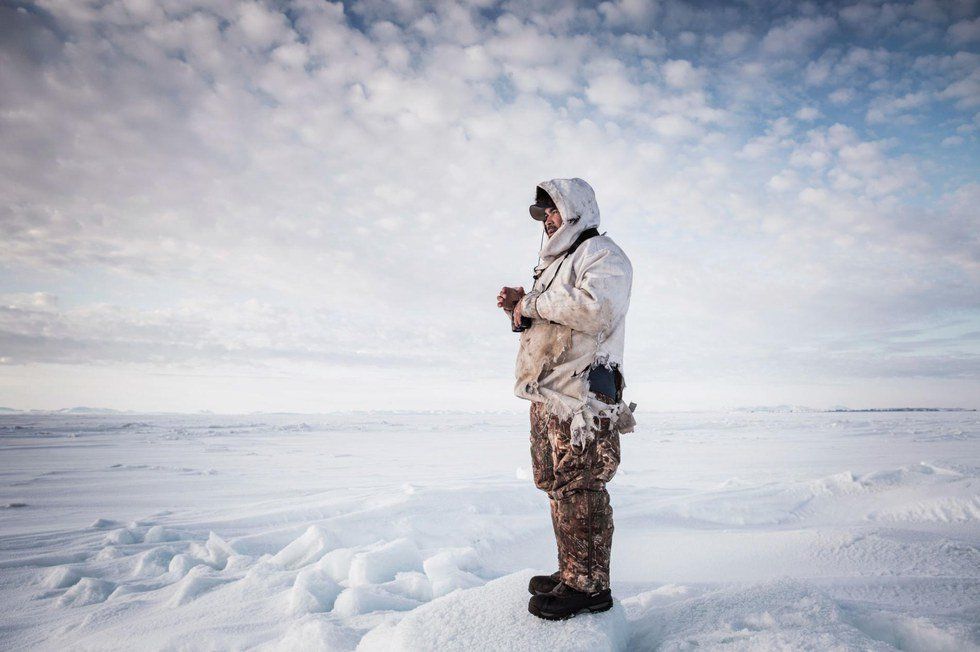
Indigenous communities, subsistence farmers, hunters, gathers, and/or any individual that subscribes to a similar lifestyle are in the right to claim the lives of other animals for food, while the average 21st century human is not. For thousands of years, the traditional and thoughtful ways that many indigenous communities have hunted and farmed their food have proven to be sustainable forms of killing. Not only are the animals whose lives are lost for the purpose of sustaining human life killed in respectful and less harmful and painful ways, but the practices of appreciation for the loss of animal life enriches a culture of intense gratitude and understanding of the severity of such an action; in addition to these practices, it is traditionally true that the entirety of an animal’s body will be utilized in some fashion—minimizing the waste and need for alternative and less sustainable production of tools, clothing, etc. Today, “industrial agriculture depends on the suspension of disbelief on the part of the people who operate it and a willingness to avert your eyes on the part of everyone else,” claims Pollan [6]. The mass majority of 21st century humans do not just consume meat that they hunt themselves, raise themselves, or care for in any capacity by themselves. Today, humans have developed vocabulary to detach meat and animals in order to diminish the potential for morality to influence consumerism e.g. cow vs. beef, pork vs. pig, etc.
Animals are not a renewable resource; like humans, animals have the capacity to feel pain, to communicate, and to grow and evolve to adapt to the happenings of the natural world. However, 21st century humans have chosen a way of life that combats said happenings and threatens both the sustainability of the natural order of life and validity of morality as a concept as it is applied as a framework for deciphering the meaning of human and animal life. Indigenous, subsistence farmers, hunters, gathers, and/or any individual that subscribe to similar kinds of lifestyles have prescribed to a way of existing that permits the sustainable, conscientious, and morally permissible means of killing animals.
[1] Michael Pollan, “An Animal’s Place”. The New York Times Magazine (2002): 6.
[2] Tom Regan, “The Case for Animal Rights”. University of California Press (1983): 196.
[3] Christine M. Korsgaard, “Facing the Animal You See in the Mirror”. The Harvard Review of Philosophy (2009): 3.
[4] Korsgaard, “Facing the Animal You See in the Mirror”, 3.
[5] Peter Singer, “Chapter 1: All Animals Are Equal”. Animal Liberation (2007), 5.
[6] Pollan, “An Animal’s Place”, 4.