

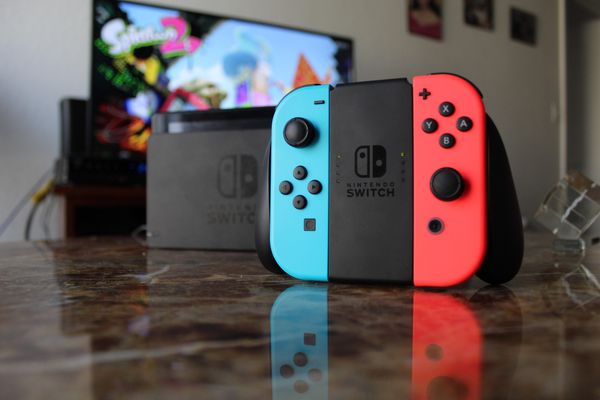

Video games have a bad rap, but last week, the Humble Indie Bundle 15 was announced, and that means now is the perfect time to introduce every bored college kid with a laptop to the wonderful, exploratory, and sometimes even beautiful world of Indie Gaming.
Independent developers are a wonderful thing. I love indie games because they're cheap and inventive, sometimes very cheap. The Humble Indie Bundle, for example, let's you pick how much you want to pay for games in the bundle. They're also just a nice change of pace from the $60 triple-A titles that never seem to bring anything new to the table. If you're just an average, non-gaming person, let me introduce you to what you've been missing. For the most part, all you'll need is a standard computer or a smart phone and less than $20. To compile this list, I sat down with a few friends and talked with them about their experiences developing games as indie developers. That article is coming next week.
Your computer screen is an infinite canvas, capable of so much more than spreadsheets and cat gifs (though I do love cat gifs).

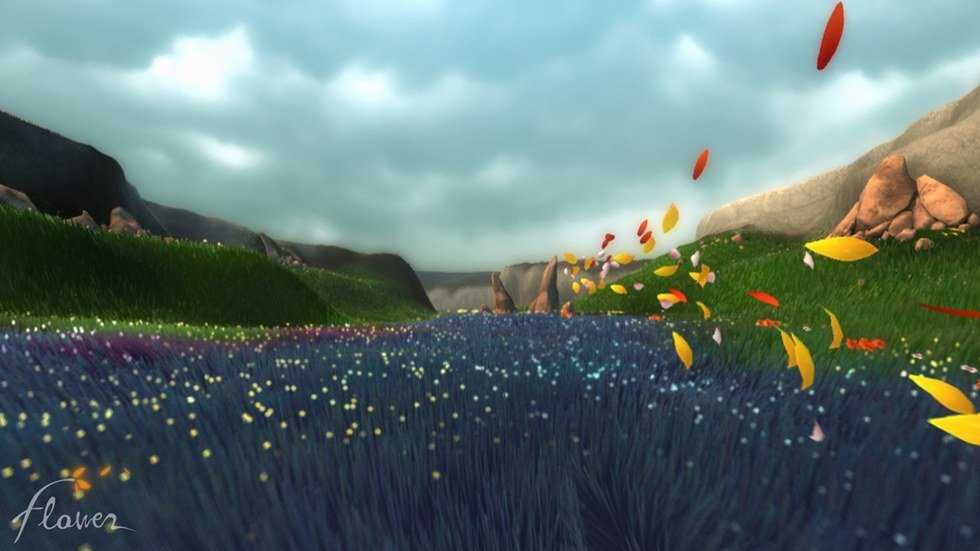
Let's take a break from studying and let's stray away from this year's iteration of American Bad**s kills all the bad guys 12. In a world where Call of Duty is the number one selling game every year, let's discover what you and your laptop can really express. Welcome to a different world, where you can be a flower floating through a field, bringing color to a desolate land.
Flower - $6.99
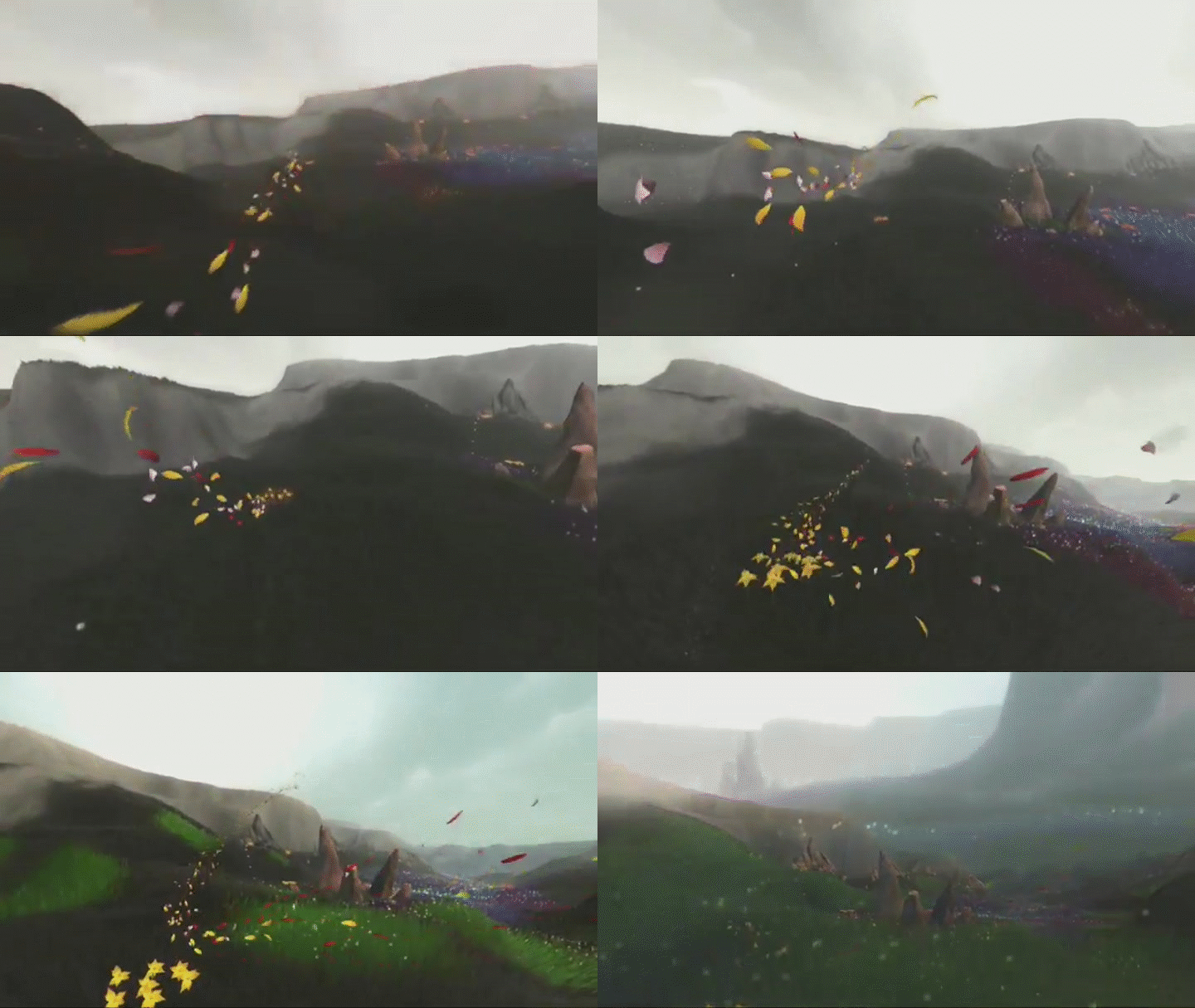
So Flower is a game where you're a flower, floating through the world, bringing color to the desaturated. I love Flower. It is easily one of my top three favorite games of all time. Not only is it beautiful to look at, it's intensely relaxing to play. The dialog-free game really plays with your emotions in a way few other pieces of media can. You start in a gray meadow, but then progress to increasingly darker scenes. At first it's calm, but as suddenly becomes distressing when your precious band of petals encounters darkness. All at once, you find yourself caring deeply about your flower petal and it's implied mission to bring life to the colorless. Play it if you get the chance, but unfortunately, this title stands out from the rest of the list for a few reasons. You won't be able to play it on your laptop as it's only available on Playstation devices. It's also only borderline indie, because while the developer, That Game Company, is relatively small, Santa Monica Studios is backed by Sony Computer Entertainment.
That being said, if you or a friend or a sibling or a roommate has a Playstation 3, 4 or PS Vita, you have to give it a shot. At the other end of the spectrum, we have iPhone games!
Monument Valley - $3.99
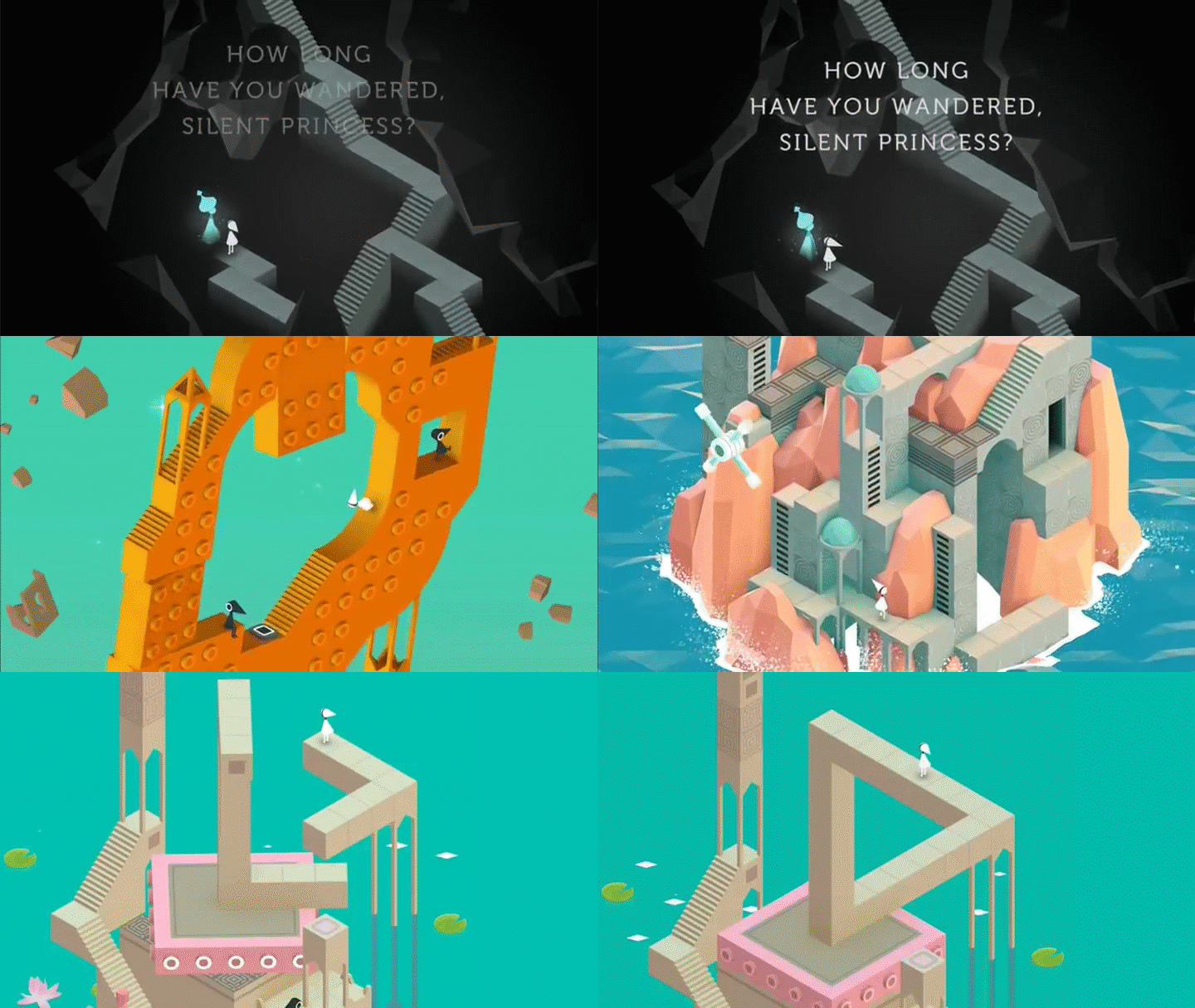 Monument Valley is a puzzle that's only available on phones and tablets. It's known for its art, designed so that "every frame of the game was so beautiful you’d want to hang it on your wall as a piece of art," and for its semi-recent cameo in House of Cards.
It's deceptively simple mechanics rely on MC Esther-esque optical illusions and moving Ida, a princess who fell in love with geometry, around the world. I had a lot of fun with this game, and I found that little kids tend to be uniquely good at it, which is a level of accessibility rare for a puzzle game. In 2014, it won an Apple Design Award and was named Best iPad Game of 2014 by Apple. Play it on your phone while you eat dinner alone in the dining hall again you antisocial piece of shit!
Braid - $14.99
Braid is a puzzle platformer, kind of like Mario, about a man named Tim trying to mend his relationship with a princess. One of the first Indie games to really take off, Braid was offered as part of the second Humble Indie Bundle in 2010. It was actually released in 2008, and, along with other titles (see World of Goo below), it's known as one of the games that really popularized indie games and brought them to the masses. Jonathan Blow came up with the concept for his debut title in 2004 while in Thailand and developed it with his own money until he had a final prototype in 2006, which won a design award at the 2006 Game Developer Conference. Development of the game actually put Blow $40,000 into debt before it was released. When it launched on the Xbox Live Arcade, it was downloaded by over 55,000 people the first week and almost immediately became the top rated Xbox Live game of all time. The game itself relies heavily on your ability to manipulate time. Sit down and start playing it, I promise you'll be instantly drawn into it. It's addictive. Also, I love puzzles if you haven't noticed by now.
World of Goo - $9.99
Going along with our theme of early Indie hits, World of Goo was developed by Kyle Gabler and Ron Carmel in their free time. Also released in 2008, it received a slew of awards (and a rant from the head of EA sports). Nintendo Life gave the game 10/10, and said, "Not only is World of Goo easily the best WiiWare release to date, it's also proof that you don't need a large development team or millions of dollars to create an outstanding video game." World of Goo is a clever puzzle game that involves moving goo balls around to make structures and help the goo balls get sucked up a pipe. its simple puzzles are incredibly addictive, but it's easy to jump in and play a single level when you have a few spare minutes. It was ported to iPad, iPhone, and Android in 2011, so you can easily take it with and kill time in that boring CSE lecture THAT DOESN'T EVEN TEACH YOU ANYTHING ANYWAY.
Cave Story - $14.99
Cave story is a story about a cave. Just kidding (lol you thought the world was simple), it's actually platformer that simply takes place in a cave. You were close. It was in development for just over five years, and when Daisuke Amaya released it in 2004, it didn't initially get popular. Even though it's now considered the father of indie games by many, it slowly gained popularity online and finally got picked up by the mainstream when it was released on WiiWare and DSiWare in 2010 and Steam in 2011. While it's a fun game, there's really not much more to say other than "it's a really well-executed platformer." It mostly makes this list because of its status as a game changer for the indie scene.
Minecraft
If Cave Story was the father of indie games, Minecraft is the poster child. Markus Persson wrote it in his free time at first, but after a lot of positive feedback from the early versions (minecraft classic), he left his day job to form Mojang. If there's only one game you've ever heard of on this list, it's Minecraft. It's been around since 2009, but it recently exploded in popularity. After Mojang was acquired by Microsoft, it only grew bigger. The thing about minecraft is it's hard to jump in as a newbie. There's so much more to know about the game now than there was when I started playing back in middle school, back when it was still in beta. I have a pretty personal connection to this game, I used to run a server that, at its peak, had several hundred unique players that would log in to build their houses and tend to their property. Every now and then I still go back and load up old save files just to kill some time. It's not a casual game though, as it really revolves around working towards a better life. You start by punching trees to get wood, then move on, crafting better tools to get better materials and build a bigger house. You'll find yourself caring way too much about your virtual sheep in this game, but it is a nice relaxing break from life if you feel like getting transported into a world where everything is just a bit more abstract.
The Borg - Free
So we just saw the most mainstream of all indie titles, let's go the other way. The Borg is a game that my friend Holden made, you've probably never heard of it. In fact, he never really published it. He uploaded it to Google Drive a few years ago and put a link to it on some gaming forum in a dark corner of the internet. In fact, before today, the only way to play that game was to stumble upon that post or ask him for the link in person. Well, here's to the wonderful world of underground indie gaming. The Borg is a puzzler about assimilation, and if you like puzzles, you'll find it addicting. It's completely free and runs best in chrome. Give it a shot :).
I interviewed Holden, he's hyper-connected to the indie dev scene and gave some great input on the choices of games in this article. His interview on the state of indie game development is coming next week. Stay tuned.
Other games to try if you have time (not main picks because I wanted to illustrate the history of indie gaming):
Geometry Wars - a wonderful heart racing game about warring shapes. Super colorful and super cool.
Fez - $9.99 - A 2D person discovers a 3D world. I love the way it deals with dimensions and perceptions, it's a fascinating puzzle platformer.
Brothers, a tale of two sons - $14.99 - This one requires an Xbox controller to play, but if you or a sibling or a roommate has one on hand, it's a fun story to play.
Starwhal - $11.99 - Again, this one is best played on Xbox controllers plugged into your computer, but if you're looking for fun with friends, the whacky physics, time dilation, and narwhal-stabbing action combine in a way that I've never seen a gameplay before.
Pid - $9.99 - This one's just a really pretty, really challenging platformer.
The Swapper - $14.99 - Another platformer, but this one revolves around cloning yourself and solving puzzles with your clones that mirror your motion. It's kinda creepy and hella fun.
There were a million other games I wanted to include here but couldn't. Check out http://www.wikiwand.com/en/1001_Video_Games_You_Mu... for more!
A note to gamers: You probably will recognize almost every title here. I'm starting with the better-known indie titles, to the point where most of these have seen mainstream success and some might test the definition of Indie. That's okay. My goal here is to highlight games that go against the status quo, that your average person can pick up and get into without a fancy gaming rig or any knowledge or experience with video games.

















