
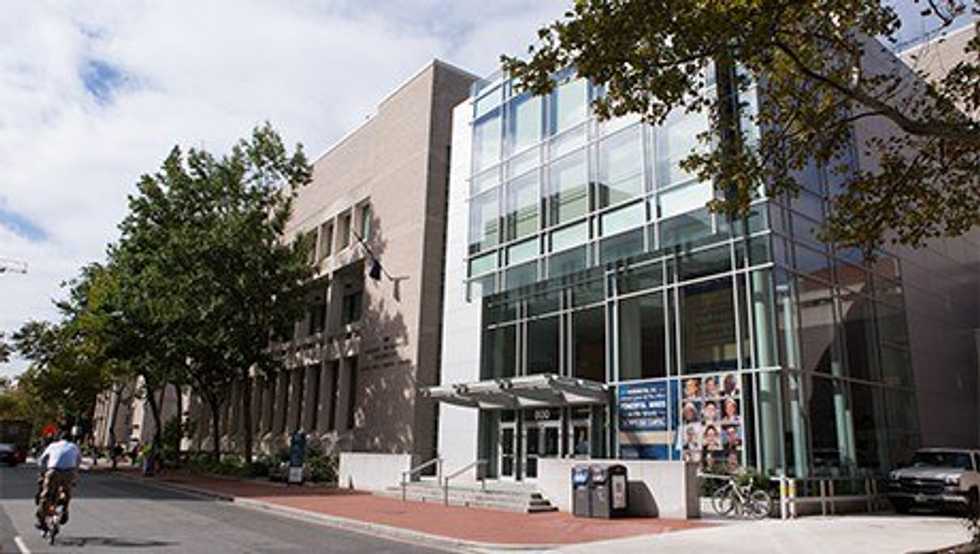
Located at 800 21st Street NW, the Marvin Center is The George Washington University’s hub of student activity. From housing the school’s dining hall to supporting a wide array of student organizations, the Marvin Center is an essential part of every GW student’s life. But whose name does this influential building boast?
Cloyd Heck Marvin, serving from 1927 to 1959, was the university’s longest sitting president. Marvin developed a “School of Government” at GW in 1928, developing the school’s potential due to its unique and incomparable location for this field of study.
During his time as president, George Washington’s student population doubled, and its faculty tripled in size as well. Marvin was present for the institution’s first acceptance of an African American student.
Prior to his work at GW, Marvin also worked at the University of Arizona, where he is known for being the university’s youngest American president. He was president of the National Parks Association from 1933 to 1935 and worked as both a deputy director and special advisor at the United States Department of War. He went on to receive the Department of the Army’s Award for Exceptional Achievement in 1948. In 1970, George Washington University named their student life center after him.
At first glance, Cloyd Marvin appears deserving of the recognition he has received from GW. Lesser known than his accolades, however, are his prejudices. A devout Freemason, Marvin made no mistake about making his beliefs known.
During his presidency, over 100 student protests resulted in unfair dismissals. In 1956, he dismissed an atheistic professor, saying, “as a matter of policy, we do not have anyone teaching who does not have faith in God.” The George Washington University is, and always has been, a non-religiously-affiliated institution.
As time has passed, Marvin’s racist tendencies have become increasingly well-known and visible. Although he oversaw the university’s admission of its first black student, he was widely known for a general policy of segregation and disregard for students’ civil rights.
If the Marvin Center serves to ensure that students’ needs are met and that their interests are showcased, what does the building’s name say about GW students? We are consistently ranked among the most politically active schools in the nation, which makes it unjust that we name our student center after a man who supported limiting free speech and punished students for questioning the status quo.
D.C. is all about opinions, and here at GW, we are supposed to support everyone’s right to dissenting opinions. No one can claim that GW is as diverse as it could or should be. Black students make up only 6.5% of undergraduate students and Latino students make up a mere 7.5%. Whether or not our administration is doing all it can to improve racial and economic diversity on campus is up for debate, but what the Marvin Center says about the future of minorities on campus is clear.
If we cannot take the time to change a name, we certainly do not appear bothered by racial minorities' struggles with getting to college and succeeding there. Until our buildings are only named after those who support equal access to education, not all of our students will be able to say that they truly feel safe and welcomed on campus.