
When I decided to major in Nutrition, I thought I would learn the secret to becoming one of those super happy people on Instagram that have 3,000 likes on every picture they post of their oatmeal. After three years of college courses, I can tell you exactly what happens to every gram carbohydrate, fat, and protein that you eat and I can run you through the stages of lifestyle change in my sleep. I can tell you that any picture I post of my oatmeal will still get less than 60 likes. I can also tell you that “going on a diet" will not make you healthy or happy in the long term.What you eat is a product of your family's habits, your culture, society, and your own personal tastes, financial status, and time available. There are about a thousand reasons why fad diets, and even diets based on more sound nutrition advice, don't work, but the biggest one is that it is very difficult to make sudden, drastic dietary changes and it is even more difficult to maintain these changes over a long period of time. The reason why people don't see the results they want is because "going on a diet" implies short term commitment, while seeing and maintaining results requires a lifestyle change. To achieve your health and fitness goals, you need to permanently alter your diet to incorporate a wide variety of nutrients and an appropriate amount of calories and also the foods you love. The big question, of course, is "How?" The process will vary for each individual, but here are some tips to help you on your way.
Define realistic goals.
Before you decide what you are actually going to do, you need a reason why. Do you want to lose weight? Gain muscle? Be healthier overall? Feel better on your runs? How much time are you giving yourself to achieve this? Are you willing to change your diet forever, so that you can look or feel better forever? On the other side of this, make sure your goals are realistic. Aiming to lose more than 1-2 pounds each week is not sustainable or healthy and does not give your body time to adjust (this is part of what leads to "rebounding" or weight gain after dieting). Personally, my nutrition goals change on a regular basis. During the weeks leading up to a dance competition, I try to eat almost 100 percent clean (no processed, fried, or sugary foods) but during finals week my goal is just not to eat mac and cheese every day.
For most people, the following goals are appropriate:
- At least ½ of all carbs should come from whole grains.
- Eat at least 3 servings each of fruits and vegetables each day (if not more)
- Eat foods with healthy fats like fish, nuts, seeds, avocados, eggs, olive oil, and canola oil.
- Eat protein from healthier sources like chicken, fish, nuts, and beans.
Track your intake.
A great way to evaluate your current intake and hold yourself accountable is to keep a food diary. If you have the patience, the most accurate method would be to use an app like MyFitnessPal. You can also use a written food diary and then enter your data into a site like Supertracker. Other less time consuming (but also less accurate) methods include taking pictures of each meal or writing everything down at the end of the day. Keep track of how much of each food you eat, what time you eat each meal, how you felt before and after (hungry, full, stuffed, stressed, guilty, content, proud, etc.), drinks, and condiments. This will help you to assess tendencies you have. Do you eat more when you're stressed or unhappy? Do you snack uncontrollably while on the computer or watching TV? Do you skip meals during the day and then overeat when you get home? Do a lot of your calories come from soda, juice or alcohol? Do you eat too many calories or not enough to achieve your goals?
Come up with a basic meal plan.
Going into a new situation without a plan is like showing up to a performance without a routine. The first step is calculate the amount of calories it would take to sustain your current metabolism plus all of your daily activity. There are plenty of websites that do this. If you are happy with your weight and just want to feel healthier, you can skip this step. If you are trying to gain or lose weight, there are some additional considerations:
- A calorie deficit of 500 cal/day will lead to 1 lb lost each week.
- A calorie defecit of 1,000 cal/day will lead to 2 lb lost each week.
- It takes an extra 12-15 g of protein and 300-500 extra calories each day, in addition to a goal-specific strength training program to gain 1 lb of muscle per week.
Next, assess what you already eat and figure out how to make that healthier, rather than completely changing your diet. Think about what the basic structure of your meals is and how you might improve them. For example, if a typical dinner is 8-12 oz steak, 1 cup of corn, a potato, and a glass of coke, consider decreasing your portion of steak to 3-6 oz, switching a nonstarchy vegetable (broccoli, asparagus, or cauliflower) for the corn or potatoes, and a glass of milk for the coke. That way you still get to eat most of what your normally would, but it is in more reasonable portions and is more nutrient dense.
Lastly, remember that no one nutrient is your enemy. Carbohydrates, fat, and protein can all contribute to a healthy diet. For most people, 45-65 percent calories from carbohydrates, 10-25 percent from protein, and 20-35 percent from fat is appropriate. It may take some experimenting to find where in that range works the best for you. For example, if you tend to feel tired or sluggish after eating carbs, you may benefit from eating a lower carb diet. Similarly, there is no reason to eat a low fat diet. Meals with a combination of carb, fat, and protein help you feel full, and unsaturated fats may actually promote weight loss. However, it is best to avoid trans fats found in processed foods and partially hydrogenated oils.
Figure out what foods you can't live without.
If you absolutely can't live without chocolate, buy a chocolate bar a week and tell yourself, whether you eat a square a day or the whole bar on Tuesday, that is your chocolate for the week and you aren't buying any more. If you have to have grilled cheese once a week, so be it. If you prioritize, you can fit any food into your diet.
If plan requires you to completely cut entire food groups or an excessive amount of calories out of your diet that is a huge red flag.
Diets that require you to cut out carbs completely or swear off all processed foods are incredibly difficult to follow. If you are looking to positively change your lifestyle, your diet needs to be something you think you can follow forever. "Going on a diet" to get ready for a competition or big event is often necessary, and can be more drastic because it has a specific ending point, but you need to consider what you want to eat every day in the long term.
Additionally, by cutting out entire foods or food groups, you also risk cutting out important vitamins and minerals from your diet. This can lead to cravings, which are your body's way of communicating that something is missing from your diet and a huge obstacle for anyone trying to eat healthy.
Practice restraint vs. restriction.
It is possible to incorporate any food into a healthy diet. Changing your diet and getting healthy does not mean that you can't eat cake anymore, it just means that you eat dessert once or twice a week instead of once or twice a day. Restricting yourself can be very damaging, and can contribute to a negative relationship with food. Contrastingly, exercising restraint and eating "junk food" in moderation leads to a much healthier relationship food. Restraint is saying, "I could eat this, but I'm getting ice cream later and I'll enjoy that more," or "I'm going to choose a small piece and eat it slowly to enjoy the flavor."
Eat mindfully.
Many people eat when they are not hungry, over eat, or feel obligated to finish what is in front of them even when they are not full. Mindful eating focuses on minimizing this by eating with the intention to nourish the body and attention to the enjoyment of food and whatever physical sensations you are eating. I highly recommend doing some research if you know you do not have a great relationship with food.
Be flexible.
It can take years to develop a healthy lifestyle that you enjoy and is sustainable. Your are going to make mistakes and you are going to have weeks where you feel like the only thing you ate was French fries and pizza. The most important thing is that even if you have setbacks, you keep trying to eat in a way that leads to a happier, healthier you.
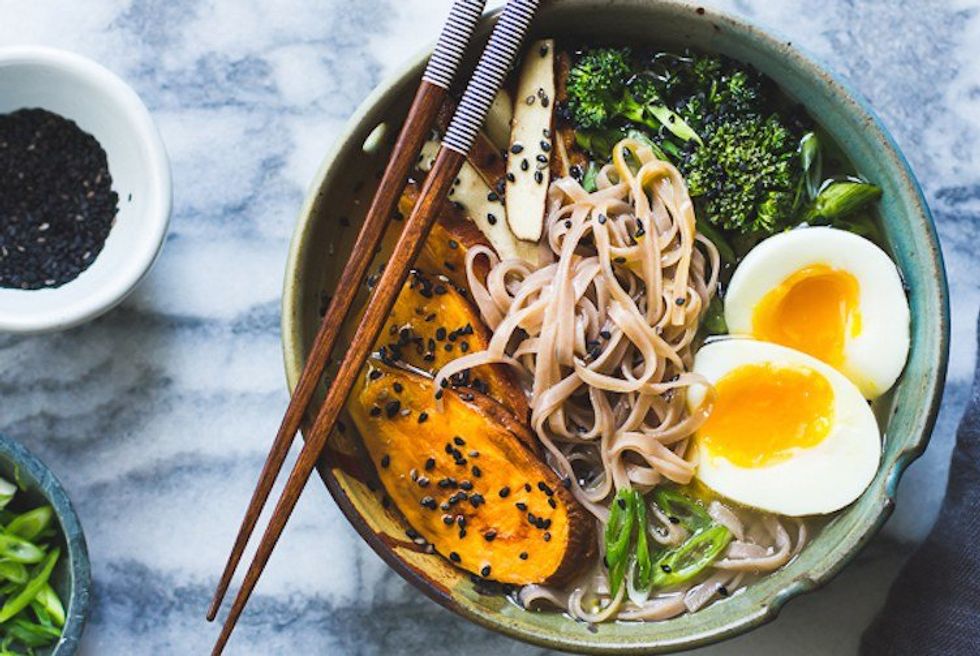
(P.S. All of the food pictures link to great healthy recipes that I love, but take any nutritional info on the blogs that seems extreme with a grain of salt)