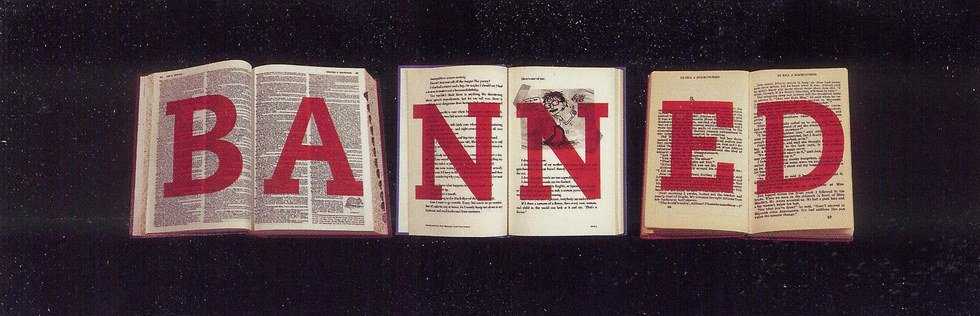
Banning books is as American as apple-pie, and, luckily, reading these banned books is just as America. It lets us exercise our First Amendment rights and our liberty as well as often engaging with the most thought-provoking and iconoclastic material there is.
Of course, the banning of literature is a world-wide phenomenon- even the
The banning of books is usually done in order to keep stable the status quo, and to leave social mores and taboos unfettered by keeping any subversive material out of the hands and minds of the children (it’s always for the children) ,and also letting conformist attitudes be maintained. As the American Library Association puts it, “books usually are challenged with the best intentions—to protect others, frequently children, from difficult ideas and information.” Of course, the censorship of books usually backfires, making a book an even more desirable read and letting the public-at-large know that: "this book was banned, there must be something challenging, fun or important in it!"
Former
- Deal with real-life issues
- Learn about how societies can change
- Foster cognitive growth
- Expand their imagination
- Appreciate the wide-variety of literature available
The first case of censorship in the
Attempts at banning books continue to this day- modern books like the Harry Potter and Twilight series have been banned from certain schools, and even The Diary of Anne Frank is still occasionally challenged. And the list of some of America’s favorite books that were either banned for a certain period of time or that were challenged is long: To Kill a Mockingbird, Where the Wild Things Are, The Scarlet Letter, The Red Badge of Courage, In Cold Blood, The Great Gatsby, The Grapes of Wrath, and The Catcher in the Rye- to name only a few!
There is a week of each year that now celebrates banned books, and it is appropriately known as Banned Books Week. The event lasts from September 27 to October 3. Yet this is a cause that ,in actuality, lasts all year long, and it is imperative that we deny censorship of any kind in the realm of literature. Should young children be reading A Clockwork
I like to end with quotes, so here is one from Salman Rushdie, author of The Satanic Verses-a book that in 1989 got him a fatwa from the Ayatollah Ruhollah Khomeini of Iran issuing that the author be killed (the fatwa is still in place, but luckily Salman is still with us): “What is freedom of expression? Without the freedom to offend, it ceases to exist.”