
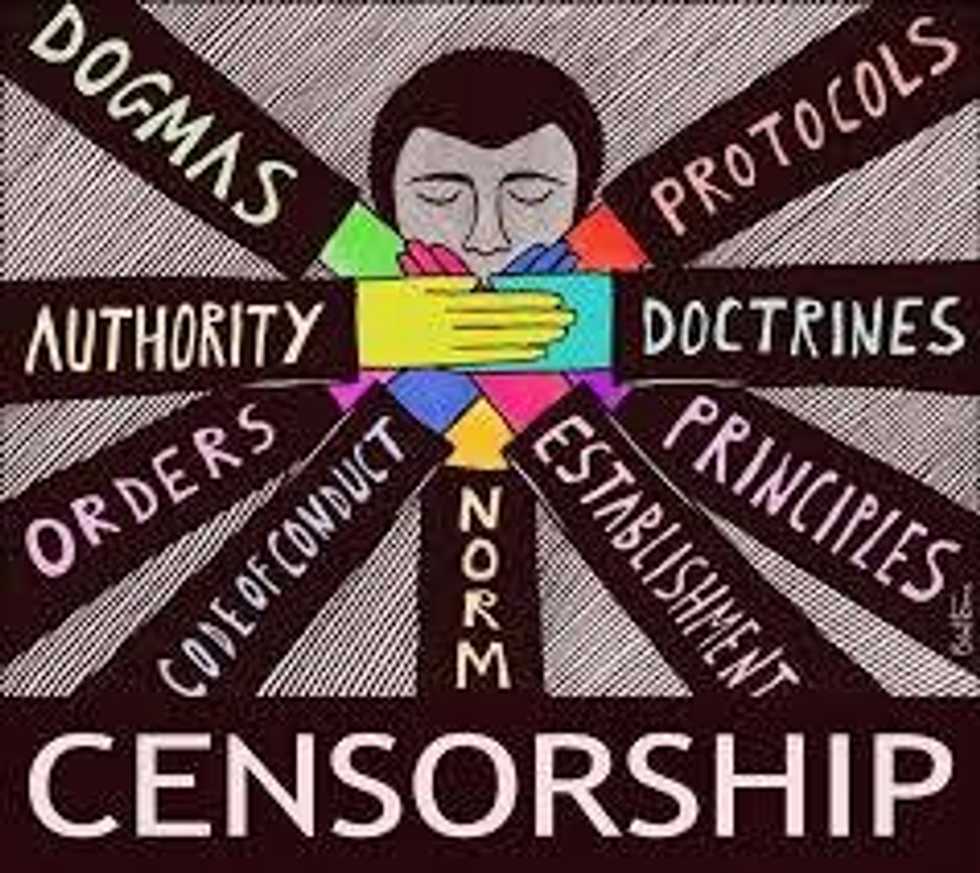
Curiosity: the most interesting part of being human. Because of this innate necessity we have for answers, when they are not given to us, we tend to either, accept the small amount of information we have, or we search for answers ourselves. Therefore, censorship should definitely be a great part of our lives.
I have come to realize that censorship has always been a part of our nature as humans. Throughout history, every time something new appears, there is always opposition against it. Therefore, in my opinion, the conflict of censorship is pretty irrelevant. I believe that everyone has the right to know as much as they aspire to know. For example, you might have a person that settles with knowing just enough to get by, but you may also meet the person that dedicates their life to learning as much as possible.
Apart from that, because of the day and age we currently live in, access to any kind of information is as easy as it could be. So, if our parents censor us during our childhood, it’s perfectly fine because at some point in our lives we will learn the truth. Therefore, if I were asked about the importance of censorship, I would agree that sometimes there are things that should not be known at certain times. An example of this could be: a little girl that does not know about the concept of sex, we cannot just bombard her with the topic because she barely understands summation.
Now, I understand that censorship is needed, but I also understand why some people are against it. The opposition comes from determining what source has the power to determine what information a person should be fed and which not. In other words, some people don’t trust the people who guide them through knowledge because of their fear of being told a lie. This is a completely acceptable behavior, in fact, it’s great that people don’t trust the system because this leads to a beautiful incentive for people to look and learn things for themselves.
Plato’s reasoning behind his support for censorship was simple: don’t let others know about the flaws in our system. He established a concept we know as “noble lie”. This concept consists on telling someone a lie (not giving all of the information) for the person’s well being and proper development. Plato uses the poems and stories by Homer that are being taught to everyone, “It’s not that they are not poetic and sweet for many to hear, but the more poetic they are, the less should they be heard by boys and me who must be free and accustomed to fearing slavery more than death.” Plato tries to appeal to the people who read anything by telling them that when we are exposed to different stories, we must not be persuaded by the spectacle, we should focus on the true purpose of the story.
Overall, opposition to censorship will always exist, and we will have to accept that matter. As long as we do not let this censorship determine how much we desire to know, let this tool be used. Because censorship is nothing compared to our innate curiosity as human beings.