

One of the most ridiculous trends I’ve seen going around is that there shouldn’t be diversity “just for diversity’s sake." But what does that mean?
What that means is that people want a reason for including diverse characters. A group of white characters with one black person thrown in? Sure, that’s fine. But try to cut it down to two white characters, two Latino, two Asian, two black? And while we’re at it, let’s make half female, and then half male? Maybe about a third of these characters gay? Oh, well, now you’re just being ridiculous.
Because of course everyone knows that diversity only exists in the head of pushy, politically correct millennials. You need a reason for characters to be diverse, because in real life, everyone is straight, male, white, and thin! You should be happy that you get any representation at all if you don’t meet that criteria, because there’s so few of you in the real world. To include you in mainstream media would be pointless. Actually, worse, it would be pandering! It would be pandering to audiences who want diverse casts even though diversity doesn’t exist in the real world.
I mean, let’s take a look at America, the whitest country on the planet in which every single person was born there and there are absolutely no immigrants present. Surely, looking at such an ethnically “normal” location, we’ll get tons of white males!
Let’s take a look at the 2013 census. “White” citizens were considered from any of the following areas: Europe, the Middle East, North Africa, Ireland, Germany, Italy, Lebanon, the Near East, Arabian areas or Poland. Ignoring the fact that some of those areas being considered “white” is the most ridiculous thing I’ve ever heard, if you remove from the original statistics the Hispanic citizens, you get 62.6%. You then get black citizens making up 12.2 percent, Asians making up 4.7 percent, Native Americans making up .9 percent (I wonder why might that be), and 16.3 percent Hispanic/Latino citizens. The rest are considered non-Hispanic/Latino of “another race or two or more races”. In addition to all of this, remember that not everyone answers the census and illegal immigrants are widely underrepresented in these statistics, and that the vast majority of population growth belongs to minorities. 50.4% of children under one at this moment belong to minority groups.
About 4 percent of Americans are gay, lesbian, bisexual, or transgender, according to surveys that rely on people who are willing to admit to being a part of these groups.
Now, let’s look at the representation of these same groups in movies. In 2014, 73.1 percent of actors in movies were white (and I’m sure we’re talking European white, and not Middle Eastern and Lebanese “white”), 12.5 percent were black, 5.3 percent were Asian, 4.9 percent were Hispanic/Latino, and 4.2 percent were “other.”
All of those statistics don’t even tell the whole story, however, as many non-white actors are demoted to stereotypes and non-speaking roles, and characters with minority casts leading as the majority are more often than not about cultural experiences, rather than universal ones. A white-led movie can be about anything from romance to fighting crime to building a successful business from scratch, while movies about Hispanic-Americans, the most underrepresented group in film when compared to their actual population, will be about something along the lines of struggling to reconcile their “Latino side” with adjusting to the American way of life.
So, what does all of that reveal? White actors are overrepresented in media, black and Asian actors are about accurately represented, and Hispanic/Latinos are underrepresented, without taking into account what roles these actors take on. When white protagonists are counted the same as Asian background characters, you’re going to get statistics that don’t even tell half of the story.
So, let’s say you have a movie with complete diverse representation in a cast of 10 characters. You would make six characters white, two Latino/Hispanic characters, a black character, and an Asian character. Half would be female, and half would be male. One of them would be gay or bisexual. It’s accurate, right?
Except, probably not. Because most likely, the protagonist would be a white male, dressed in a t-shirt and jeans, and the antagonist would be a white female, dressed up in tight dresses and stilettos. The protagonist would have a male white friend and a white female friend who the male friend constantly makes passes at, and then a black male friend for good measure, who only talks to make a witty joke. The white antagonist would have a female Hispanic secretary and a white male advisor, who is gay but never mentions it. There would be a brief appearance of a Latina maid who discovers a dead body, and a male white police chief. Still think everyone is represented fairly?
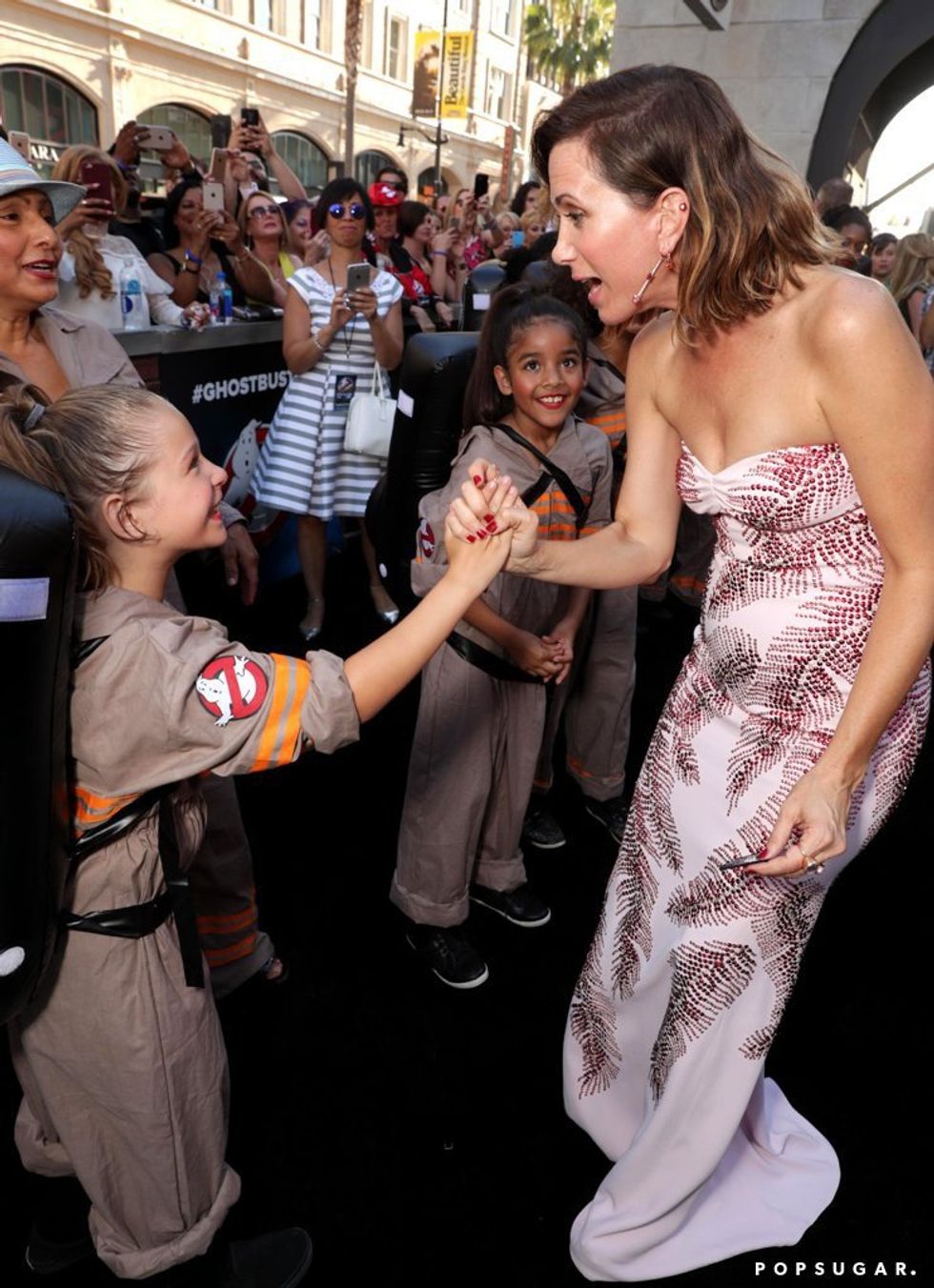
Not to mention, the above situation is sort of an odd way to do casting, anyway. Does that mean when in 20 years, when Latinos hold the population majority as experts expect they will, movies will feature Latino-dominated casts with one or two white side characters thrown in for good measure? Yeah, probably not. Diverse casts should be expected of every form of media, because everyone should get a chance to see themselves as everything they could ever imagine being. Just take a look at pictures of little girls at Ghostbusters premieres or the clip Disney posted of young Latina girls seeing the Elena doll for the first time. Representation matters to them, to all of us. Seeing yourself in your favorite media positively affects the way you see yourself.
There is no such thing as diversity for its own sake; diversity needs to exist for accurate storytelling. Minorities shouldn’t have to fight to see themselves in media, and then be satisfied with the barely fleshed out, walking stereotypes that are handed to us.
We’ve become so comfortable with the random assignments forced upon minority characters that we are incapable of seeing them as anything else. This article reveals just that. When we see a non-white character, we don’t see “protagonist”. We see thug, sassy best friend, drug dealer, maid, and every other gross generalization in between.
I don’t want to only see myself in hot trophy wives and stories about living life in America as the child of a Spanish-speaking immigrant. I don’t want to always be the maid or the telenovela star. I want to be the protagonist, in all of the wonderful forms. I want to be the superhero, the undercover cop, the jewel thief, the teenager running away from home, the awkward high school girl trying to figure it all out, the rebel without a cause, the princess, all of it. I want to be more than a readily made, two-dimensional archetype that never changes anything but her hairstyle from movie to movie.
That’s why new media like "Orange is the New Black," "Hamilton," and the new Disney princesses are so important. "Orange is the New Black" is a story about truly diverse women, and they are women who may have accents and connect with their culture, but they have stories and backgrounds so far beyond that. They get to be bosses, lovers, mothers, friends, and everything in between while still representing the faces of their ethnicities. "Hamilton" has taken a story about America we all know and love and made it relatable to the new America. Alexander Hamilton being played by a Latino and Angelica Schuyler being played by a black woman do nothing to tarnish the story, but they do everything to uplift minorities in the audience who can see themselves in an America that they love, in an America that today they help build. The new Disney concepts are bringing a Polynesian princess who is thick and unapologetic to the table, and a Latina princess to the television. Do you know how many little girls are going to see themselves as something they admire for the first time? Now, they don’t have to take their Cinderella dolls and paint their hair and eyes brown to make themselves feel better. They can just buy a Moana or Elena doll, and see themselves in their toys effortlessly.
We have stories to tell, and they are stories beyond the roles we have always had to play and the tales we have always been forced to tell. Put minorities in front of and behind the cameras, and you produce media that connects with an audience who had given up hope that they could ever be something more than loose stereotypes they have nothing in common with. We are more than our past, and it’s time the literature, film, and television world embraced our futures.
















