

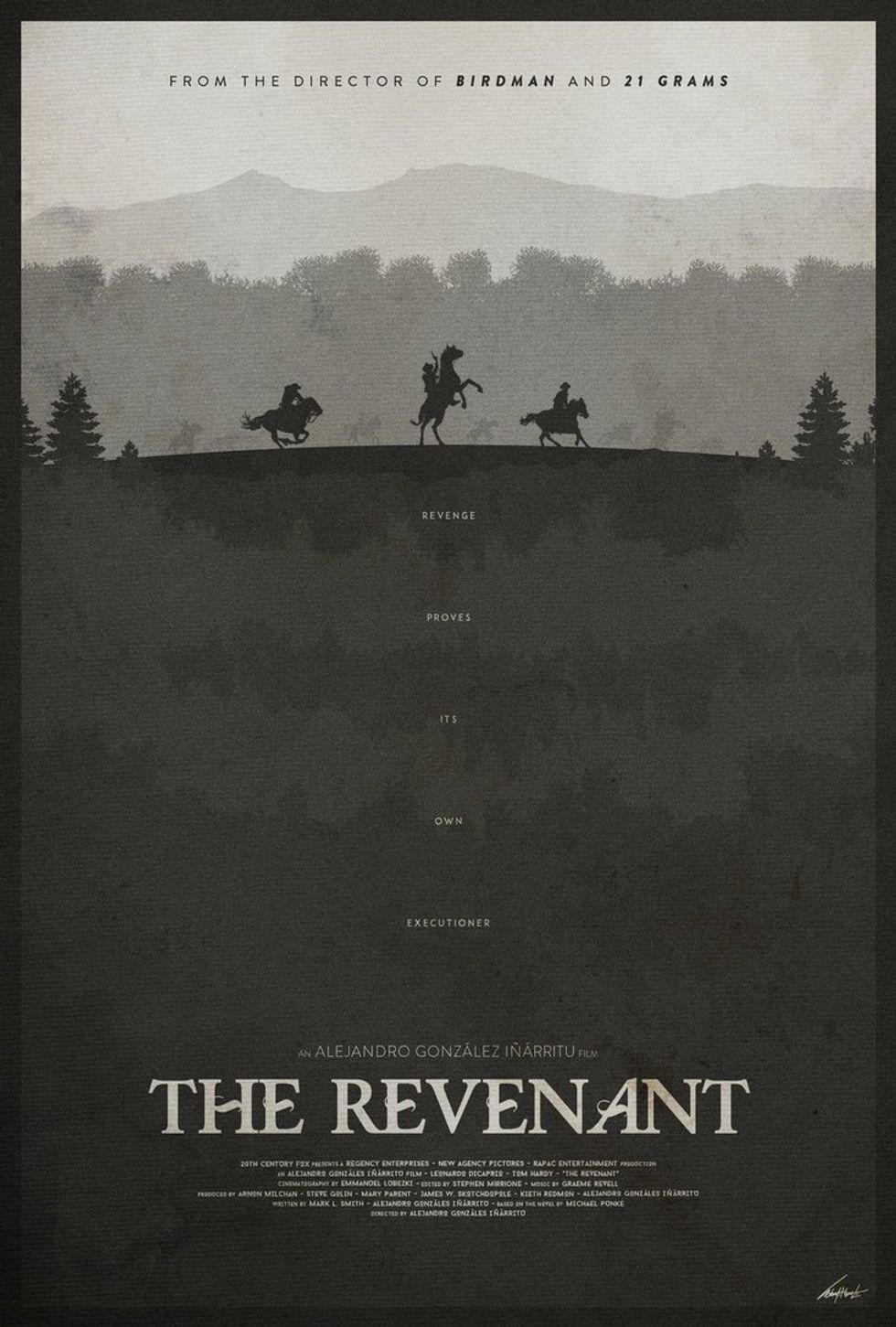
Imagine yourself in Frontier America. Nature does not respect your will to survive. In fact, it willingly and ferociously attempts to kill you. This is Hugh Glass's fate in Alejandro Gonzalez Inarritu's new, much lauded epic.
Leonardo DiCaprio, sinking to the absolute root of human exhaustion, makes a triumphant crusade towards Oscar gold as Glass, the titular man who is "reborn" after narrowly avoiding a gruesome death. His will to live is bolstered by a fiery desire for revenge on the man who killed his son and accented by a nuanced performance full of passion, genuine emotion, and heart.
Eating a real raw bison liver on set can't do any harm, either.
DiCaprio isn't the only one who went to extremes for this film. Cinematographer Emmanuel Lubezki, a back to back Oscar winner ("Gravity" and "Birdman,") used only what light the sun offered to give the film a more organic feel. This means that for the duration of the shoot, the production team had somewhere between five and six hours of usable sunlight a day, stretching principal photography from 80 days to nine months.
At one point the normally snowy plains of Canada became unusable due to impending summer and the entire team relocated to southern Argentina.
It's hard to really pin down what it is about "The Revenant" that affects an audience. The visuals certainly are gorgeous. DiCaprio and co-star Tom Hardy do not disappoint, and Inarritu's direction is a dream to observe.
His in-your-face camera angles give a sense of heightened realism, and maybe this is partially because of the slightly fisheye lens Lubezki uses. But then, through sporadic and often tantalizing dream sequences, you find yourself thinking, "This isn't a movie, it's more like a living, breathing mural."
Film is an experience, not passive or lazy but an active sensory smorgasbord to be absorbed, decoded, and discussed. While Inarritu accentuates what he can—the sound of rushing water, the grandeur a copse of birch trees exudes on a cold winter's night, the feeling of anxiety as life and death wrestle tirelessly—the ultimate power is in the hands and heads of the audience.
In the hushed pause as the credits begin to roll. In the amazement a viewer feels as they reenter the real world, aware that something unnameable has changed about them.
That's the real magic behind "The Revenant." You may leave feeling reborn, too.

















