If you could prevent a murder from occurring, you probably would. Wouldn’t you?
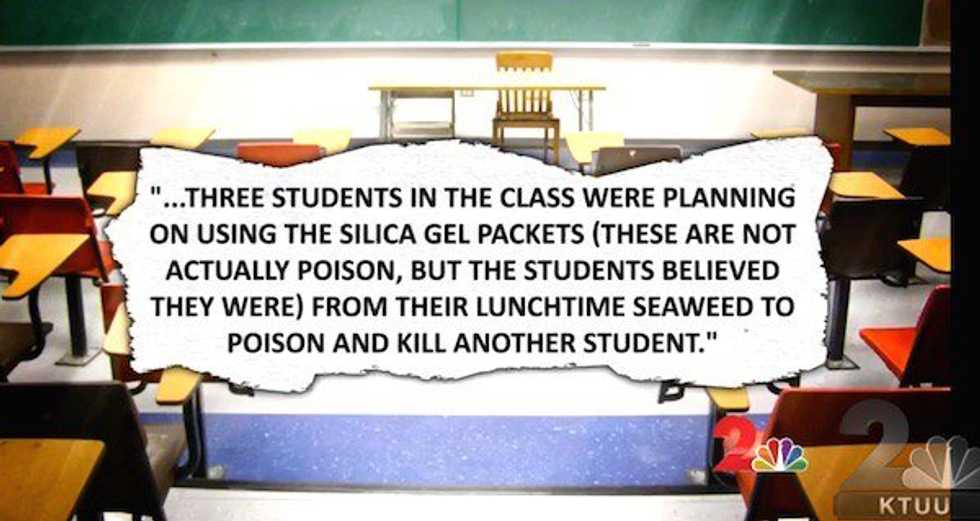
Recently, a trio of first graders at the Winterberry Charter School of Anchorage, Alaska hatched a plan to poison and kill a classmate. Students intended to lace this classmate’s lunch with packets of silica gel, which, though non-toxic, was thought to be poisonous by the three students.
After overhearing details of this plot, two brave first graders notified teachers, who prevented the plan from being carried out. Though the three students involved in the planning will not likely face criminal charges, this episode begs an important question:
When we observe others committing wrongful acts, or even planning to do so, do we display the same initiative and courage as these first graders and speak up immediately? Or do we turn our heads to the side to look away, suddenly take off walking in a different direction, or passively wait for someone else to say something?
I am afraid that, in the current day and age, we too frequently select the second option.
Pretending like we are unaware of the evils we notice in the world can feel so much safer, as knowing often obligates us to act. If we did not see that man’s abusive grasp around his wife’s wrist, if we didn’t hear that stranger’s racial slur, we feel we cannot be held accountable for doing anything to fix it. Are we lazy? Do we only feel motivated to speak up when the evil could impact us or someone we love? Maybe so. Perhaps it is a matter of fear. Confrontation can be uncomfortable. How are we to know that if we bravely step forward, others will also follow?
At less than seven years of age, two Alaskan students boldly did what so many of us are either unwilling or too afraid to do. These individuals anticipated the poisoning and potential murder of a classmate and decided to say something. They refused to be bystanders and decided that saving the life of a classmate would be worth any measure of discomfort that accompanies speaking up.
We must follow the example these two students set. We can no longer afford to be passive bystanders. By seeing, overhearing or even suspecting evils that could affect others, we assume some level of responsibility to act. By being aware and still doing nothing, we play a role in the resulting hurts, pains or losses that could occur. We must stop looking the other way and turn our blind eyes into mouths that speak and arms that embrace. We must not allow muzzles of fear and discomfort to keep our voices from ringing out loudly at the moments they matter most.