
It’s almost impossible to talk about the new Ghostbusters reboot without also mentioning the continuous backlash of toxic misogyny it’s received since its announcement. But exerting energy in refutation of that backlash and those responsible for it is not my goal. Meeting outrage with outrage only seems to breed more of the same, any salient points lost in the vitriolic cacophony, minds remaining unchanged. In much the same way, a meticulous, intellectual response to MRA talking points would fall on deaf ears, as a staunch opposition has already been set against both film and any rational discourse about it.
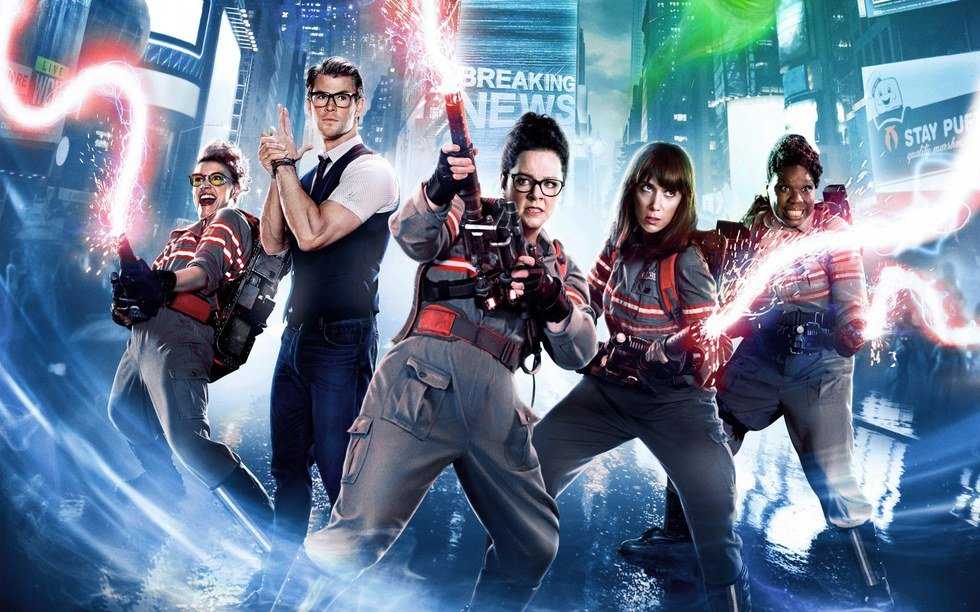
And while so many have derided the new Ghostbusters, lambasting its cast, its director, and its studio for having the temerity to remake/reboot/repurpose a cherished (and, apparently, hallowed) classic, so few voices have risen in celebration of what it’s accomplished in terms of both story and structure, gender representation and empowerment. Ghostbusters 2016, while not a perfect film, is certainly worthy of praise for these reasons, and is a more than deserving inheritor of the legacy left by Ghostbusters 1984.
I’m assuming you’ve seen both movies. Full spoilers follow.
Before discussing the new film, a look at the 1984 original is warranted (and unavoidable, really, so pronounced is its presence in the popular consciousness). Ghostbusters 1984 is very much a product of its time, or rather, it was a film whose time had come. In America, 1984 was a year steeped in mounting fear of the occult, of Satanism, and of most anything that felt antithetical to the views of the then ascendant moral majority. Two years prior to its release, the Tom Hanks TV movie Mazes and Monsters gave its viewers a cautionary and hyperbolic tale of the dangers of Dungeons & Dragons (at the time both object and propagator of fear), the central thesis of which was the inability of young minds to differentiate between their present realities and the fantasies of the game — to the point of psychotic break. In many ways that film functions as a vessel for the fears of the period: the danger is real, and it’s targeting our children.
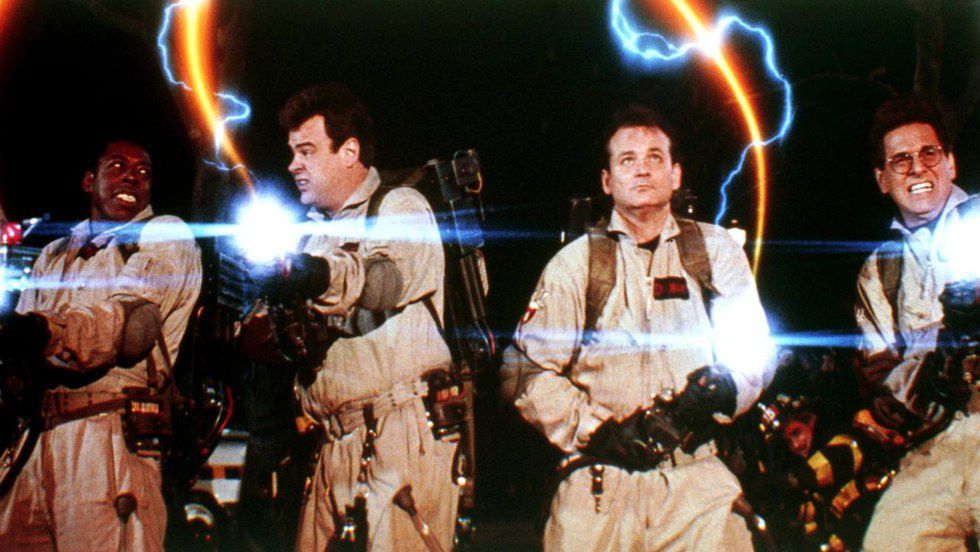
While not a direct response to "Mazes and Monsters," "Ghostbusters" 1984 did seek to address the institutions most likely to produce and support a narrative of authority and fear: mainstream American Protestantism (or organized religion more generally) and the Reagan administration. Religious groups were the most vocal opponents of pop-cultural appropriations of the occult, and more importantly, science that seemingly stood in defiance of scripture. And it was these same groups that helped sweep Ronald Reagan into office twice, on a wave of religious fervor and righteous indignation after decades of counter-cultural encroachment. "Ghostbusters" 1984 was released into this milieu, and its success definitely owes more to the palpable, anarchic glee exuded by its cast (the somewhat reprehensible antics of Murray’s slick conman and the demented enthusiasm of Akroyd’s guileless man-child certainly drew in crowds, SNL alumni status notwithstanding), than to the message at the core of its story.
"Ghostbusters," in all its various incarnations, has always had “the exorcist as exterminator” as its central conceit. And it’s a pretty good conceit, lending itself to wacky, high-concept shenanigans. But inherent to that conceit is that the everyman has supplanted the clergyman as humanity’s guardian against the supernatural forces of darkness. Where the exorcist uses the power of faith and scripture to perform his tasks, the exterminator uses science and technology to perform his (and hers!).
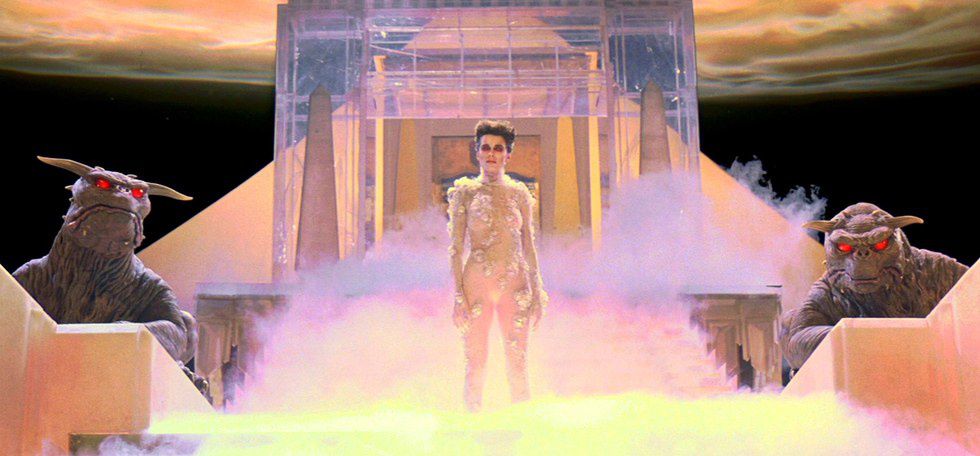
The central conflict of "Ghostbusters" 1984 revolves around this tension between science and mysticism or religion. The film makes some none-too-subtle references to Judeo-Christian depictions of God (along with a handful of visual cues taken straight out of Masonic Architecture 101). The impending invasion of Gozer is described by the ‘busters as “biblical” in proportion, “real Old Testament stuff,” and Gozer itself, while a god if not the God, is pretty fond of smiting people with lightning bolts and making portentous proclamations as a disembodied voice from the heavens (not strictly biblical, but certainly part of the popular understanding of God’s shtick). When the ‘busters ultimately defeat Gozer, it’s not as men of the cloth, but as scientists, utilizing a democratized and intuitive technology they developed themselves (though not a scientist, Winston uses his proton pack as expertly as his colleagues — exorcism is no longer limited to the exclusive authority of the church). This act serves as a metaphor for the triumph of modern science over the authority of musty old religion.
So that’s Ghostbusters 1984. Much like its predecessor, "Ghostbusters" 2016 is a film whose time has come. Its release in the wake of "The Force Awakens," "Mad Max: Fury Road," and "The Hunger Games" series is no coincidence, but part of a trend toward telling stories with strong female leads within a medium starving for them. Furiosa, Rey, and Katniss all possess agency and power, and use it to fight the people and circumstances that have denied them that same agency and any validity to its claim. These women exist in male-dominant worlds, and prior to their respective rebellions are objects of scorn, abuse, and manipulation. Their stories are mythic, feminist texts, necessary and good, especially given the current political climate. They humanize women in a medium that’s often content to depict the gender as objects of sexual desire, bereft of any identity beyond relationship to men. But popular media and gender politics have socialized most of us (men, I mean) to tacitly accept the sex-object depiction of women as truth, in part because the stories in which these depictions appear feature male protagonists, reflecting our (men) reality back to us, reinforcing our sense of primacy of perspective. In short, from the point of conception, "Ghostbusters" 2016 has had its work cut out for it.
Fortunately, writers Paul Feig and Katie Dippold have a pretty solid template for their project, and "Ghostbusters" 2016 riffs on and echoes its predecessor in some entertaining and subtle ways, paying homage by telling a familiar yet distinctly different story. This fact is apparent from the start of the film, in a scene that introduces us to the supernatural in fashion similar to the iconic NYC Public Library scene. The sprawling, gothic library is replaced by the more confined and limited space of the historic Aldridge Mansion, the location in which P.T. Barnum first conceived of elephant slavery, as Zach Woods’ tour guide informs his group of site-seers. Woods also gives name to the first ghost the ‘busters will encounter, one Gertrude Aldridge, daughter of the mansion’s former owner, who hacked her father’s guests to death in a murderous outrage. While both setting and ghost will hold the same beats within the story that the NYC Library and its nameless specter hold in "Ghostbusters" 1984, they differ in theme and context. In essence, we’re standing in the same place but we’re facing a different direction.
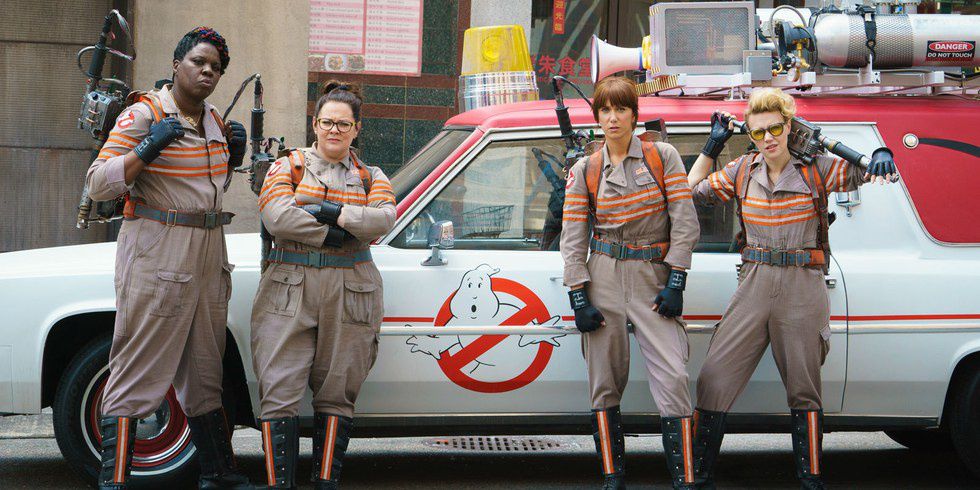
Gertrude’s captivity and the questionable story around its circumstance (Wood's character proves to be an unreliable narrator) articulate the films’ thematic truth: men desire dominion over women, they will deny women validity and agency, and they exercise their power with an almost buffoonish lack of self-awareness. This assertion, while not a particularly nuanced critique of the patriarchy, is made fresh when married to the conceit of the Ghostbusters franchise, supplanting wholesale the previous science versus religion conflict with women versus male-oriented society. But where Ghostbusters 1984 sought to bring the supernatural to heel under the authority of science, the women ‘busters pursue validation and acceptance in doing what they love, exorcising some of the worst elements of patriarchal society along the way. ("Ghostbusters"2016 seems entirely unconcerned with religion and mysticism in fact, lacking any reference to elder gods or Tobin’s Spirit Guide — the sole allusion to mysticism is found in a book on leylines that appears onscreen for a matter of seconds, and that’s a tenuous connection at best).
Ghostbusters 2016 leverages this theme throughout its runtime, matching much of its predecessor beat-for-beat in story while skewing most all of the latters’ plot details with a cock-eyed glee. Where Peter, Egon, and Ray researched and taught (we assume) at Colombia University before being fired, Abby and Holztmann, and by association Erin, are run out of a much less reputable school (in what looks like Queens) — the Kenneth P. Higgins Institute of Science — by a dean of students who only holds his current position because the previous dean was sent to prison. Where Venkman and co. were let go by an administrator all too ready to be rid of their years of nonsense and resource drainage, the female ‘busters are told to leave by a man who didn’t even register their existence. The beat from the original has been flipped in order to highlight in how little regard the men of Ghostbusters 2016 hold Erin, Abby, Patty, and Holtzmann. Erin’s sacking from Colombia in the scene prior gives us the other side of this coin; she’s let go because of her perceived non-conformity to the patriarchal institution of the academy (she’s also chided for wearing some of the most staid “provocative clothing” in cinematic history, lest we not realize just how patriarchal higher education really is).
As the story moves along and our heroes succeed in busting a number of ghosts, the validity of their accomplishments is called into question by Youtube commenters, newscasters, and Bill Murray himself in a cameo informed as much by Colonel Sanders as by Christopher Hitchens. These kinds of roadblocks to agency and empowerment fill the second act of the film in a thematic inversion of the “rise to notoriety” montage found in the 1984 original (that these men are rewarded by a patriarchal social structure is never addressed, it’s just a given, despite how ridiculous the idea of ghostbusting seemed to that angry Colombia University admin who fired Venkman and co.) But everyone who denies the ‘busters of their deserved recognition, it should be said, are men, including the Youtube commenters — even though we can’t see the writer, the comment “ain’t no bitches gonna bust no ghosts” could only have been written by a male, as the film’s text doesn’t support that sort of female-on-female invalidation.
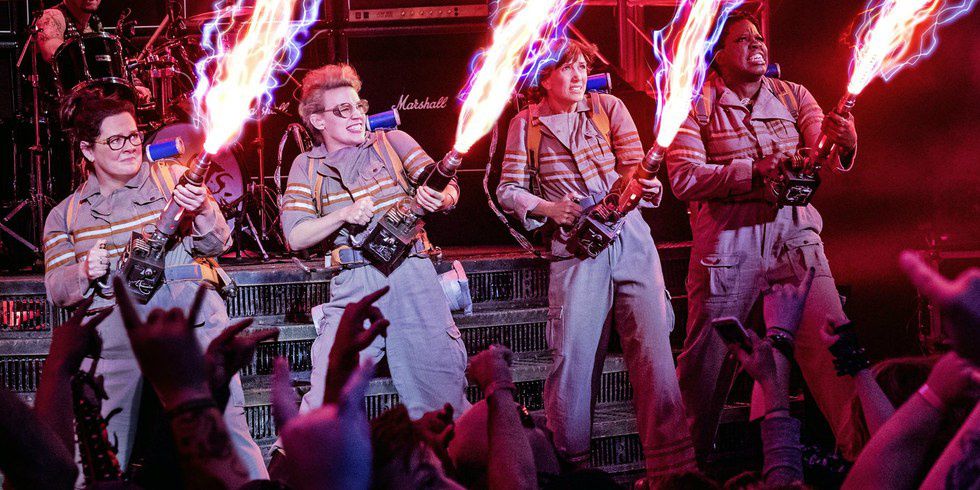
In fact, the ‘busters do nothing but support one another throughout the course of the film. While much of Erin and Abby’s friendship is informed, preventing its arc from really sticking the third-act landing, most of the moment-to-moment interactions between the ‘busters hold a sort of charming sincerity that "Ghostbusters" 1984 lacked between its cast members — Venkman was busy tomcatting after Dana, Egon was engrossed in developmental engineering, Ray was preoccupied with research, and Winston was just trying to deal with crazy white people. The female ‘busters support and validate each other when no one else does, laugh at each other’s jokes, and even commune with one another over pizza and sandwiches (with nary a fat joke in sight). They believe in each other and are passionate about their fledgling business, and even arc, in another stark contrast to "Ghostbusters" 1984. Through their camaraderie, the female ‘busters accomplish something their predecessors couldn’t — family and community, a fact underscored by Holtzmann’s sole moment of vulnerability at the end of the film. They love and respect each other and are brought closer together through their triumph in a way that seems alien when applied to our understanding of Venkman and co.
That emotional and experiential triumph doesn’t come over Rowan, but rather the patriarchy itself, of which Rowan is only the vessel. The showdown with Rowan during the third act serves as the film’s major action set piece and gives the women a chance to prove both textually and meta-textually their worth as ghostbusters, while exorcising the specters of patriarchy past. When the ‘busters arrive at the (don’t call it a mystical) convergence, Rowan dispatches a group of ghosts against them with the words “relive the glory days of New York City!” This call echoes the dog whistle of white identity politics — “make American great again.” Both imply that glory or greatness existed at one point in America’s past but has since been lost and must be regained in order to experience the “true” America or NYC, as the present reality no longer reflects that truth. The ghosts who heed Rowan’s call to arms hail from multiple periods of NYC's past — the ‘busters fend off pilgrims, gangsters, and doughboys, all of whom are commanded by a towering, stilted Uncle Sam. Each of these types represent problematic periods, movements, and institutions within American history — the pilgrims were forerunners of a colonial project resulting in the marginalization and genocide of millions of people; the gangsters depicted seem to come from the prohibition era, embodying the vice and misogyny expressed in reaction to legislation resulting from the agendas of women’s groups; the doughboys are representative of not only the war in which they fought (the modern incarnation being an invention of the patriarchy), but also a period of time in which women were denied the vote. The ghostly Uncle Sam commanding these troops of course represents the American patriarchy itself, an ideal both informing and reinforced by the periods here represented, and the last of the ghosts to fall in this battle — the ‘busters deny the validity of this patriarchal and historical narrative, and thus the power of the ideal behind it.
The final and most pronounced story beat to echo the original Ghostbusters movie comes when Rowan asks the ‘busters what form he should take, a request mirroring the one made by Gozer. In the original, Ray’s inadvertent choice of the Stay-Puft Marshmallow Man is played for laughs, its thematic relevance almost shoe-horned in (nostalgia’s gonna kill ya — where did this come from after 104 minutes of science v. religion?). Rowan’s transformation into a towering perversion of the Ghostbuster’s logo holds far more thematic resonance; it stands as the final denial of validity and agency in a long list of such denials. From academia, to media, to government (though Andy Garcia’s clueless mayor is an unexpected delight, as is Cecily Strong’s power-behind-the-throne archetype), the ‘busters have suffered indignity and scorn from the institutions of patriarchal power, and when they’re finally on the cusp of realizing that validity, it’s denied one final time by Rowan’s appropriation of their group identity. It also functions as a meta-textual commentary on the vileness of the ghostbro movement, those individuals who thought they knew what was ultimately best for the Ghostbusters — a future lacking the feminist bent of this film (it’s always the sad pale ones, laments Abby, recognizing that anger is a secondary emotion). This final confrontation then is not really between the ‘busters and Rowan, but the ‘busters and the worst expressions and excesses of the patriarchy, those which not only deny agency but steal and twist and repurpose it for the perpetuation of an institutionalized violence. This triumph, far more so than the triumph over Gozer, is earned, in terms of both story and ideology, thus accomplishing something the original Ghostbusters did not: complete thematic resolution.
Also gender representation.
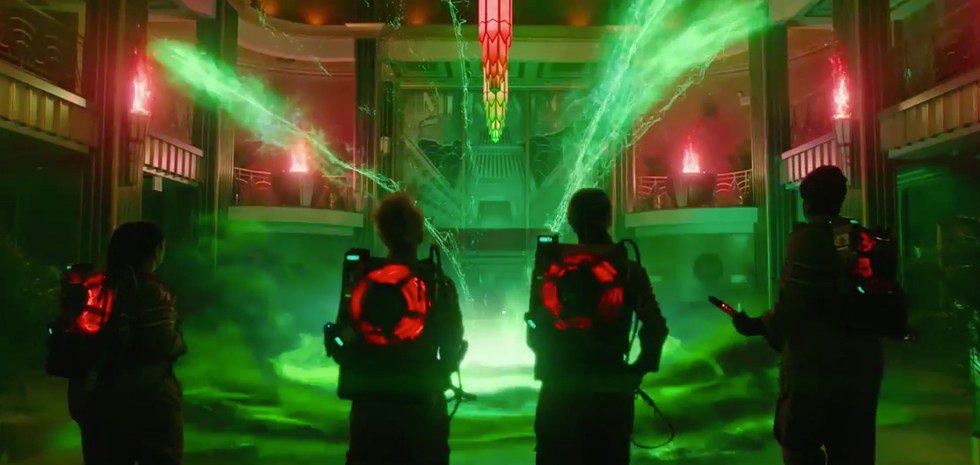
So that’s "Ghostbusters" 2016. It’s an imperfect film. Some of its parts don’t hang together too well, especially during the transition from second to third act, and a few of its jokes land a little flat. But these minor complaints are overshadowed by its success in riffing on the structure of the original, its uncommon level of meta-textual and self-awareness, an incredibly strong thematic through-line, and the most kick-ass cast of ghostbusting women you’ll ever see on screen. No, it’s not the original, and it doesn’t need to be. It’s a film whose time has come, whether or not certain factions of people were ready for it, and for that reason and within our present context, it’s better.