
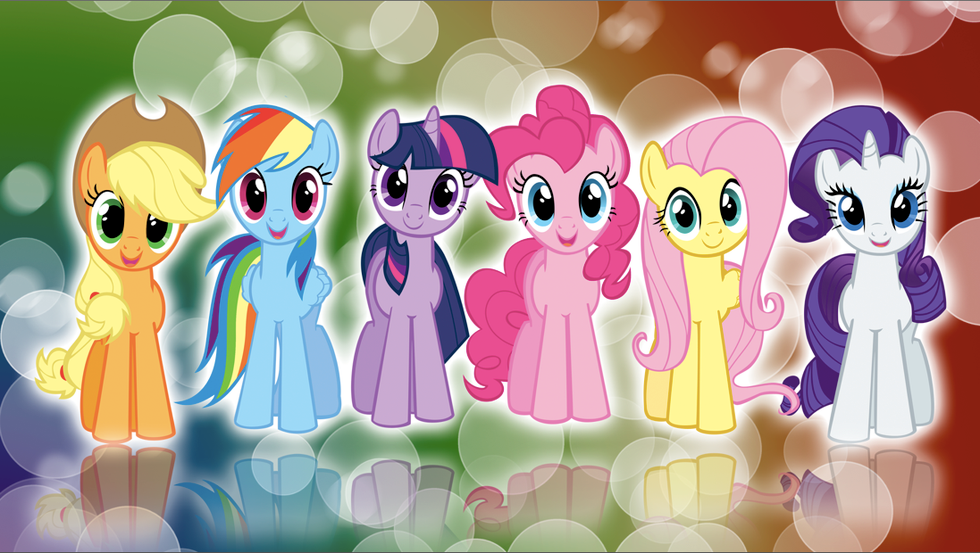
Many of us are aware of the fascination and mystery that is the "My Little Pony: Friendship is Magic" fanbase, otherwise known as "Bronies." If you weren’t, then why would you be clicking this article? To save my space and your time, I’m going to skip over a beefy overall defense of Bronies and get to the meat of what I’d like to say. Here's the summary of my defense. One, don’t judge people and their interests based on social standards of age and gender role. Two, don’t let the bad Bronies overshadow your understanding and opinion of the fandom overall.

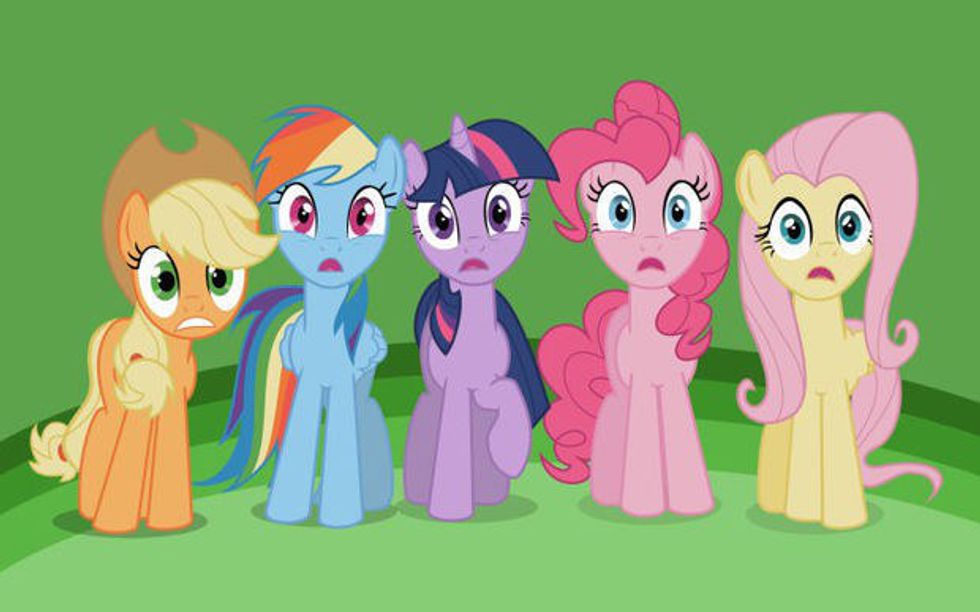
Okay, so as you know, "My Little Pony: Friendship is Magic" is part of a franchise aimed towards audiences of young girls, a series with easy-on-the-eyes pastel colors and heartwarming tails of friendship (ha, see what I did there?). It’s cute, innocent, and all-around rather charming. So why, one might ask, does it have a fan base built of young adult and adult men? It’s creepy. But why exactly is it so wrong or off-putting? Is it because people assume that men liking the same things as young girls means that they’re pedophiles? You may be here with strong, pre-established opinions for or against this fandom, but please hear me out--or read me out.

Is our negative stance on Bronies a product of Western media culture? I know that that’s an extremely general statement and, honestly, the answer has many facets which, of course, include the previously mentioned gender roles and whatnot (this is simply an article, not a thesis). My approach to this comes from personal experience. I have had a strong interest and love for Japanese media and culture since I was a little kid. I’ve watched more anime than I probably should and something that I’ve unconsciously known is that there are a lot of cute, girly shows. And those cute, girly shows are watched by young adult males.
I didn’t come to full awareness until my college debut but, by then, it wasn’t anything jarring or unexpected. I’ve written a previous article on Hatsune Miku, who is a 16-year-old female hologram from the future where music decayed. There are many young men in their high school, college, and even post grad years that absolutely adore this pop star. Putting aside the mystery of attraction to drawn, fictional characters, why do they like girls who look like they’re 10 years old (but with breasts)?
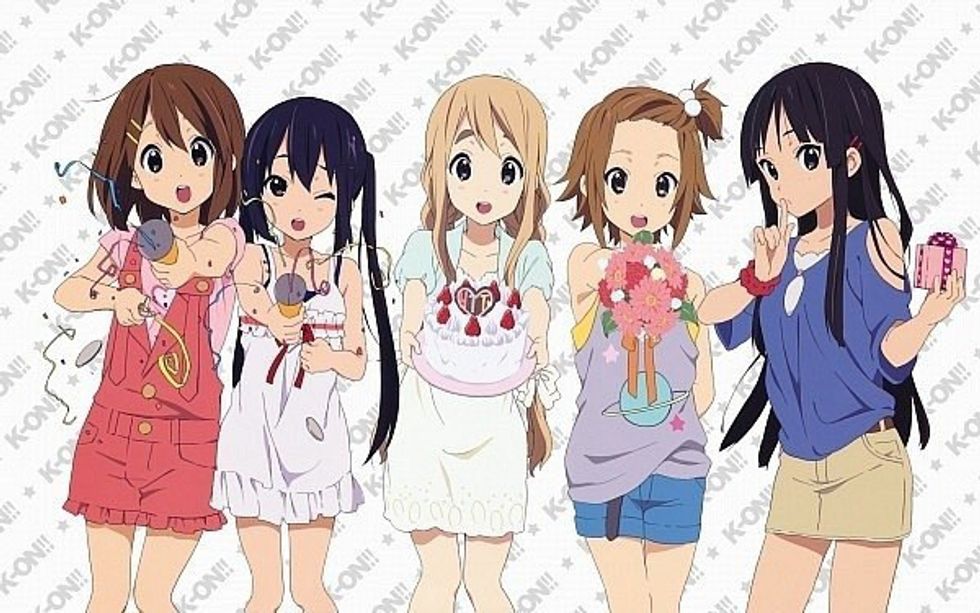
There’re other anime like "Lucky Star," "Love Live!," "Idol Master," "Hibike! Sound Euphonium," and "K-On!" (just a few from the top of my head), which all have very cutesy, doe-eyed, largely female casts. They aren’t doing anything overtly sexy, nor are they pining after a male protagonist (did somebody say harem?). They’re just living their day-to-day lives being friends and are sometimes thrown into the episodic struggles of animated life. This is very similar to "MLP:FiM." The important difference is that these anime were initially targeted for young adult males. So the Japanese are all pedophiles, right? No.

Western media isn’t accustomed to having men with explicitly feminine-like interests. Men are supposed to like action and horror and easy romance, right? Of course, Japanese men like these too, but kawaii culture and Japanese anime help make those cute interests more prominent in society, if not accepted. So, because I’ve often been surrounded by anime, it’s wasn’t very hard to understand why men would like "MLP:FiM." I was used to shows with innocent, young females being tailored for high school and college-aged boys.

Alright, so at the end of this, maybe Bronies and some otaku (Japanese anime/manga fanatics) still seem very "pedophilic," but I must remind you that you’re looking at it from a Western standpoint. Or maybe there is something substantially wrong with men liking shows that are suspiciously adorable and Japan has been desensitized over the years of anime industry. As I wrote before, there are many pieces to this puzzle that can’t be broken apart and organized in one article alone. The general acceptance (or apathy) within the anime community, at least, for men liking "feminine" things (and therein, appearing feminine themselves), is probably the biggest sign that our nonacceptance for Bronies could be partially due to Western media culture.

















