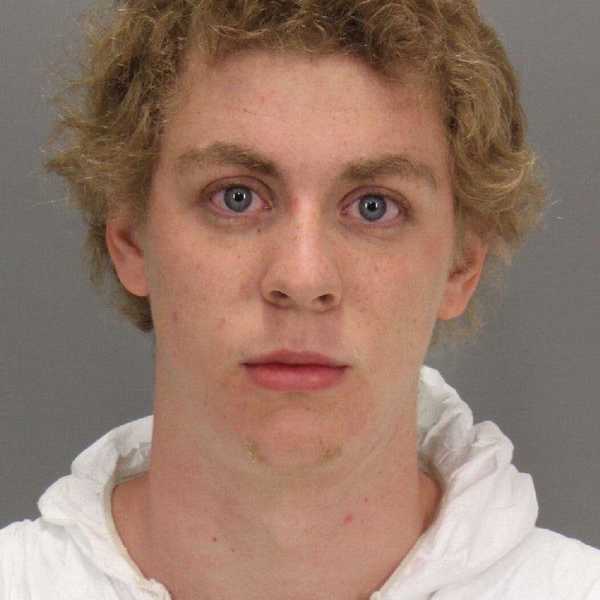
Many of us have heard and read about the rape case about Stanford student Brock Turner. I'm sure in the media coverage of this case you have read the letter from the victim to her attacker, and read various opinion articles about the entire case. I'm not here to talk about the specific case. Because this case is just one of thousands that will happen this year. But the rest will not get the same media coverage that this case has gotten.
This case became so publicized so quickly for a few reasons. One, because the rapist's sentence was so short. Two, because of the comments from the rapist's father. And lastly, because of the fact that the judge chose a far more lenient sentence because he feared a longer sentence would be "too severe" on the rapist.
With all of this knowledge, it should be noted that this outcome is far more than the majority of rapists get. Many instances of rape and sexual assault never gets reported. Even when reported, the judicial process is so brutal on the victims and often assumes that the victim is lying. This is where our underlying problem begins. We send the message that if you do choose to report your sexual assault, your life will be destroyed. People will say that you are lying, even claim that you "liked it" because for some reason, in this specific crime, we cannot believe the victim.
The gender of the victim does not matter. Amongst both men and women, reporting rape is one of the most difficult things they can choose to do. Not to mention that it is more difficult for transgender people as well to report rape because, in many cases, their gender is used against them. The problem continues with invasive rape kits, lack of police follow through with reported sexual assaults, and the public backlash that follows.
The public backlash can cause victims of sexual assault to commit suicide. That is why they are called survivors. Not everybody can survive the psychological effects of the assault itself, and the public comments calling the victim a liar, a slut, and otherwise blaming them for the crime, can lead victims to suicide. It is no wonder a victim would not want to live in a world where everybody around them told them it was somehow their fault for being sexually assaulted.
Not only does our society place blame on the victim for sexual assault, but this is one of the only crimes where the victim is blamed. If a victim of a robbery says that they were robbed, we believe them. We don't blame them, because someone knowingly broke the law to enter someone's house. Why don't we treat the perpetrators of sexual assault the same? Why don't we believe the victims?
Victims of sexual assault almost never lie. In fact, studies show that only eight percent of reported sexual assaults are false. It should be noted that even within those false cases, there is often an underlying problem of domestic abuse. But for many readers, statistics do not matter. You could repeat statistics all day long and to some, it would not change their opinion.
Our society allows sexual assault to happen. We do not believe our victims, and when we do, we put them through a questioning process that is the equivalent of reliving their assault. Then, if the rapist actually gets convicted, which doesn't happen most of the time, their sentences are ridiculously short. Specifically with the Brock Turner case, the judge only sentenced him to six months. Which, given that he gets off for good behavior, (and many white men will) means he will only serve about three months. He will still be on parole for three years and have to register as a sex offender, but it is not enough. He could, and should, have faced fourteen years in prison, but he did not.
This sentencing is also common. For example, with the case of Beau Donaldson and Allison Huguet, Donaldson was sentenced to ten years with many of those years suspended. Suspended basically means that it is not given that the criminal will serve the full sentence, because this part of the sentence is not set in stone. Donaldson, as of today, is out on parole and registered as a sex offender. This case occurred in 2010, over a year after the sexual assault occurred.
In both the Donaldson and Turner cases, there was proof that the assaults occurred. Donaldson confessed to the assault, and two Swedish students at Stanford stopped the assault when they saw it occurring. Both boys were athletes, one a football player, and one a swimmer. Both were bred in a culture of entitlement and achievement. The difference is that Turner's sentence was so short. He will be back on the streets again in mere months. Even though neither boys will serve the time they should in prison, the fact that they were even convicted and sentenced is a miracle.
In our judicial system, it is no wonder victims of sexual assault fear coming forward. We live in a society where the victim is blamed. We assume the victim is lying. Even if there is an admission of guilt, the sentencing lasts, at most, a few years. Still, judges will be lenient on sentencing because they fear not only public backlash, but the "effect" it has on the future of the rapist.
To which I, and many others have pointed out, is the future of the victim not taken into account? Is the mental, physical, and emotional wellness of the victim not considered in these sentences? Having their rapist convicted and serve time in prison is one of the things that can help a victim recover psychologically. Having the attacker serve time for their crime is what needs to be done to make reparations for the damage they caused.
But with all of this information, some will still ask about responsibility, about the influence of alcohol in these cases, and the damage caused in the communities. Some will still say that it is the responsibility of both parties. Which, in some cases, it is, but when one person is blackout drunk and cannot possibly consent, they should not be blamed for being that drunk. Instead, the attacker should be blamed for deciding to take advantage of someone while they were so drunk they couldn't even stand.
As long as we still allow rapists to serve short sentences, and as long as we place the blame on the victim, this problem will not go away. It simply won't.