
This past weekend, I ventured to the movies to see a film I've been wanting to watch since the day it hit theaters: "Bridge of Spies." Knowing that it was a Steven Spielberg-directed film starring Tom Hanks, I had high expectations from the start; these expectations were more than exceeded.
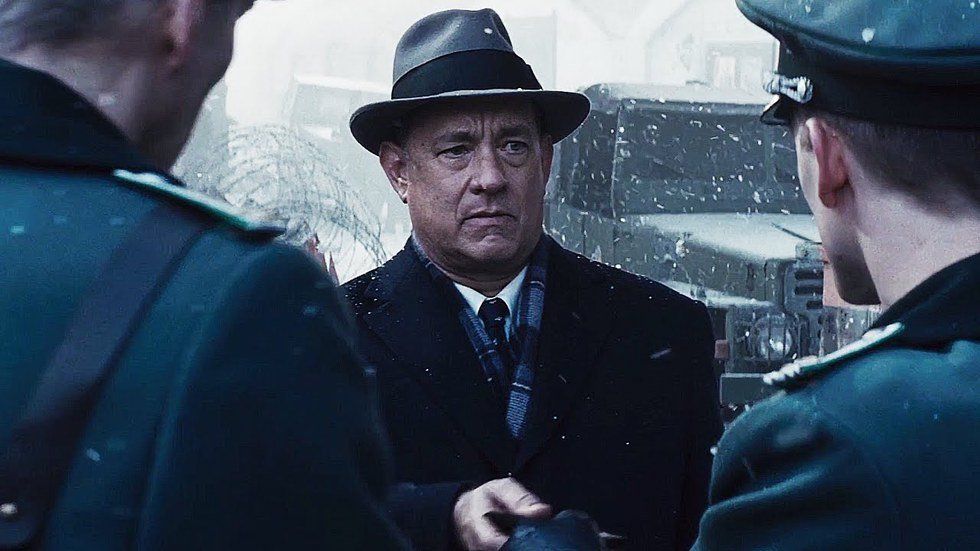
"Bridge of Spies" is based on a true story, set during the Cold War in the year 1957. A Soviet spy named Rudolph Abel (played by Mark Rylance) is captured in New York City and charged for the crime of espionage. An insurance lawyer, Jim Donovan (Tom Hanks), is tasked by his boss with serving as Abel's defense attorney so that the government can claim Abel was provided appropriate due process.
Yet this was the height of the Cold War, at a time when the U.S. and the USSR were in the middle of an intense nuclear arms race. As a result of his decision to defend the traitor, Donovan receives extreme criticism and even threats to his family. Ultimately, he loses the case and Abel is convicted.
Before Abel's sentencing date, Donovan approaches the judge requesting for a life imprisonment sentence as opposed to the death penalty. He argues that Abel could serve as a valuable tool of exchange in U.S.-Soviet negotiations. Not long after, an American pilot named Gary Powers is shot down while spying over Russia; he is captured as a prisoner.
CIA officials immediately ask Donovan to travel to East Berlin to conduct exchange negotiations as a representative of the U.S. government, due to their reluctance to acknowledge the USSR as a power. The rest of the film revolves around these high-profile negotiations, as Donovan risks his own life and his family's security to attempt to bring Powers home.
The film is brilliantly directed. From the acting to the cinematography, it does not take a movie critic to recognize that this film deserves Academy Award nominations. It pushes you to appreciate the American judicial system and the sacrifices of U.S. military personnel. Applaudably, it takes a period in history and brings it to life through fantastic sets, costumes, and talented actors.
One of my favorite actors in the film was Mark Rylance. The screenplay portrays the Soviet spy, Abel, as a frail painter who longs to return to his Russian homeland. He left at a young age, and his only fear throughout the entire process of his capture, conviction, and exchange is that nobody from home will be able to identify him decades later. The Donovan-Abel, defender-defendant relationship is perfectly executed by Hanks and Rylance, serving as arguably the best part of the entire movie.
I thoroughly enjoyed the film's cinematography as well. It manages to take you back in time to the feelings of insecurity and anxiousness that enveloped American families daily. It certainly took an ample amount of filming -- it is a two-and-a-half-hour-long film, although not once did it drag on. I was invested the entire time by the gripping plot.
If you live for historical dramas or war-inspired films like "The Imitation Game," "Pearl Harbor," or "Saving Private Ryan," this is the movie for you. Spielberg did it again, and he did it flawlessly.