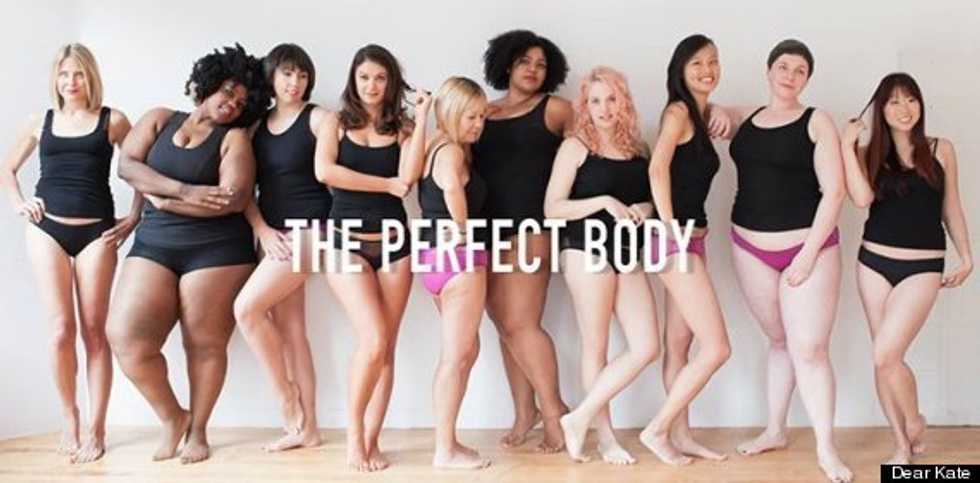
Did you know that 80 percent of women say that the images of other women featured on television, in magazines, and on advertisements make them feel insecure about their own bodies? Advertisements are now mainstream, and we must remember that no one is able to completely escape these ads in today’s society.
Jay Walker-Smith, who is the president of a prestigious marketing firm, explains: “Everywhere we turn we're saturated with advertising messages trying to get our attention, we've gone from being exposed to about 500 ads a day back in the 1970s to as many as 5,000 a day today” (Johnson). Eating disorders are on the rise and young girls especially struggle to fit in with today’s society. “Several research studies have found that higher exposure to beauty and fashion magazines increase the likelihood that young girls will develop negative body image and eating disorders (Rhodan).
It is no secret that the vast majority of advertisements we see daily are majorly enhanced using programs such a Photoshop. In addition to the many individuals who wish that advertisements were just a bit more realistic, “members of the eating disorder coalition met with over 50 lawmakers about the Truth in Advertising Act of 2014, introduced on March 27, which they say could prompt the Federal Trade Commission to investigate the impact digitally retouched images have on society” (Rhodan). With the help of this bill, we could monitor the amount of Photoshop that is used to enhance photos used for mainstream advertisements. Would banning Photoshop for advertisements all together be going to far? Yes it would. However, with the creation of a new agency, we could limit the amount of Photoshop used. The creation of a new agency under the Federal Trade Commission who “already has more than enough power to protect vulnerable communities from false ads” would be able to monitor companies and their ads before they are released for the general public (Rhodan). This new agency would act like a quality checker, responsible for evaluating if the photo follows the standards and is acceptable for all viewers. New advertisements would only be allotted 40 percent Photoshop enhancement. In addition to the regulations, all advertisements would be required to have a warning statement in the corner explaining to consumers that the photo is digitally altered.
Forty-two percent of girls first through third grade wish that they were skinnier. This is a shocking statistic due to the fact that it is addressing females that are between 6 and 8 years of age. Eighty-one percent of 10-year-olds think they’re fat. The current school system in the United States has a curriculum that requires health class to begin in elementary school and continue on through high school. In high school, there is usually health class focusing on drugs, alcohol, and sex education. Why not integrate a curriculum that focuses on positive body image and eating disorders? Kathy Kater is an author of a textbook that focuses on positive body image and directs it towards students in grades 4-6. “Kathy helps erase the fear and confusion around eating. At the same time, she promotes a positive body image and high self-esteem for all kids. She has seen the results of stigmatizing bodies that are too fat, too short, too skinny, too tall...and she celebrates the fact that human beings come in a wide variety of sizes and shapes,” according to Joanne Ikeda, MA, RD, Nutritionist Emeritus, University of California, Berkeley. By implementing a new curriculum in schools, certified instructors can detect early warning signs with students and attempt to solve the problem before it progresses.
Just as cigarettes and alcohol have a minimum-age requirement to purchase and use the product, magazines should be withheld from minors until they reach an age of 18. This would prevent females from seeing these advertisements at an age where they are vulnerable and impressionable. By placing restrictions on the age of purchase for a magazine, you could limit the amount of ads reaching young women. This isn’t to say that parents won’t purchase magazines for their children, but there is someone who is monitoring their child and can notice the warning signs before it progresses. Parents who wish to purchase this product need to understand the implications that come along with advertisements. Magazine companies who feel like they will be losing money are given an opportunity to create an age-appropriate magazine addressing things like positive body image and eating disorders. They are still able to use celebrities, but create a more personal and relatable vibe.
I will leave you with this statement by Troian Bellisario: "So by now you have seen many a shot from #GQ [photo-shoot] and many people have said that we were Photoshopped ... OF COURSE WE WERE!" That's a very specific type of photo shoot. And looking very blown out and perfected was obviously what they were looking for. Great. Cool. As long as we acknowledge how it was achieved so we know it's not real."