
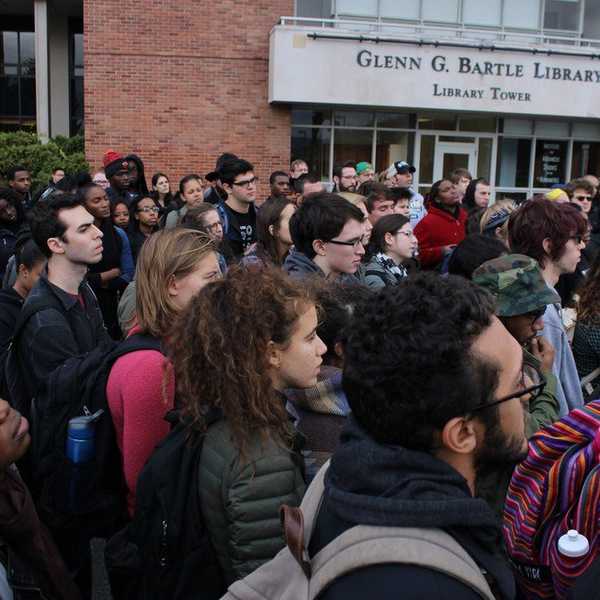
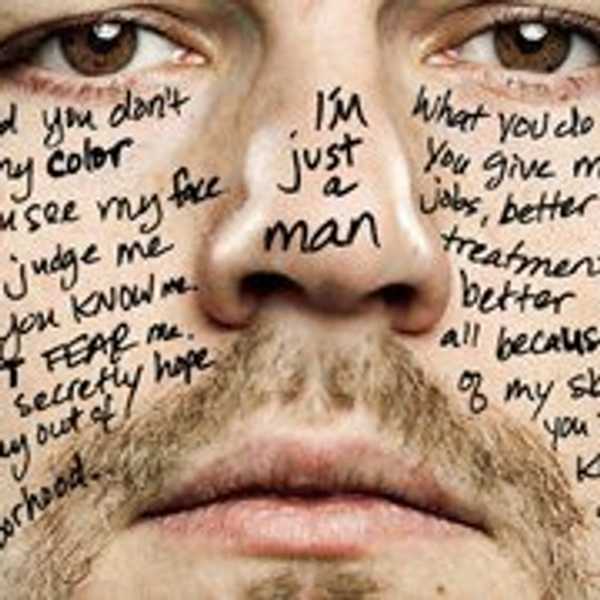
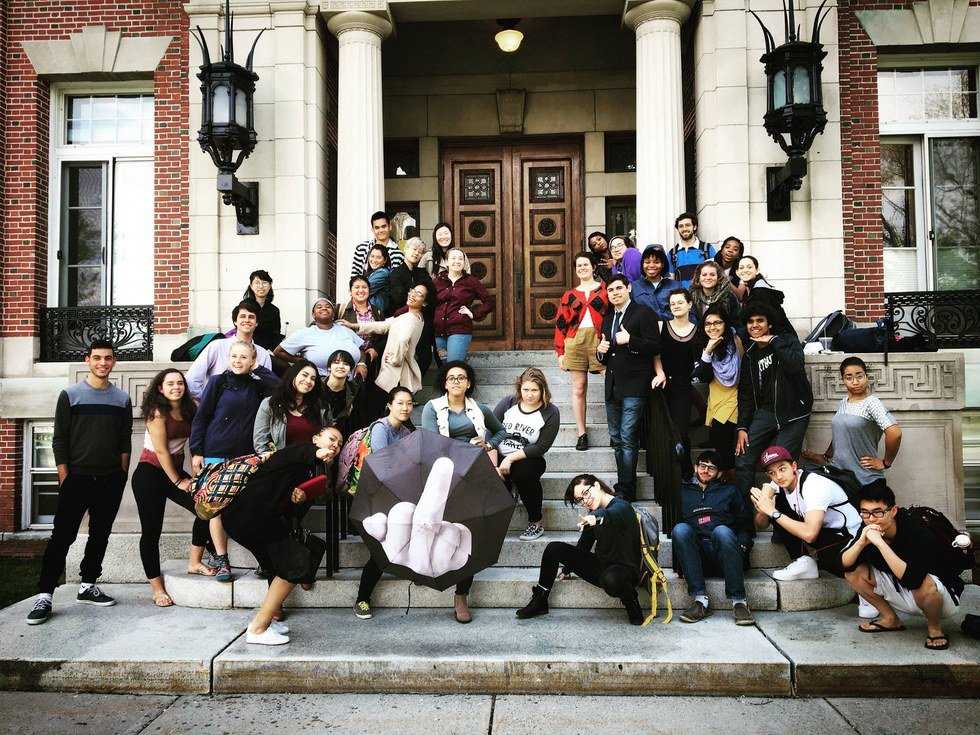
Dartmouth College, a colonial, elite institution embodies the white, libertarian politics reflected in the “Live Free or Die” motto of larger, overwhelming white state of New Hampshire. As Mel Tapley suggests in her 1979 article “Dartmouth: Poison Ivy League?”, these libertarian sentiments combine with hegemonic white supremacy and socioeconomic elitism to create a toxic environment for Black students. While the dominant narrative on anti-Black racism of the United States claims that 1964 Civil Rights Act ended segregation, racism, and inequality in the United States, the lived experiences of Black Dartmouth students in the “Post”-Civil Rights Era” – from 1964 to now – suggests something much different. The lack of adequate resources and minority mentors in the face the college’s racist, heterosexist, elitist climate have caused the feelings of social alienation amongst Blacks students. There is a trend in the presence of Black social justice activism against white supremacy in the college, as suggested in a 2016 interview for the college’s newspaper by Alphonso Seville that – one of the few Black faculty members and mentors for Black students –: “…[reflects] part of their experience here at Dartmouth…that justifies the need for its existence.”
Historical Experiences of Black Students of Dartmouth College
Stephan M. Bradley, a Black History professor at the Saint Louis University, provides a history of the experiences of Blacks students in his 2015 work “Black Power and the Big Green: Dartmouth College and the Black Freedom Movement, 1945 – 75.” Bradley affirms the presence of a “decades-long struggle by nonwhite students, particularly African Americans…against the school’s predilection toward being exclusively white and rich” (2015: 26). He posits that the experiences of Black Dartmouth student is distinct from Black students at other PWIs because “there is no Black community in the Upper Valley of New Hampshire” and because the few Black students that Dartmouth admitted were from affluent socioeconomic backgrounds and also attended elite private preparatory secondary schools (2015: 27).
Even these relatively privileged Black students were effected by the racist climate of the school as shown is Bradley’s case study of Black student with the most privileged, normative identity possible: a Black male sponsored by an incredibly affluent white family in New Jersey. This student, Julian Robinson, whose experiences Bradley claims “[provide] some representations of what life was like for a Black student at Dartmouth in the postwar era”, initially flunked out of Dartmouth and joined the United States army (2010: 30). One significant structural change in the institutions long history of anti-Blackness was former college president Sloan Dickey’s high profile recruitment of poor, Black students from urban areas, most notably, “self-identified members of a notorious youth gang” from South Side in the late 1960s Chicago (2015: 27). The coercive targeting of poor Black students to come to this elitist white institution subjected them to even stronger discrimination and isolation than the middle-class Black students that the school traditionally admitted.
Black students also experienced rejection in their social lives, as shown by the reaction of many of Dartmouth’s fraternities – one of the only social spaces for Dartmouth students – who barred them from rush stating that they “did not meet the standards” of their organizations (Bradley 2015: 31). The 1968 McClane Report, commissioned by the Trustees’ Committee on Equal Opportunity, “described the unpleasant experience of Black students”, revealing that they “[struggled] because of their isolation and the shock of such a new experience” (Bradley 2015: 40). This hostile climate of Dartmouth was exacerbated by the school’s hosting of “notorious and divisive figures” (i.e. violently racist) including militant segregationist Governor of Alabama, George Wallace in 1963. Black students held peaceful “prointegration” marches, which elicited racist, libertarian cries from white students that the protesters were “immature” and “encouraging students to close their minds to new ideas” (Bradley 2015: 32). White Alabamans praised Wallace and questioned the extension of suffrage to Blacks, stating that Blacks are “’easily corruptible…and prone to not use their votes wisely’” (Bradley 2015: 32).
As if these messages were not a clear enough message to Black students, Wallace was invited back to the college four year later by the college’s newspaper, The Dartmouth. This ignited proliferation of the Black Power movement to Hanover. Black students appropriated the militant tactics of Black Power organizations by “[jeering]” during the speech, staging a walk-out, and “[attempting] to turn over the former governor’s car and [banging] on the top of the vehicle as he left campus” (Bradley 2010: 39). Dartmouth’s administration confirmed its white supremacist commitment to elitist libertarianism by sending an apology letter to Wallace and issuing sanctions against the Black protestors that advocated for their suspension after which they would have to apply for readmission (Bradley 2010: 39).
Two years later the school invited white physicist and eugenicist William Shockey to the National Academy of the Sciences where he made claims that “the less intelligent Black race was breeding quickly and weakening American civilization” (Bradley 2010: 44). Non-violent protests ensued in which Black students “clapped loudly, interrupting him and drowning out his voice”, which resulting in 17 Black students being put on probation and the dissolution of the Black Judiciary Committee recognized only a year before (Bradley 2010: 45). The racist climate outlined above clearly supports the statement made by James DeFrantz in 1979, the president of the college’s student initiated African American Association, that “It is living hell for Black students” (Tapley 1979: 47).
















