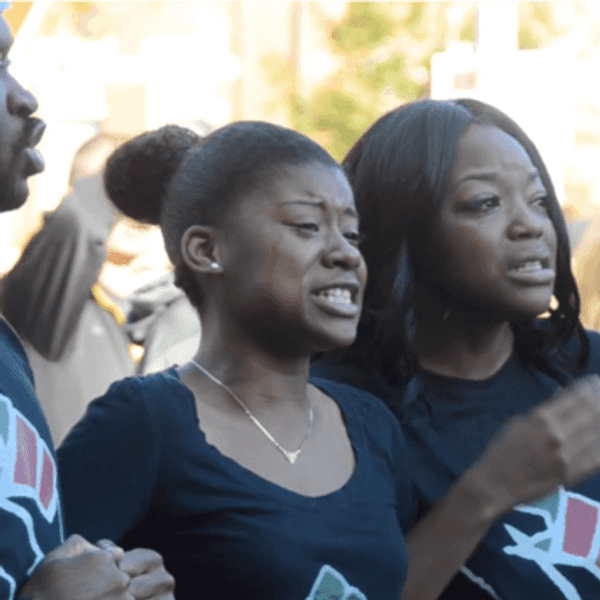

On Thursday, November 12, 2015 students at Binghamton held both a demonstration and a discussion to express their solidarity with the black students at the University of Missouri. The walkout manifested when a Facebook event was distributed urging students to walk out of their classrooms at 1:15 and then meet in front of the Pegasus Statue near Glenn G. Bartle Library.
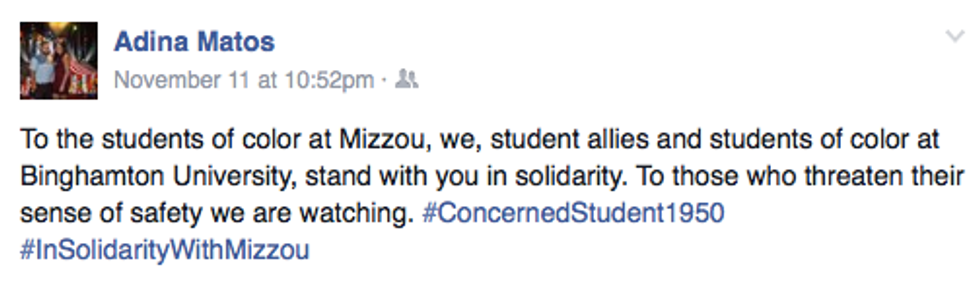
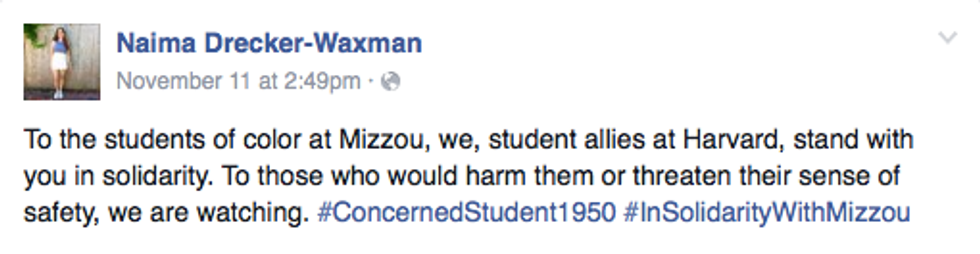
The following statement also seemed to be spreading on social media by activists on college campuses attempting to catalyze a sense of consciousness around the country:
The walkout lasted roughly an hour and was lead by undergraduate and graduate students alike. Anyone was given the ability to express their emotions regarding the anti-black events at the University of Missouri, Yale, Ithaca or their individual experiences at BU's campus.
The demonstration was meant to pick up on the foundational demands and political work mobilized by various student groups last year. We felt as though it was necessary to create the perception that BU was not apolitical and had been thinking about picking up their activist efforts throughout the entire semester; we just needed something to collectively get behind.
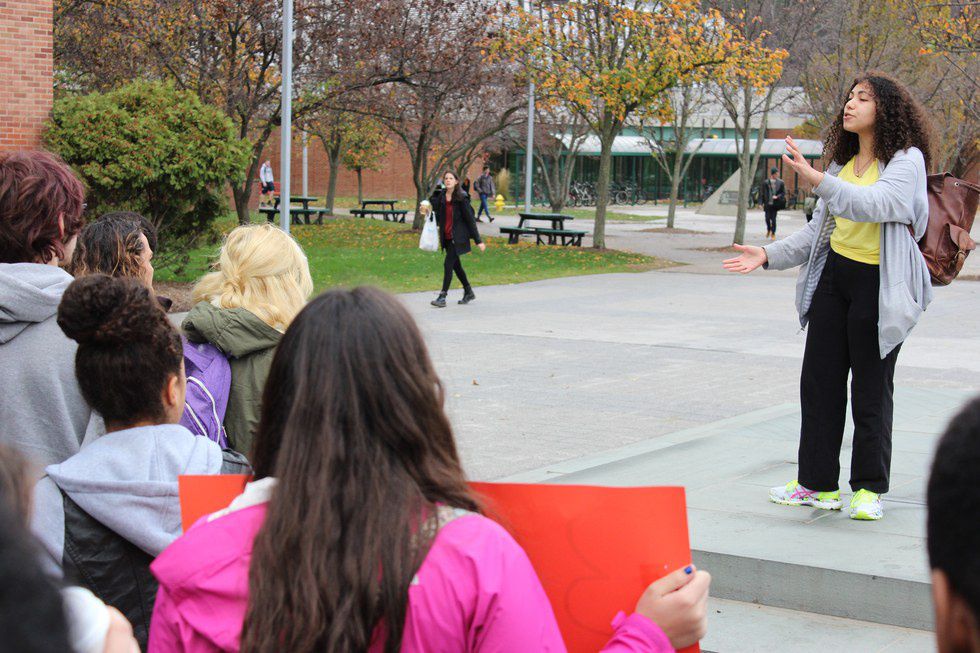
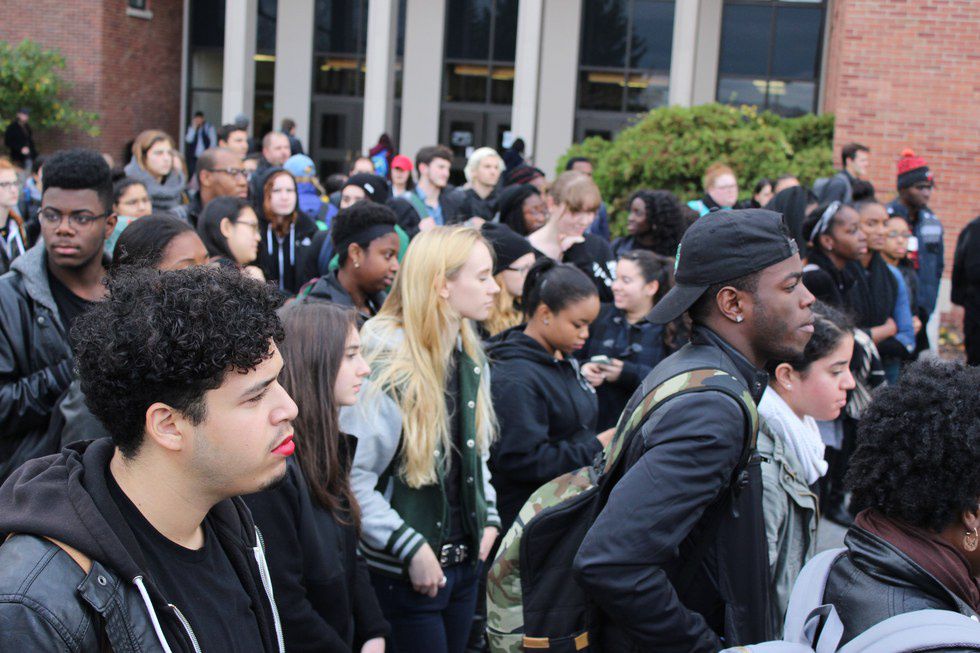
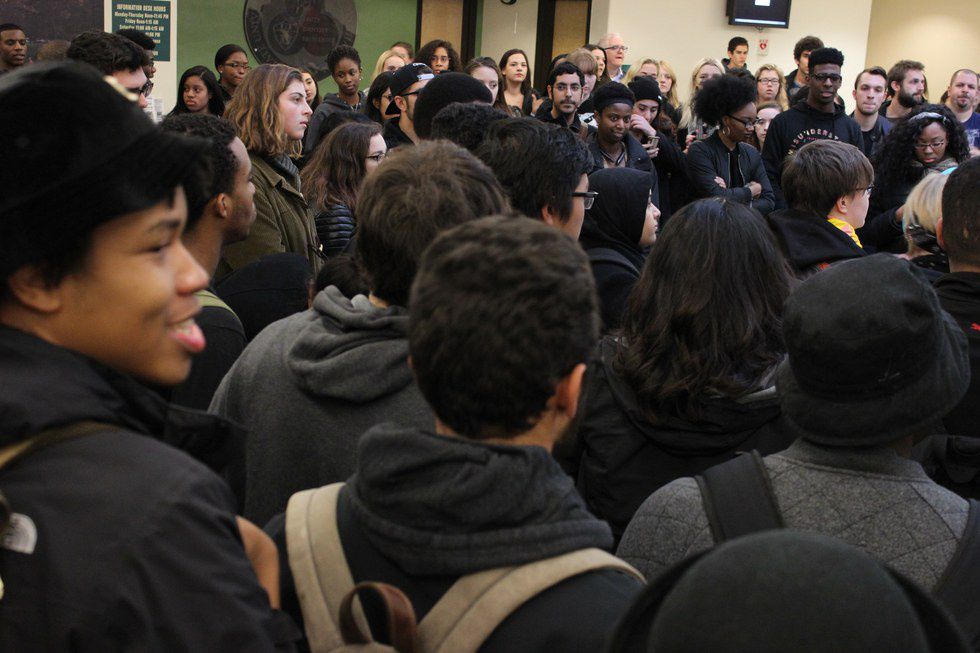
The demonstration ended at the Old Union and one of its purposes was to counteract the rhetoric expressed on a Pipe Dream article entitled, "Don't Wake the Bearcat." The Pipe Dream is Binghamton University's newspaper, who on November 10, 2015, proclaimed that Binghamton activists were asleep after their protests on campus last year.
Personally, I felt as though efforts by student activists and multicultural groups on our campus were being undermined by the article, (that neither took a position on the protests and the writer opaquely hid behind the ethos of the entire 'Editorial Board') and I decided to write a response on my blog, "Response to the Pipe Dream: We are Mizzou and Yale". Here is an excerpt from my response:
"As students felt disheartened and incapable of creating any material changes, strong soldiers began to walk away. It’s hard to be part of any movement when it seems as though nothing will come of it. I understand. But that’s what the Pipe Dream doesn’t. It’s not that we went to sleep but we felt like nothing would come of our resistance."
But, I wasn't the only BU student who felt as though the article misrepresented the efforts of students and executive boards. First, the Black Student Union (BSU) and Latin American Student Union (LASU) took it upon themselves to host the post-walkout discussion at 6:00pm. Using Instagram, Facebook and Twitter the BSU and LASU utilized their follower game to distribute a well-developed and thought out flier to students of color following the organizations on social media.
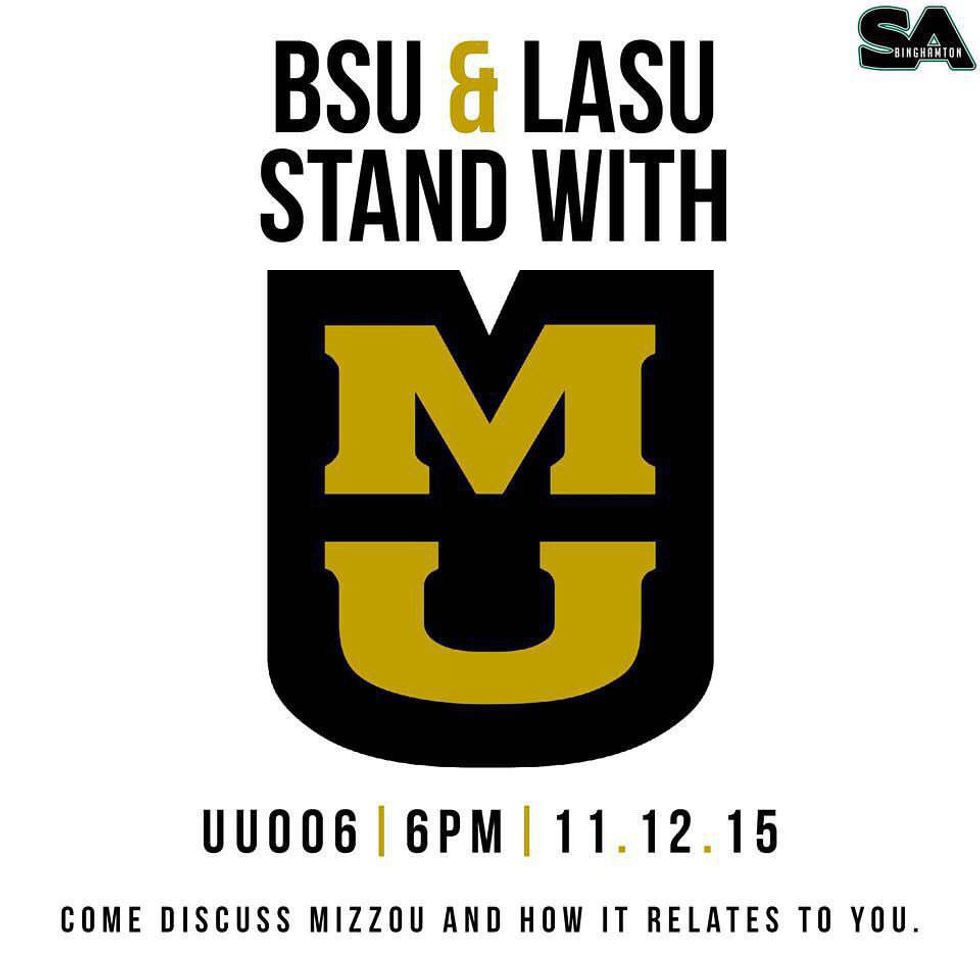
Last year, the Black Student Union held the three-hour long discussion after the Eric Garner-related protests on campus. The BSU was always on top of their game, writing down the demands of students and bringing them to the ODEI (Office of Diversity, Equity and Inclusion) and setting up meetings with other staff. The Latin American Student Union and their executive board is now also working hard to also be apart of the growing movement or "Black Lives Matter." In our current moment, racism against Latinx populations has become less hidden and way more obvious and insidious. It's motivating seeing the Latin American Student Union working with the Black Student Union to teach students about the common susceptibility of violence between Latinx and Black populations.
The discussion after the demonstration began with an opening political statement about a letter sent to the Binghamton University student body by President Harvey Stenger. The statement attempted to list initiatives by the Binghamton University administration and the Division of Diversity, Equity and Inclusion. However, most students felt as though the statement was a strategic attempt to create an anti-mobilization sentiment on campus. For the President and the administration, there needed to a perception created that protests and solidarity with black students in Missouri was not necessary because strong initiatives were already being enforced on Binghamton's campus.
Yet, it seems as though students at the discussion still seemed to be experiencing individual experiences of anti-blackness and discrimination on campus. Isolated instances of white students, teachers, larger academic programs and disciplines creating uncomfortable spaces for students of color seemed to be a commonly shared experience.
Various demands were future goals that were ultimately laid out, which I will be writing about in a future post. The students of color at Binghamton believed that prior to the events in Missouri we could not become a unified front. The individualistic and competitive nature of college manifests itself in the inability for us to become a collective. The discussion for me was indicative of desire to work together by students of color, through the structures of the university which ultimately keep us from collectivizing and achieving a common goal. It's not just about us but for the generations of black and brown students that will come after us.