Legend has it that coffee can be traced back to ninth century Ethiopian goat herders. "The story goes that Kaldi, the goat herder, discovered coffee after he noticed that after eating the berries from a certain tree, his goats became so energetic that they did not want to sleep at night. Kaldi told a local monk who made a drink with the berries and found that it kept him awake through the long hours of evening prayer." (1) And thus the first couple of coffee was born.
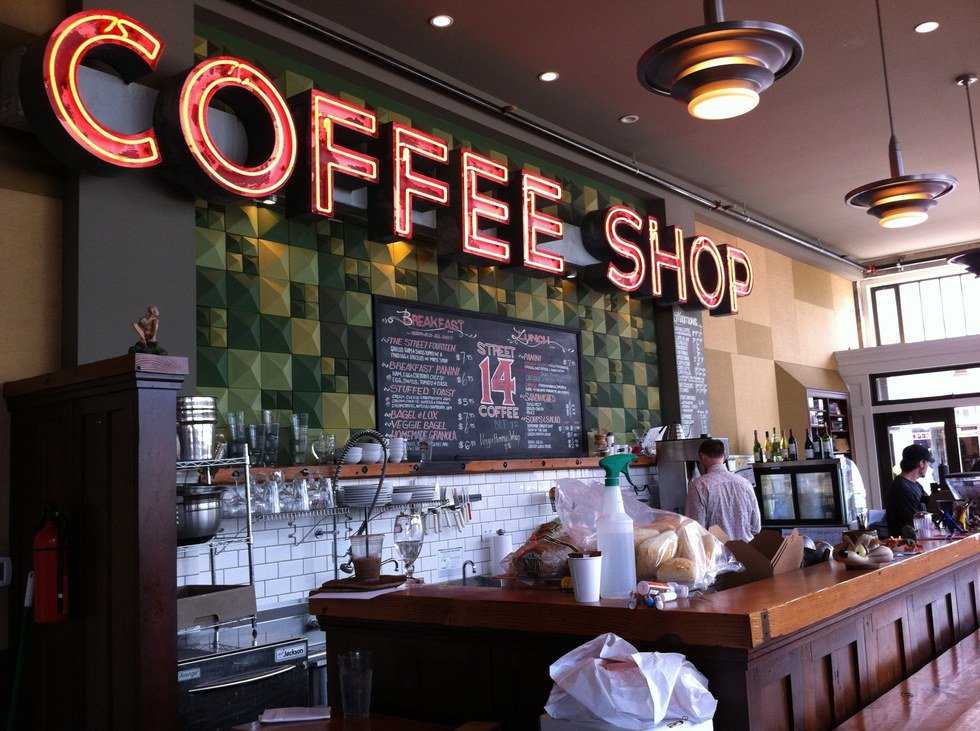
The sounds and smells of Biscotti's, the small campus café, stop me as I attempt to pass by. As I stand in front of the door, contemplating whether or not I should enter, I think of something I read -- just the smell of coffee can wake people up. Inhaling the aroma can alter the activity of genes in the brain, and it reduces the effects of sleep deprivation. I close my eyes and take a deep breath, reminding myself that I drank a cup of coffee just a few hours ago before I put my daughter on the bus for school. I don't need another cup of coffee, but I feel my legs carry me through the threshold of the small shop to my favorite table in the back.
Biscotti's is one of four on-campus dining options. "Located in the Olmsted Building, Biscotti's Coffee Bar opened in September 2003." (2) The shop displays a sign inside stating that they proudly serve Starbucks coffee. Though they don't have the ability to serve every Starbucks drink, I think that sign is part of what draws students inside.
According to an article on friedcoffee.com, "Starbucks is arguably the most successful coffee company in the world" and one of the reasons is because it has become what's being called a "third space". Starbucks "is neither home nor work, but a neutral community where people can meet on an equal footing. A cup of coffee may cost more at Starbucks than at McDonalds, but you're also paying rent on a pleasant, inviting living room where you can stay for a while and meet with friends and work colleagues." Starbucks is striving to uphold a tradition that started in the 17th and 18th centuries. (3)
As professors free their students from early morning classes, they flock to Biscotti's for fuel. Frappuccinos, lattes, and hot chocolates are presented to each customer, an elegant swirl of white whipped cream settled on top. Overlapped conversation crowds the room, stories of mid-term study sessions weaving with tales of weekend adventures. The café clears out as students grab their coffees and rush to their next class. A few students sit at the tables, hunched over their work with a cup of coffee only a few inches from their fingertips. 80% of adults in the United States drink coffee. We are part of that 80%. I wonder how many of these people drink coffee every single day, how many of them drink multiple cups of coffee. Like me. Are any of them addicted to coffee? Am I addicted to coffee?
With the line gone and Biscotti's quiet -- save for the Maroon 5 song playing through the speakers -- I give in to temptation and move to the counter.
"What can I get for ya', hon?"
I smile. "How about a venti salted caramel mocha?"
"That'll be just a minute."
I take my place at at the end of the counter, watching the barista move effortlessly as she prepares my drink. I enjoy watching her make it, despite my minimal knowledge of the processes. (4) I don't know why it's comforting -- I wouldn't know if something was done wrong -- it just is. I watch as the barista finishes my drink. A swirl of white whipped cream and a drizzle of caramel sauce. Salt to top it off. She slides it across the table, flashing me a smile. I return it and thank her.
It's possible to overdose on coffee. Can you believe that? I can't imagine being able to consume enough coffee to overdose. To consume a lethal dose of caffeine, one would have to drink close to one hundred cups of coffee. Or more depending on your weight and the brew of the coffee. Is that even possible? How can someone drink that much coffee in one setting?
The soft cushion of the chair sinks slightly as I sit and cross my legs. The mocha burns my thirst as I take a long drink. The warmth of the coffee fills me, and I sigh contentedly. A new wave of students and professors take their place in lien, eagerly awaiting their chance to be filled with that same warmth. The quiet café is soon filled again with laughter and conversation; the song playing overhead -- something from the 80s, I think -- can barely be heard.
Have you ever wondered how coffeehouse culture began? As what point did people start sitting around tables, drinking coffee, and spouting off intelligence? Steven Johnson, a bestselling author, "suggests that good ideas don't come from a lone genius working in a lab as often as they come from interactions between geniuses." (5) People would spend time in coffeehouses and express their ideas, their thoughts, and their feelings. Café Le Procope is a café in Paris. Opened in 1686, this café is the oldest one in operation in Paris, and it is "arguably one of the oldest in the world." (6) This Parisian café is famous for being the meeting place for intellectuals -- Thomas Jefferson, Benjamin Franklin, and many more. It's interesting to think that coffeeshops around the world -- even corporate shops like Starbucks -- are still working to continue the progression of coffeehouse culture.
As I pack up my bag, glancing at the coffee-lovers still waiting in like for their drinks, I think of all the articles I've read about the benefits of drinking coffee -- avoiding Alzheimer's, positive effects on Type II diabetes and Parkinson's disease, and protection against skin cancer in women. I think of the history classes I've taken where I learned that countries and leaders once banned coffee because they felt it was an affront to their culture or religion. I don't like to think of a living in a world where coffee is no longer allowed to be a part of my daily life. Like so many other students and mothers, I rely on caffeine to keep me awake and alert throughout the day. I need it. It can't be taken away.
I silently bid the little shop farewell, knowing that I'll be back in a few hours for another drink and another chance to take a brief break. Nothing will have changed -- there will be a line of students out the door, chatting and checking their phones. The tables will be occupied by hardworking students. And the air will hold the smell of drinks capable of getting people through the day. It's these characteristics, the predictability of the small café, that pulls me back. It feels familiar. It feels like home. As I walk out the front door, I realize that in the last two years Biscotti's has become my little home away from home.
(1) I found this story on the National Coffee Association USA website. And while I found the history interesting, I was more amused by the gif playing next to the text -- a cute little goat, who I can only assume had been fed coffee berries, is jumping around in the grass while his little goat friends look on. And then it kicks another goat. And knocks it over.
(2) It took me a while, but I finally found a little blurb about the coffee shop in "50 Years of Photos @ Penn State Harrisburg: Our Visual History from 1966-2016".
(3) According to Brian Cohan, in his article "What was Masculine about the Public Sphere? Gender and the Coffeehouse Milieu in Post-Restoration England", English coffeehouses were public social places. People would meet and have a chance to engage in conversations.
(4) Everything I know I learned from my boyfriend who was a Starbucks barista for two years.
(5) "How Cafe Culture Helped Make Good Ideas Happen" featured on NPR's 17 October 2010 episode of All Things Considered.
(6) "The 5 Oldest Coffee Houses in the World from The Bean Box