
The immortal lyrics of Public Enemy ring, “To revolutionize make a change nothing’s strange/ People, people we are the same/ No we’re not the same/ Cause we don’t know the game/ What we need is awareness, we can’t get careless.”
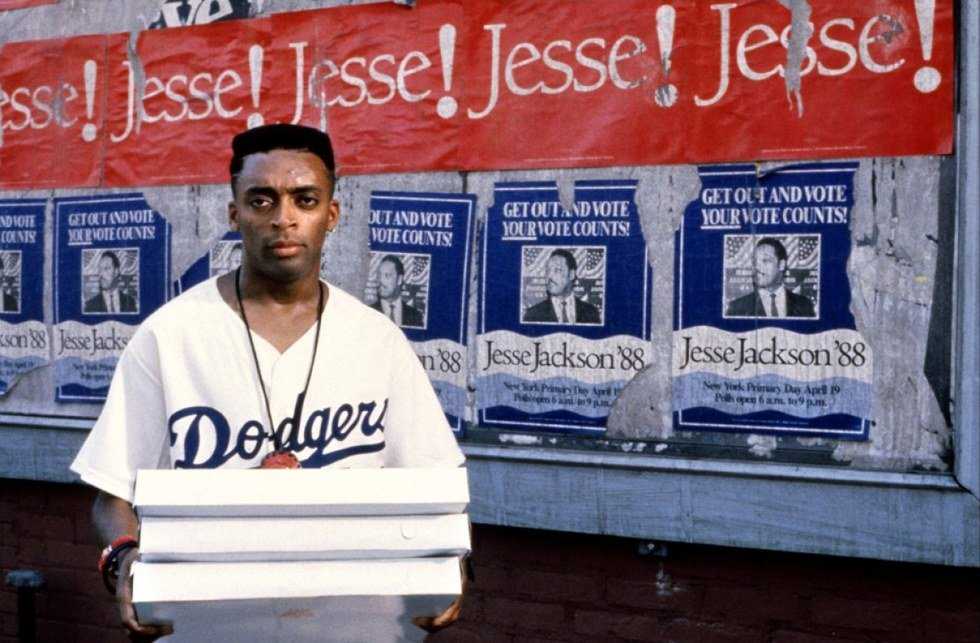
Urban life in the 1980’s was maligned by myriad problems, and the brunt of consequences bore down on the backs of minority groups. References to the general distrust of these trampled people are littered throughout the infamous Spike Lee Joint, most notably, the graffitied wall with "Tawana Told The Truth" splayed across the concrete.
With gang violence, racism, and drugs spreading pervasively throughout urban centers across the country, director Spike Lee paints a harrowing portrayal of urban life in his 1989 film Do the Right Thing. However, while most of us want to believe that we’ve left this arduous time behind, Lee’s critiques are more apt today than ever before. Lurking behind the barrage of videos depicting police abuse and discrimination that proliferate on our Facebook and Twitter streams, the bloody visage of Radio Raheem hangs as a specter, reminding us that this is not anything new.
Do the Right Thing espouses a depiction of the police that characterizes them as authority-wielding and out of touch, callous and killer. The portrayal of law enforcement is epitomized via their interaction with Radio Raheem, as the chokehold that strangled him is eerily reminiscent to that which ended the life of Eric Garner. The only difference? Eric Garner’s gruesome death was absolutely real, wholly unprovoked, and the respective killings are separated by 25 years.
People have questioned why there is this sudden spike in police brutality, but looking at Lee’s magnum opus answers this question: this abuse is systemic and has plagued minorities for decades (putting a date on police abuse?), but is just now receiving a spike in media coverage and national attention. This is not something that has ebbed and flowed with time, but rather, has been a constant presence in lives of millions of Americans, and disproportionately black Americans.
As well as bringing attention to police abuse and misbehavior, Lee takes the time to illustrate the general skepticism and discomfort towards the police from the perspective of these urban minorities. The references to Michael Stewart and Eleanor Bumpurs further reinforce the fact that tensions between the police and the community they serve have become part of America. Michael Jerome Stewart was a young man from New York who was caught spraying graffiti in a New York City Subway in 1983. He was unarmed, and eleven police officers were responsible for the handling of this man. He was found battered and bruised, and died later the same night.
GrSimilar to cases today, there was a perceived ambiguity to the event, which led to each officer being acquitted, despite conflicting statements. These events by themselves are tragic, traumatic, and terrifying, but when factored into the total equation that comprises police behavior, it is clear that this is an epidemic.
I live in Portland, Oregon, a liberal bastion where most would say that the general investment in community is higher than average. Nonetheless, over the past year my eleven-year-old brother has become scared of being outside in the dark because he fears getting shot by the police. If this problem isn’t addressed immediately, the perception that the police are ‘bad’ will permeate the collective mind of the younger generation, exacerbating an already difficult problem.
This isn't to say that all police officers are belligerent racists, or that they're responsible for the large majority of abuse, but that doesn’t mean change is allowed to arrive slowly or that the entity that 'the police' has become is any less responsible.