Industrial agricultural is extremely detrimental to both the environment and human health in several ways. At the center of it all is the monoculture. When you think about it, the monoculture perfectly epitomizes the American way of life: bigger is better. If you can produce a lot more of the same thing that can be used in just about every other product you make, at a much cheaper cost, with a lot more cash flowing into your wallet, why wouldn’t you? For the large-scale corporations that control our agriculture system, the answer is: you would. And you do. We’re obsessed in this country with doing things the cheapest and most profitable way possible, no matter the external costs.
This ultimately results in the monoculture—because a billion of the same little cheap crops on one big field that can all be treated with the same toxic pesticides and fertilizers and grow to the same ultra-juicy GMO maximum at the same ultra-speedy GMO rate of growth and that can be processed in the conventional industrial factory that emits tons of greenhouse gases into the air and accounts for almost three quarters of all water quality problems in rivers and streams (maybe no one will notice?) is way better than scattered small-scale local farms that sustainably produce crops of both adequate sustenance and biodiversity so as to secure our food system and our food sovereignty while avoiding significant ecological impact. Right?
The controllers of our food system seem to think so, because the effect on the environment is evidently rarely taken into account when it comes to the American agriculture system. This is evident in simply recognizing that our system is one of “industrial agriculture.” We rely almost completely on the conventionality of monoculture farming, which more or less directly leads to the large-scale factory-style breeding and processing of crops due to the desire to produce food quickly and cheaply.
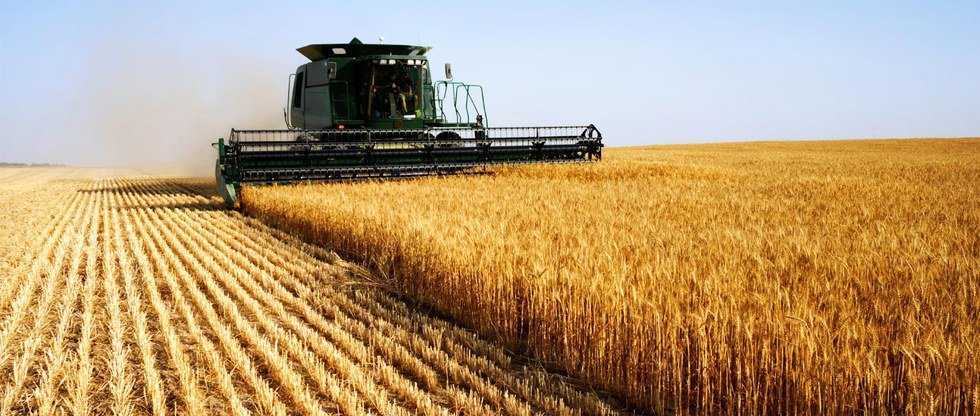
Monoculture farms, typically consisting of corn, wheat, or soybean, have overrun American farm culture: they don’t require as much human labor—thereby “increasing” energy efficiency—and produce high yields at very low costs. However, they do much more damage to the environment than they do good. Monocultures in actuality decrease energy efficiency, because human and animal labor are in fact the most efficient sources of energy, while large tractors, factories, and other industrial mechanisms rely on fossil fuels and are unsustainable. Likewise, tractors used for crop movement actually unhealthily compact the soil and decrease the ability for crops to absorb nutrients efficiently.
Furthermore, the monocultures perpetuated by the large-scale, corporate production of food lack biodiversity, which is a problem for several reasons, one of them being the lack of versatility and susceptibility to damage by climate, weather, and pests. Monoculture crops do not provide adequate food security: quite simply, if one kind of crop gets damaged by a particular weather pattern (such as drought) or insect, they all get damaged because they’re all of the same kind. Additionally, in their excessive use of pesticides and fertilizers, monocultures create an optimal environment for insects and other crop-pests to become resistant to such chemicals, thereby creating “superbugs” that are then able to effectively damage acres and acres of the same crop. This process of consciously creating ever-resistant pests contributes significantly to loss of food security.
Our overuse of toxic pesticides and fertilizers on monoculture farms not only creates resistant intruders, but it also is killing off one of the most, if not the most, important species to mankind: bees. All the bees are dying, by way of Colony Collapse Disorder, and it’s the monoculture’s fault. The monoculture farm is treated like a factory, its fertile soil directly sprayed with tons and tons of synthetic pesticides (specifically “neonics,” the group of pesticides approved by the EPA on more than 120 crops to kill “crop-ravaging” insects) that will be soaked up into its plants for the duration of their lives.
When bees come into contact with one of the crop’s flowers, they are exposed to the chemicals and harmed in several ways: their immune systems weaken, resulting in higher susceptibility to and prevalence of disease, and they lose the ability to effectively navigate back to the hive, resulting in death before they make it home. Even if the bee makes it back, it returns covered in contaminated pollen and infects the rest of its colony. America’s system of monocultures is killing off a species that is necessary to our survival: if the bees don’t pollinate our crops, we’ve got no food.
Sounds like a problem, right? So Big Ag decided to try a quick fixer-upper to scotch-tape over the hole in their monoculture farm-logic: GMOs. Genetically modified crops would allow the reduction of synthetic pesticides and fertilizers, because new crops would be programmed to be resistant to pests and other natural disturbances, such as drought. The genetically modified crops would be able to grow in drier and saltier land, withstand extremely high and low temperatures, and tolerate insects, disease, and herbicides. However, GMOs pose a large toxicity threat to other organisms such as bees, butterflies, and birds: GM crops provide fewer weed flowers and less nectar for pollinators, and toxins from the GM crop are released into the soil and degrades it of important nutrients needed for the plants to grow properly. Likewise, GM crops are largely implemented in a monoculture-fashion, which perpetuates the style of agriculture most damaging to our food security.
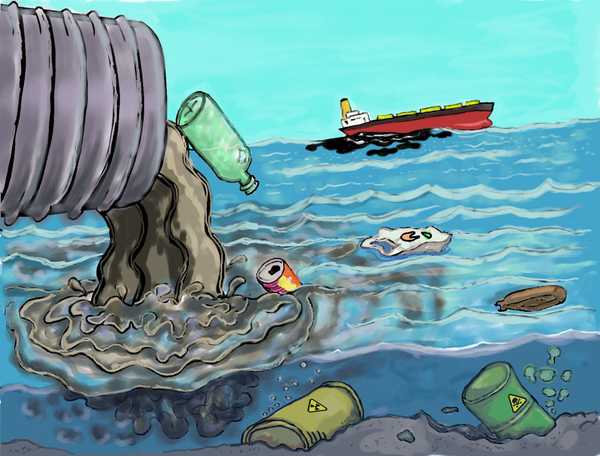
After the monoculture crops, particularly corn, are produced and processed on large, industrial farms, they are fed to our cows and chickens and fish raised on a beautiful thing called the factory farm. Factory farms require increasingly large amount of corn, soy, and other monoculture crops and are one of the main contributors to global greenhouse gas emissions, causing extreme detriment to the environment. The large-scale burning of fossil fuels, rather than the more sustainable use of renewable energy, to run factory farms accounts for 15 percent of global greenhouse gas emissions and 37 percent of the emissions of methane, a gas that has more than 20 times the global warming potential of carbon dioxide. CAFOs (Concentrated Animal Feeding Operations) likewise account for more than half the toxic organic pollutants found in fresh water. This pollution both directly and indirectly harms humans, as the industrial pollutants contribute to global warming and climate change and are also inhaled by those living nearby the factory farms. Factory farms also contribute significantly to land degradation, including destruction of tropical rainforests. In Brazil, 1250 square miles of rainforest land in the last five months has been destroyed and repurposed for feed production for livestock.
On such factory farms, chickens, pigs, and fish are bred and raised unnaturally, posing a threat to both the environment and human and animal health. Because of the United States’ overproduction of corn, such animals are fed the excess corn and grain that they’re not really supposed to eat (at all). This allows the animals to fall ill easily without the use of antibiotics (and the extremely unhealthy conditions in which they essentially live in their own shit don’t help) which then contributes to the growth of antimicrobial resistant pathogens. The antibiotics are then transferred to humans upon consumption and affect human health.
Hog factory farms greatly contribute to global pollution as well: a typical farm produces more than 7 million pounds of manure, and farmed animals as a whole in the United States produce 130 times as much waste as the human population. Chicken, hog, and cattle excrement has already polluted 35,000 miles of rivers in 22 US states, which has resulted in the obliteration of at least 200 entire fish populations. Additionally, those living nearby factory farms are put at numerous health risks, such as higher asthma rates (50 percent) and other physical and psychological illnesses, due to both the pollution in the air and the toxic “lagoons” that accumulate nearby farms that often leak into fresh water supplies and damage the surrounding environment. Likewise, large factory farms produce the majority of our food, which often travels thousands of food miles from producer to consumer before it reaches our dinner tables. The carbon emissions that arise from the transportation of food across states, even across countries, contributes significantly to global greenhouse gas emissions and hence global warming in obvious ways.
I aspire to someday fully commit to being a vegetarian. Or maybe even a vegan, but that’s much more difficult. Right now I can’t really dedicate myself to complete vegetarianism—partially because I live with my family and am often condemned to eating whatever my mother puts in front of me, but partially because I am scared. A lot of people are, I’m sure, because change can be weird and make one feel uneasy, especially when the change is a choice and not something forced or imposed upon you.
Educating myself on these issues really reveals to me the flaws of human nature: we are greedy, selfish, and have strong, likely trivial desires that often override our rational thought about our place in the world and how we affect everything around us with every decision we make. Though I may not do this now as wholeheartedly as I could, I aim to continually make this a part of my everyday thought. Every time I pick up a slab of meat or buy a genetically modified apple (just kidding, I would never do that), I have to force myself to think: What is the impact of me buying this?
By buying this product, am I directly feeding into the large, corporate-style industrial agriculture that is degrading the quality and security of our food system? Or am I positively supporting sustainable farm practices? Hopefully I can answer yes to the latter, and I will, as I begin to become more conscious over time about the choices I make. If I am eating meat, I will make sure it is from animals that have been humanely raised that do not come from factory farms that contribute substantially to global greenhouse gas emissions. I believe that is ethical. If I am eating dairy, I will make sure the same is true, because dairy cows on factory farms are treated just as poorly and contribute the same amount to environmental degradation.
But I will (and have already) significantly cut down my meat and dairy intake, because although I am able to obtain grass-fed meat or organic products, Big Ag dominates our food system, so it’s probably better to try to avoid it when possible.