Bisexual people occupy a curious space within the LGBT community in that we are misunderstood from both inside and outside the community. While other facets of the community certainly face issues from both inside and outside the community as well, it is the bisexual community I will be focusing on, most specifically, the discrimination we face from within our safe spaces.
I’ll begin with a disclaimer: this is not meant to be an attack on other members of the LGBT community. This is not a way of me trying to claim bisexual people are—or even can—be oppressed by other members of the LGBT community based off of gender identity or sexuality alone. This is merely an open statement towards members of the LGBT community who I feel have a misunderstanding of bisexual people.
The main misunderstanding about bisexuality within the community is the assertion that bisexuality fundamentally excludes non-binary people. Now, I could simply debunk this theory by saying that my very existence as a bisexual non-binary person proves it wrong, but let’s delve deeper. I believe this assumption of bisexual people disliking or excluding non-binary people comes from an outdated definition of bisexuality. This outdated definition would be that bisexuality means an attraction to both men and women. This definition in my opinion no longer fits where the LGBT community is today and yes, does erase non-binary identities by upholding the two-gender model.
In the defense of bisexual people, this definition is no longer the one most bisexual people use anymore. While Merriam-Webster and other major online resources have yet to get on board, the resources online written by and for bi people use a different, more inclusive definition. The more inclusive definition is this: “bisexual [is] an umbrella term for people who recognize and honor their capacity for sexual, romantic and/or emotional attraction to more than one gender” (x). While the root of the word is “bi,” meaning “two,” this does not take away the legitimacy of the term. Just because the definition has changed doesn’t mean the root of “two” no longer fits the definition. If you like people of genders the same and different from yourself, you still fit because “same” and “different” are still two categories.
The accusation of bisexual people being uneducated about non-binary genders especially harms bisexual people who identify as non-binary, because it is an attempt to erase both of their identities in one fell swoop. It also harms bisexual people who identify with a gender on the binary, because it makes unfair assumptions about their history, their education levels, and how much they know about their own identity. A bisexual friend of mine, who wishes to remain anonymous, said the bi-phobia from within the LGBT community is “unbelievably frustrating and unfair. I don't think I've ever felt as invalidated as I have when we're presented as less educated or open minded. Times change and so do terms!.”
Another thing said by non-bisexual members of the LGBT community (the ones who do understand the modern definition) is that with the new definition, we are basically the same as pansexual people. The definition of pansexual is the attraction to people regardless of gender. This statement is invalidating to the bisexual people who have fought for LGBT rights since the beginning. Brenda Howard, one of the most influential members of the LGBT movement, also known as the “mother of pride,” identified as bisexual. Does this mean her bisexual identity should be erased? Of course not. Saying bisexual people are the same as pansexual people is too close to implying that we don’t need the bisexual label anymore. While I agree there are more similarities than differences between bisexual and pansexual people, the bisexual label is important to LGBT history and to people who feel it fits their experience.
There are also noteworthy differences between pansexual and bisexual definitions. The first difference is that “pansexual” fits for some people’s experiences, while “bisexual” fits for other’s. Who are you to take away what label someone feels fits their identity? The fact that people still identify as bisexual is reason enough that it should not be erased as “basically pansexual,” and the same thing goes the other way around.
Secondly, pansexual is a more loose term that means an attraction to all genders or an attraction to people regardless of gender, while bisexual is a term that fits a different experience. The “same or different” definition means essentially an attraction between two or more different genders. A bisexual person can experience attraction to all genders and still fit the bisexual label (as it includes “same” and “different,” which are categories all genders can fit under). You can be bisexual and identify only to genderqueer individuals and women, or to a multitude of different combinations. Pansexual can mean you’re attracted to all genders, and while bisexual can also mean that, it also makes room for limitations if you’re only attracted to a couple of different genders. Bisexuality can include a person’s preferences because while pansexuality implies you’re attracted to all genders, a bisexual person can be bisexual and only be attracted to certain genders.
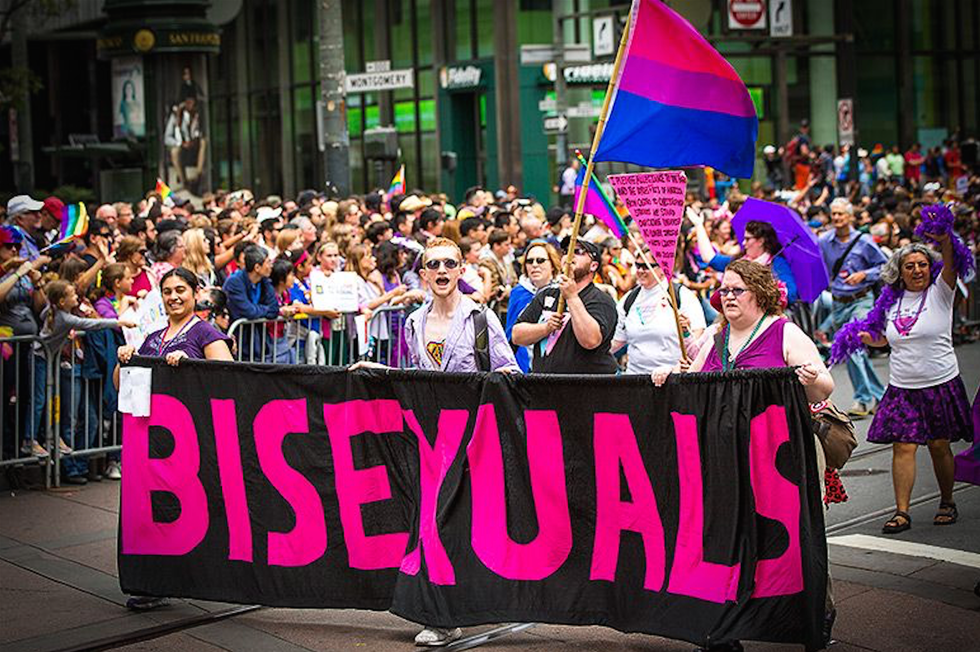
Members of the LGBT community also claim that bi people do not belong in LGBT spaces such as pride, bars, etc. Some even claim bisexuals who have partners of the opposite sex do not belong in the community. The discrimination based on partners is troubling because it should go without saying that bisexual people continue to be bisexual no matter the gender of the person they are dating.
The outright exclusion of bisexuals from the LGBT community is the most troubling. Bisexual people are in great need of LGBT resources, and being shunned from the community, by the very people who are supposed to support them can yield deadly consequences. Bisexual people are less likely to be out to their friends, family, and coworkers than lesbian and gay people due to fear of bi-phobia. Over 40% of bisexual people have had suicidal ideations (as opposed to 27% of gay people and 9% of straight people). Bisexual youth are more likely to be bullied in school, commit suicide, and 26% of bisexual youth (as opposed to 13% of gay and 15% of heterosexual) have experienced homelessness (x)(x).
The exclusion of bisexual people from the LGBT community is hurtful at best, and dangerous at worst. Bisexual people are just as (and sometimes more so) at risk as some other parts of the community, and exclusion based on how they may or may not be oppressed harms a community of people that are already hurting. Excluding bi people from the LGBT community has negative, real-world consequences and no benefits. It must be stopped, and denies a community towards people who desperately need one.