In today’s world, we are taught to fight back against stereotypes. Because we are taught that all stereotypes are harmful, and many can be without a doubt. But what about the ones that aren’t malignant? What about the ones that are just parts of who you are? Why do we fight against them?
While I cannot speak for anyone other than myself, I am actually OK with a little stereotyping. I am gay. I am a former thespian. I am a future fashion designer. I love to shop, and there is nothing I love more than a little “girl talk” with my best friend Sara. So, I am a stereotype. Big freaking deal.
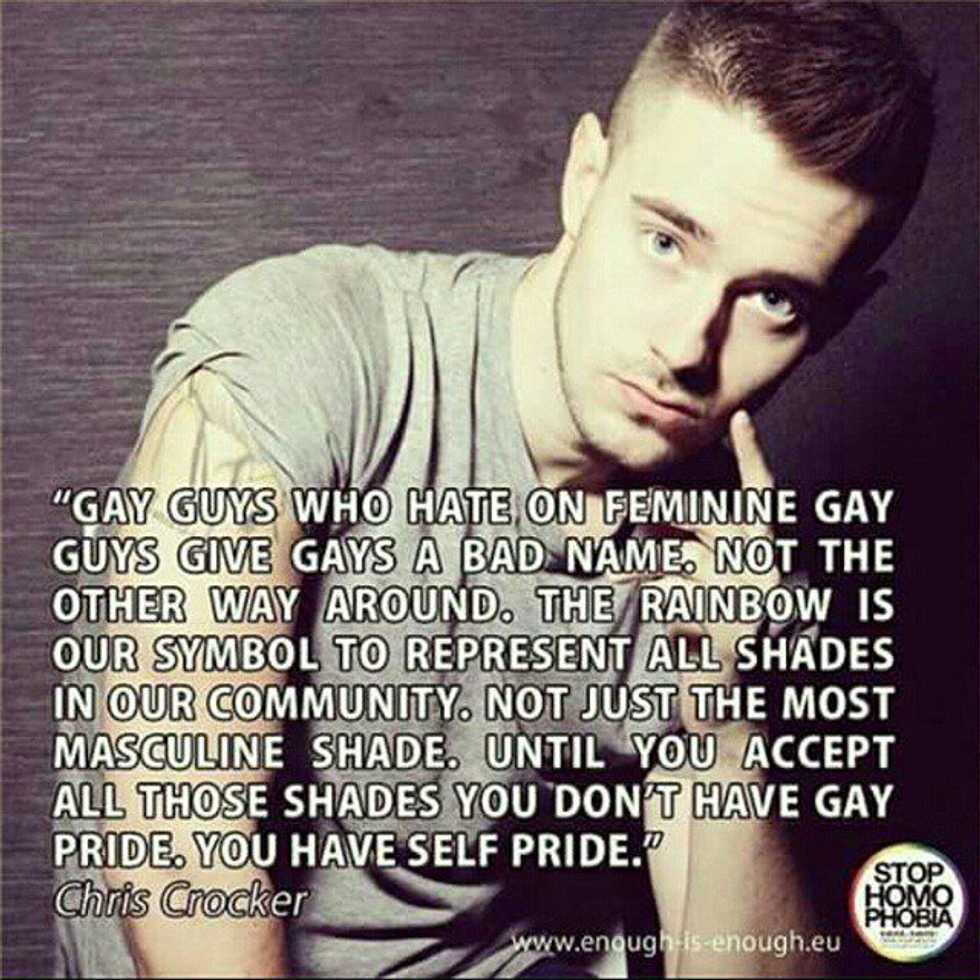
As a member of the gay community, especially one in a semi-rural area, we are encouraged -- both directly and indirectly -- to shield ourselves from those stereotypes. We have to combat them by pulling back and shying away from things that make us happy. Spend 30 minutes on Grindr or Tinder and you can see why; “Masc for Masc,” “No Fats No Fems,” “Jock,” etc., are labels that are abundant. We, a community that is supposed to be inclusive and open, are creating a space that continues to reinforce cisgender gender roles by asserting that masculinity is the most important quality.
So often, I (and many others) have had reservations about telling potential partners about my dreams of being a fashion designer or insert other “bad” stereotype here because it isn’t considered masculine enough. But why should that be a bad thing? Why should we be ashamed of our passions?
You. Should. Not. Feel. Ashamed. So “Masc for Masc” guys take note. Let’s break down “Masc for Masc,” shall we? From what I have seen or experienced in my time from being out is that “Masc for Masc” generally is indicative of a few common factors: you need to be a gym rat or like to work out, you like sports, your apparel appearance is not a super important factor, you’re outdoorsy, etc. If you like theatre, dancing, or fashion, have more female friends than male friends, etc., then you’re out of luck. Oops, sorry, you are the weakest link -- goodbye.
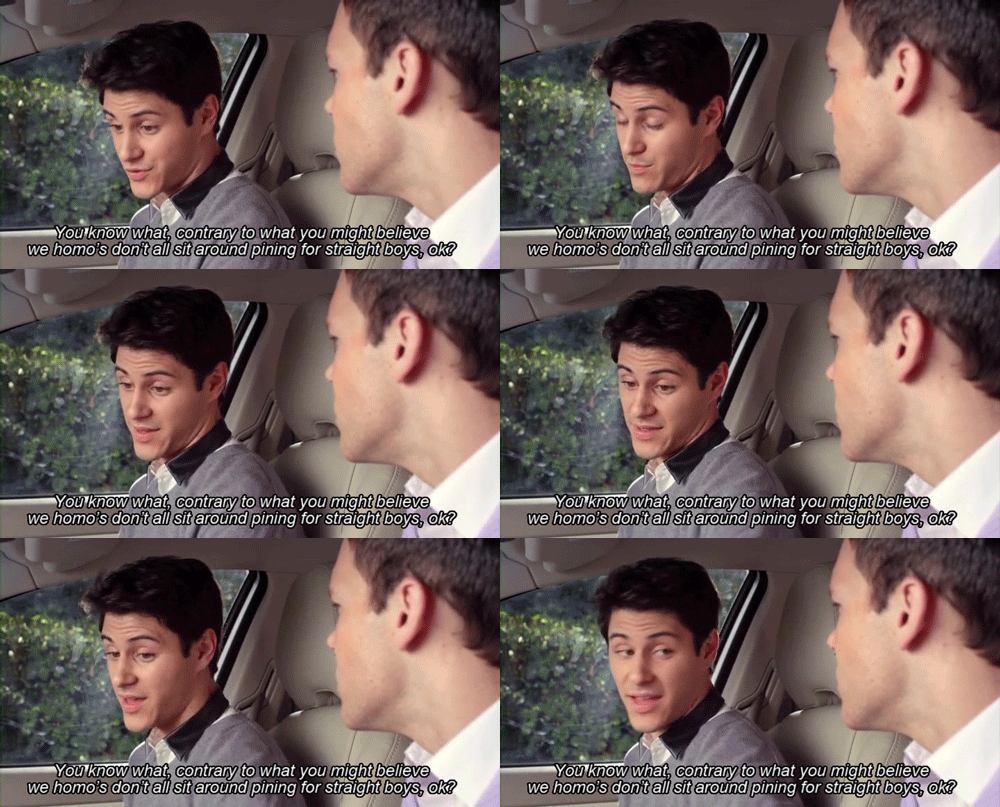
Now, before we get too much further, let me say that everyone has their personal preferences. This is not about dating. This is about creating an environment where, rather than coexisting, we are creating division against our own members. We have a community that reinforces the idea that people who demonstrate even the slightest amount of femininity belong on the sidelines, while the “real men”, the masculine ones, take the lead.
So here is why I am OK with being considered a feminine gay stereotype.
Feminine gays have always been on the frontlines.
We are some of the first to stand up for our community. We lack passing privilege, so we have more to lose therefore we are some of the first to stand up for our community and others.
I don’t have to be ashamed to enjoy the things I love.
Like I mentioned, I love fashion, art, musicals and theatre. I absolutely do. Being open and owning that fact means that I can publicly go and do the things I enjoy. That extra "Cats" ticket? Hand it over! What are the Pantone colors of the year? Serenity and rose quartz, duh! When you own what you love, no one can really make you feel ashamed.
I love to shock people when I do masculine things.
Think I can’t play sports, build a cabinet or fix my car? Think again. I am so lucky to have grown up in a family where I learned all of those things. I love my Saluki sports and I am an avid St. Louis Cardinals fan. Need someone to help you do a project around your house? I’m your gay. And cars? OK, I may not be a mechanic by any stretch of the imagination, but my first car was a 1997 Volkswagen Jetta, and I spent many a night over the four years I owned it covered in grease and cursing because something wasn’t working right. I love the shock on people’s faces when they find out that I can get dirty and do “manly” things. Don’t underestimate guys in touch with their feminine sides.
The biggest takeaway? It doesn’t matter if you are masculine, feminine, or whatever. What matters is you own who you are and don’t put others down for being who they are. Don’t try and segregate yourselves and put yourselves into a box because you think that it will make things easier. Own what you love, but find ways to encourage others to express what they love too. Push your boundaries and you may surprise yourself.