
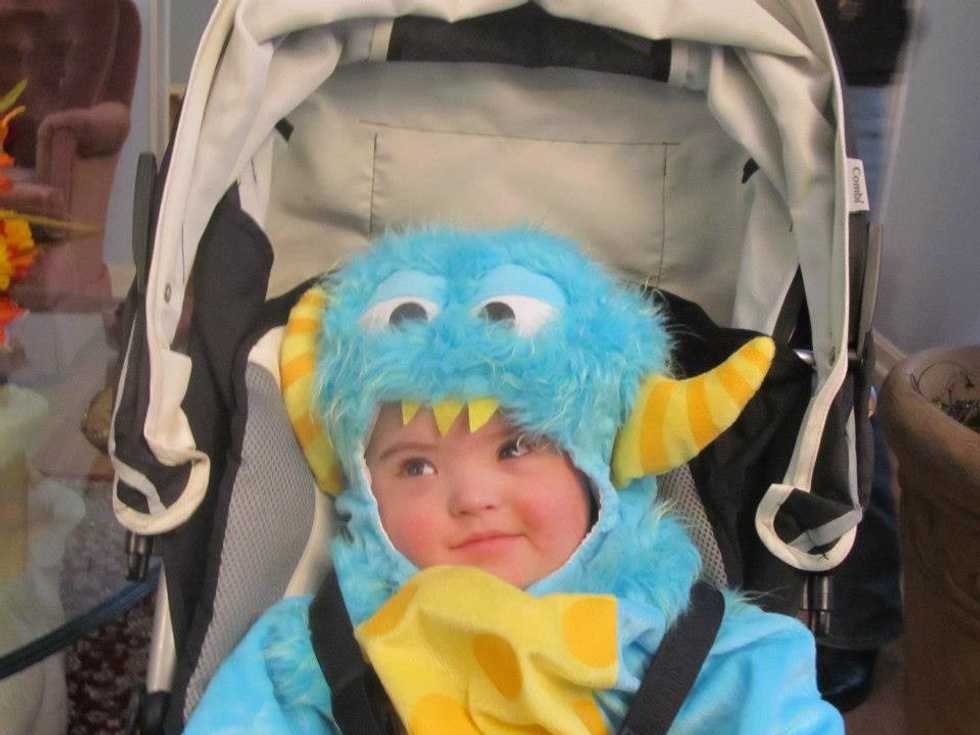
In July 2011, my baby brother was born. However, he is a bit different than some of the other kids.
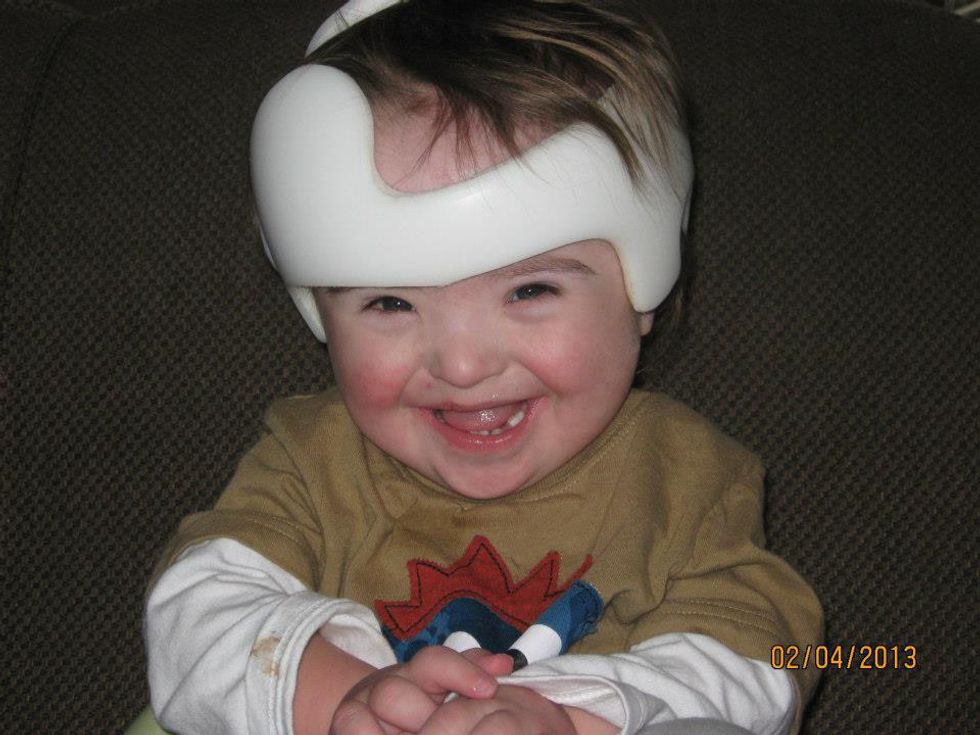 My baby brother at two years old
You see, he was born with Esophageal Atresia (EA), which is where you either have part or your entire esophagus missing (referred to as “short gap” or “long gap” atresia, respectfully). Additionally, he has Trisomy 21, more commonly known as Down Syndrome (DS).
When people hear that a child has these conditions, they think about the struggles that child may having growing and developing. With EA, it may be the idea of how hard that child will have to work at learning how to eat properly. Thoughts of therapies and learning to speak may come to mind for children with DS.
However, unless you are a direct family member of one of these unique and loving individuals, or know their guardians, you probably don’t consider everything else that goes on when a family member has a disability.
One of the worst fights are those with the doctors.
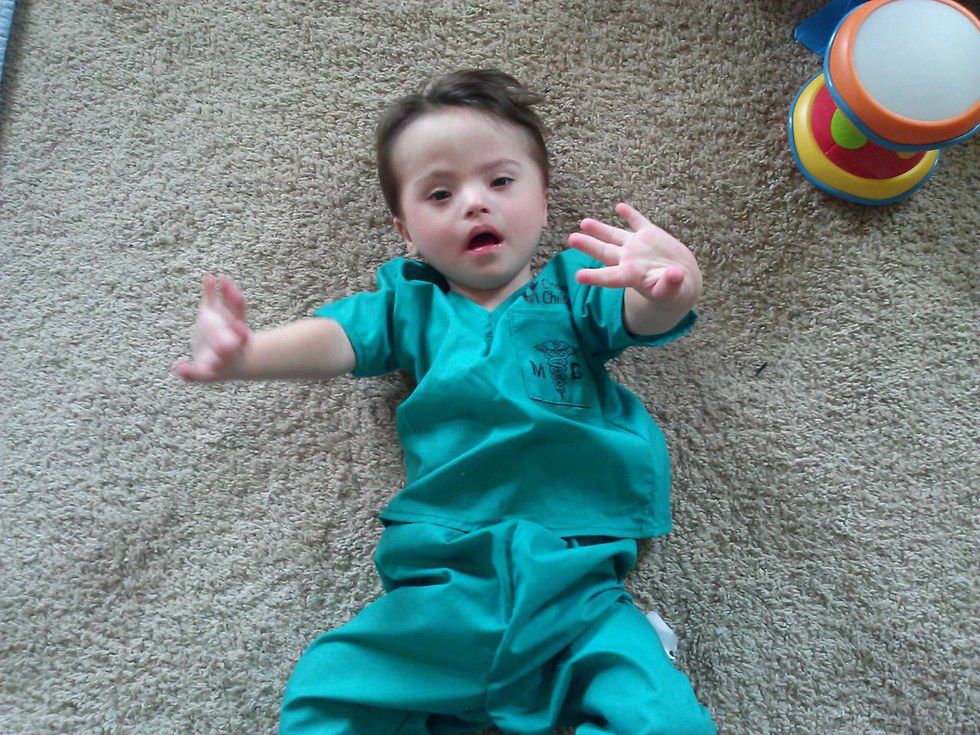 My brother about to go to another surgery in his scrubs!
As my family found out, sometimes the doctors don’t actually know what’s going on with your family member. Yes, they know the most, but they don’t spend enough time with that individual to fully tell when he or she is in pain, acting different, or going through something new. For example, when my brother was approximately three months old, his lower stomach became hard and red. We could tell just how much pain he was in, but we were told by the professionals that all it was a urinary tract infection, and that his reactions were “over the top”. In reality, a part of his bowels had kinked up and died, and was actually killing my brother.
Sometimes, it’s not just about a misdiagnosis, or gauging the individual wrongly. It’s also the battle of stereotypes from doctors. One of my family’s worst experiences with an ear, nose and throat (ENT) doctor. Those with Down Syndrome generally have issues with small ear canals, chronic ear infections, hearing loss, airway obstruction, and sleep apnea. That being said, my brother has issues with his ears and correct drainage.
No matter what my mother told the doctor, no matter what issues were presented to the doctor, everything was written down as being caused by the DS. Because the doctor had written off the issue to the Down Syndrome, my brother continued to struggle and his ears got worse. We fought the doctor for six months before my mother requested a new doctor. Finally we found a doctor that would treat my brother’s ears, and he was better within a matter of weeks. But the fact remains that a doctor would not treat my brother because of a medical condition and the formation of a stereotype about that specific medical condition.
Another behind the scenes issue that come with having a loved one with a disability or severe illness: the insurance companies are a pain, and can either make your life fantastic or ruin your day. For my family, just a month’s worth of food for my brother is over $1,300 before any insurance. Thanks to the deductible that is placed on our family’s insurance, we have to reach at least $3,000 in bills before the insurance will pay 80%, then we have to reach $6,000. For my family, that food bill alone is a third of the monthly income, and what’s worse is the fact that some supplies don’t even count towards the deductible, including all of his feeding supplies.
But that’s only his medical bills, not any of the medical bills from the other four people in my family. With all of my own medical conditions, these bills can really rack up. It might have been better if my brother’s conditions were temporary, but these are lifelong issues that will consistently need high priced supplies to keep my brother healthy.
$3,000 may not seem like a lot of money. But to a family of five, one child with disabilities, one in college and one about to go to college, these bills can place a hefty toll on us. The insurance companies try to help after you’ve reached your deductible. Before that though? Sorry about your luck.
There are a lot of strains that come from caring for a loved one with disabilities, like the ones mentioned above. However, it’s all rewarding when you see their smile.
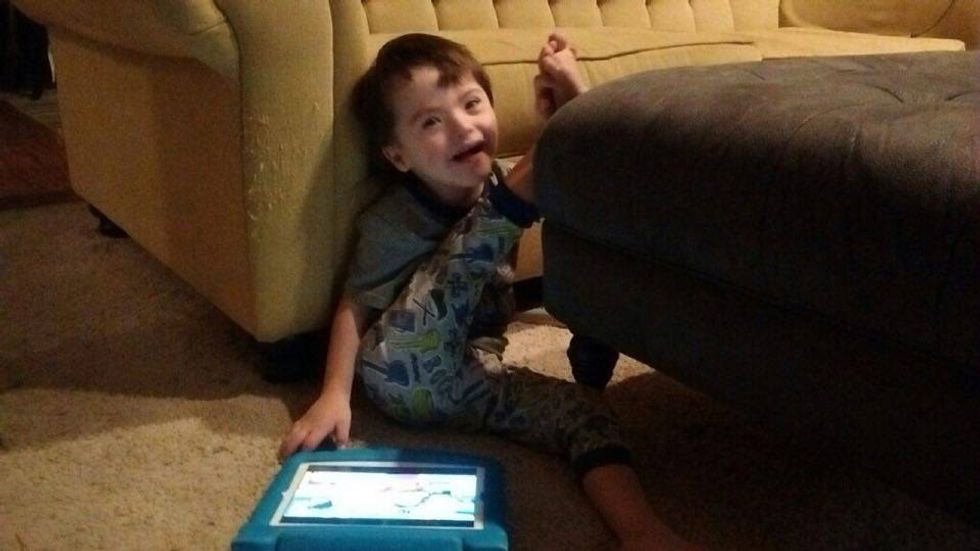 He's so happy at home with his family
If you know a child with EA who needs treatment or who you feel is not doing well, please contact the Esophageal Airway Treatment Center at Boston's Children's hospital, the #1 hospital for children with EA.