“Look there she goes that girl is strange no question”

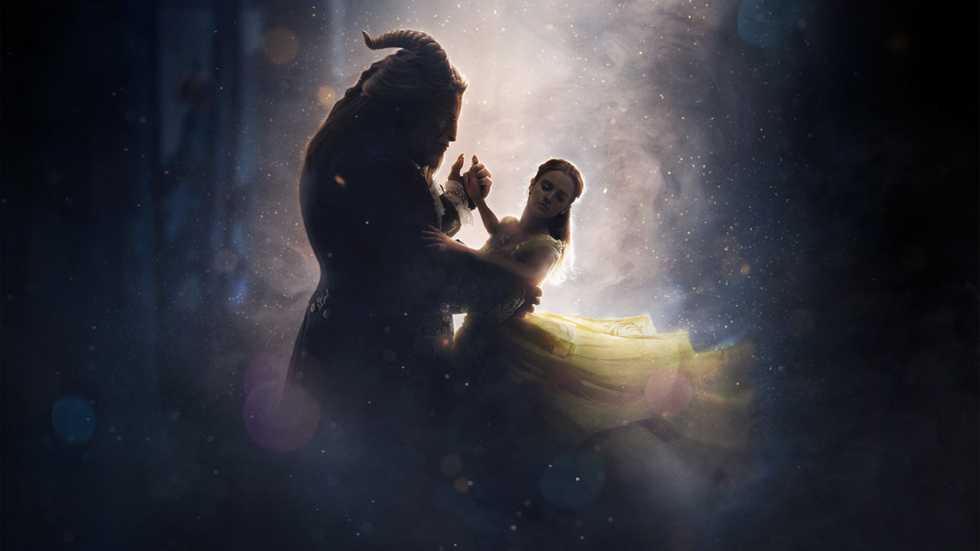
Belle. The girl from the small, provincial town who goes against the norm. She reads, she invents, and she doesn’t swoon over mindless heart-throb Gaston like all the other women. And, for this, Belle is known as one of the strongest princesses. She wants more in her life than just a man. She craves adventure, intellect, and challenge – not submission, simplicity, and routine.
Belle is that feminist princess who believes women deserve the same opportunities as men. She sees beyond physical appearances to truly discover who someone is. She likes books and dreams of the lands that lay beyond her small town. However, as powerful and confident as Belle may seem, Beauty and the Beast struggles to pass a simple test for female equality – the Bechdel Test.
The Bechdel test is named for cartoonist Alison Bechdel whose comic strip characters openly questioned how well rounded and complete female characters in movies were. The test poses two simple questions: 1) are there at least two female characters in the movie, and do they both have names? And 2) do those female characters have a meaningful conversation with each other that is not about a man?
This brings me to my question: is Beauty and the Beast beautiful or beastly? Does it encompass the strength and confidence which Belle possesses and reflect that? Or does it, once again, focus its attention on the Beast and all he represents?
In the eyes of the Bechdel test, Beauty and the Beast poses a truly difficult debate. First, many of the major characters are actually inanimate objects with personalities. This makes us ask the question: Do we consider the tea pot (Mrs. Potts) and the Wardrobe to be considered female characters? If we do not, then Beauty and the Beast fails nearly immediately, as there is hardly even another named female character in the movie. However, I am going to consider them to be female characters, for the sake of this argument. In the new live-action movie, especially, I believe they should count, as they do turn into women in the end.
However, there are still very few conversations where Belle and these female characters speak. The biggest one, which raises the most question, is with both Mrs. Potts and the Wardrobe, not long after the Beast tried to demand that Belle accompany him to dinner on the first night and she refused. Mrs. Potts comes in with Chip (the teacup) to serve Belle a glass. She sees that Belle is trying to escape through the window, and encourages her to stay. This is one of Mrs. Potts’ key scenes in which she sheds a light upon Belle’s situation, begging for her to stay in hopes that she will be the one to break the curse. However, this conversation is relatively short and, while it may not directly mention the Beast, it indirectly breaks the rule of not allowing the conversation to be about a man.
After Mrs. Potts leaves this scene, the Wardrobe tries to dress Belle for dinner. Now, it is a bit of a stretch to say that ‘the Wardrobe’ counts as naming this female character. However, again, saying the Wardrobe does count, the conversation that ensues is still weak and lacks substance. The Wardrobe asks Belle what she would like to wear, to which Belle responds that she is not going to dinner. The conversation then concludes very quickly.
Other than these two encounters, there are no other conversations that could help this movie qualify to pass the Bechdel Test. Most people say it does pass, with the conversation with Mrs. Potts being the deciding factor. While I don’t necessarily disagree, it saddens me that this movie passes on a technicality.
I have, personally, always looked up to Belle. I admired her intellect and appreciated that there was a Disney Princess who enjoyed reading as much as I do. I have always seen Belle as a strong woman. And while I haven’t necessarily changed this opinion, I wish the movie reflected this in a stronger way. It should not be hard for a movie – one known for its strong, central female character – to pass this simple test.
Beauty and the Beast has found a lot of success, despite this disappointment. With other popular female-centric fare like the “Twilight” series, and “The Hunger Games,” it would be easy to say strong female characters on the big screen have never been more popular. But is this really true? Though all installments of “The Hunger Games” series pass the Bechdel test, all but one of the movies in the “Harry Potter” series fail, even with the presence of a strong female character like Hermione Granger. Most of the female-led “Twilight” movies fail, as do “Pulp Fiction,” all of the movies in “The Lord of the Rings” trilogy, all of the “Star Wars” movies, and “The Social Network,” to name just a few.
It shouldn’t be so difficult for movies to pass this simple test and, yet, most do. How can we change this? In an age where the push for female equality is at an all-time high, we need to act now. It is up to our generation to bring awareness to this issue in film and search for a way to render it.
I propose adding The Bechdel Test to our movie ratings system. Movie rating systems are nothing new. The current content-rating system (G, PG, PG-13, R and NC-17) has been in effect, in one form or another, since 1968 by the Motion Picture Association of America (MPAA). It highlights a movie’s level of violence, mature themes, language and other factors. Adding a rating for a movie’s gender bias could be easily adopted and would likely be accepted by moviegoers who are accustomed to using a rating system to judge a movie’s appropriateness.