Flashback to 2015.

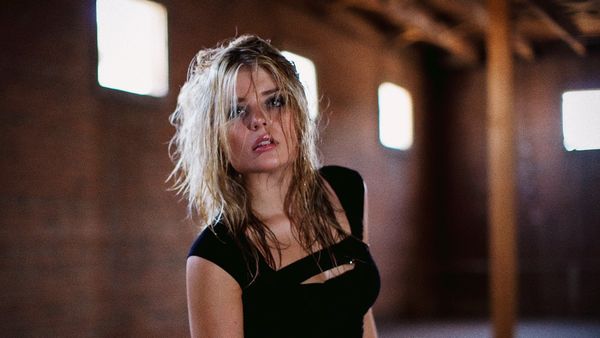
Here I am, age 15.
I was driving home from my doctor's appointment with my mother. I should note this was not just any old doctor. It was a psychiatrist.
In my hands I held two sheets of paper tightly, watching the highway curve through the valley the way I did every other day on my way home. This day felt different. My mind was racing.
On the sheets read descriptions of my brand new diagnoses — generalized anxiety disorder and major depression. On a sticky note attached to the paper read my prescription instructions. One pill twice a day, and then...I'd be cured?
"This is it," I thought. "The last day I'll wake up and go to sleep without having to remember to take a pill. Like I'm sick."
The rest of that day would be lost to my memory, like most days in one's mind. They pass by like a tiny blip on a long timeline.
I don't remember taking my first pill, hands most likely shaking, struggling to hold my glass of water. I don't remember that night, going to sleep or the next few weeks.
What I do remember is the day before Memorial Day.
Fast forward, and there I was in the corner of my dimly-lit kitchen. I was hallucinating wind chimes. A man was staring at me from the neighboring window.
I clutched a knife in my hands, and comically, a box of Cheez-Its in the other. You get hungry defending your home from a robbery. Or ghosts. Or demons.
I was up that entire night and spent the next day planting flowers on overgrown graves for relatives I never met or didn't remember. I can recall every detail of that day and night. But that's not important.
What is important are the weeks that followed.
I thought, "how could a girl with a depression and anxiety diagnoses believe anything could get better if the pills had made her feel anything but?"
Often times, when prescribed an SSRI (Selective Serotonin Reuptake Inhibitor), or antidepressant, like most depressed patients, the pill can increase mania in those suffering from bipolar disorder.
I didn't know it, but I had bipolar disorder.
Those two words hit me like atomic bombs dropped right in the middle of the psychiatry office — a silent, blinding, sharp-inhaled phrase against the dull backdrop of the tiny room.
Aren't bipolar girls the ones you hear about threatening their boyfriends? Stabbing people?
Going "crazy?"
Long after the bombs, this question lingered on the tree-lined valley ride back into my city: "was I crazy?"
I clutched the paper with my new diagnosis tighter than I had the last two. I read the prescription over and over.
A dose of an anticonvulsant in the morning (the most important discovery in treating bipolar disorder is arguably the discovery that it works like epilepsy and can be treated with anticonvulsants) and dose at night.
I don't remember taking my first dose, hands probably shaking. I don't remember the day the world went numb to me.
The only thing that kept me pushing forward were the words of promises and hope from others like me.
You see, bipolar disorder isn't a regular mental illness. Bipolar disorder can't be cured. The neuropathways in my brain will never be normal.
I can treat it, but I can never beat it.
At that point, I couldn't remember what OK felt like.
This prescription made me depressed, as the anticonvulsants only really treat the excitement in my brain, the manic part of manic depression. Slowly, I started to feel hopeless.
All of these prescriptions, all of these pills... for what?
Take the remote and fast forward a bit more. It's September 2016.
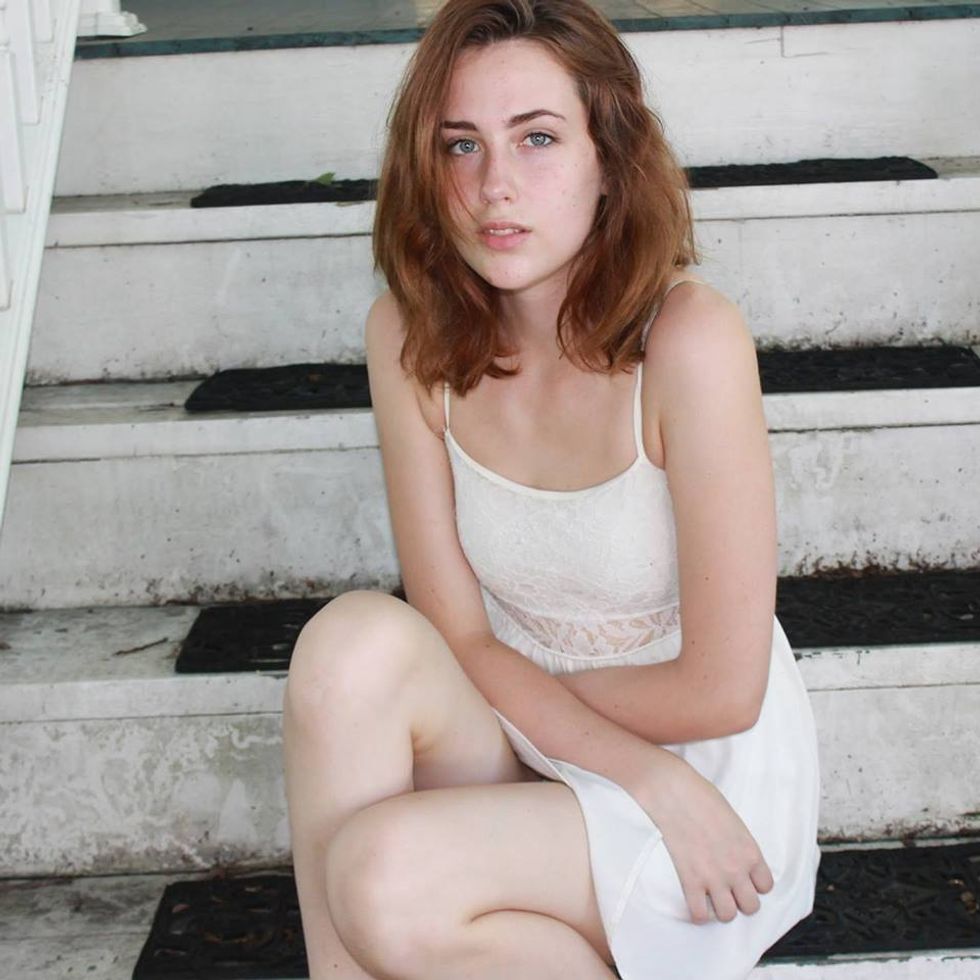
Me, age 16.
I spent a year taking these pills and nothing more. It became increasingly clear that my psychiatrist was more interested in my body mass index than my state of being.
She didn't listen to my suicidal thoughts. She didn't listen to the scars I was carving into my hips like I, the violin, and my knife, the bowstring.
She didn't listen to the increasing fear beating in the back of my brain like a drum — "was I crazy?"
It was a rainy ride home from practice when my mother had summed it up.
"I just don't feel like doing anything I used to anymore," I'd told her, the neon lights of the city painting her face a shade of orange.
"Yeah. You're depressed," she'd stated knowingly.
I felt the gears in my head start turning, pieces of the puzzle clicking together like they should've. I was depressed.
The question still pressed — could I ever feel better?
It was only a week later when I'd again sit in that tiny office and listen to that doctor tell me she's run out of options for me. It was two days before my first boyfriend would break up with me. It was two weeks before I started feeling completely hopeless.
Meaningless words of wisdom and promises that things will get better can only last you so long, like a well full of hope you can suck dry.
I left the psychiatrist that day in a frantic state. I was hopeless. I felt I had no future. I had no glimmer of happiness to believe in. Things came crashing down when my boyfriend broke the news – he never loved me.
"Great," I'd thought. "Now, I'm unlovable too."
Tensions inside my brain began to rise, building like steam inside a kettle without a hole, ready to blow.
I started doing reckless things. I stopped taking my medication. I snuck down my stairs in sweatshirts and cutoff shorts into strangers' Jeeps for the thrill of riding 90 without a seatbelt. I stared down the road daring it to hit me.
Tear me apart, I edged it on.
Somehow, I'd always come back home alive, sneaking back up the stairs in the morning hours and into my bed as the sunlight began peaking its way through the trees.
It was a Thursday when the idea finally solidified in my head. I could pull the trigger myself. I didn't have to feel any of it anymore — the depression, the anxiety that crippled me daily.
I had my friend take photos of me that day, thinking it'd be my last. When I got home, time just passed and passed.
I fell asleep and woke up the next morning alive and disappointed in myself. But I let the weekend carry me. I let the thoughts blossom like a garden.
I cleaned my room that Sunday night and poured all the medication I had out onto my desk.
"I am worthless," I thought while vacuuming my carpet.
"These are dangerous," was a second thought. Soon after, I poured the medicine back in.
It was an early morning hour after I'd finished cleaning my room (obsessively cleaning was a symptom of my mania, I'd come to find out), and I looked to the desk again, pill bottles lining it like little soldiers.
I poured them out again. If each pill was 100 milligrams — taking five would put me at a small risk of not waking up tomorrow.
Visions of eulogies and funerals covered in flowers danced through my head.
"Such a shame," maybe they'd say. "So young, pretty and so full of potential."
Yet, I woke up the next morning, and I woke up sick. I couldn't go to school, so I spent my day in bed letting my thoughts and pounding head whirlwind around me like a tornado until nighttime.
I had more pills to take.
This time, I took twice the dose. I took aspirin. I took anything I could find.
"She was poised to be valedictorian," they'd say with a somber look and a head shake.
I went to bed. I woke up. Repeat.
The next night, I took the rest of my medication. All of it. I wrote out suicide notes.
I wrote it all down in my journal. Gave them passwords to my computer. I had taken the last of the medicine at that point, and I went to sleep.
I went to sleep scared.
The rest of the details from then on aren't important, besides the fact that I hadn't died and woke up the next morning.
It was in a new, tiny office that same week, the same type of place I feel medicine had failed me, that my new psychiatrist told me about all of the different routes I could take with my medicine.
They put me on anticonvulsants again so I could control my mania, but they also gave me something for my horrible depression. They gave me medicine to control my anxiety long term. They even gave me something to help my ADHD.
It didn't happen fast. The change, I mean. I wasn't sad one day and better the next. As the months rolled by, as winter faded and spring thawed the snow, I realized that I felt like I did before my bipolar disorder began its course.
Now, hit the button on the remote that reads "live."

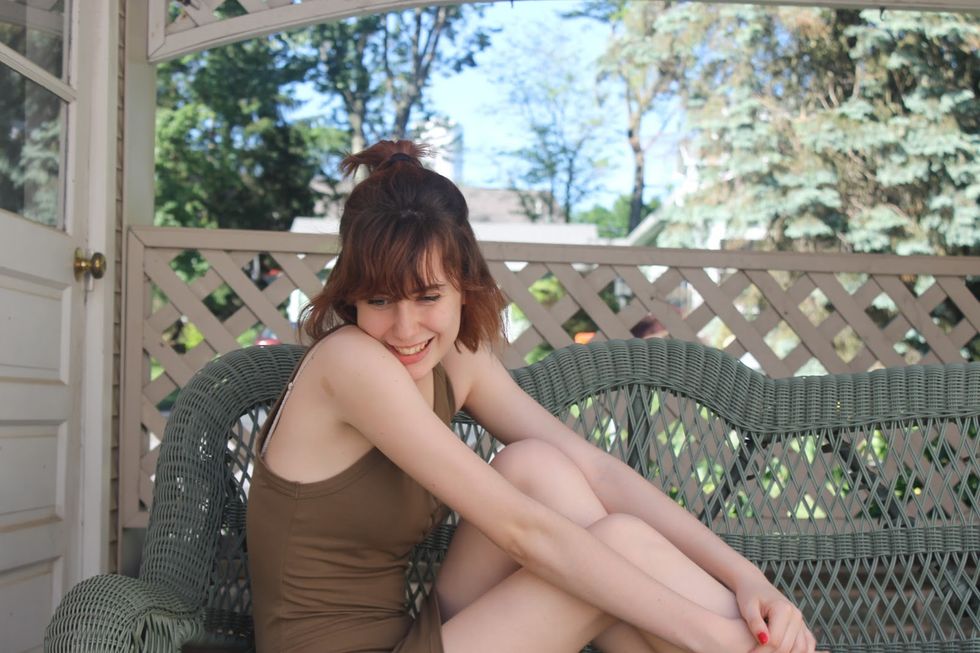
Me, age 18.
Here I am, 18, an age I never thought I'd reach.
The medicine I've been taking has helped my anxious brain. I can wake up in the morning and go to school without crippling fear. I can go to bed at a normal time and not stay up all night with insomnia.
I finally found the right meds for me.
Medicine is a hard mix to balance. Each medicine works differently for everyone. Each person needs a different mix to help them feel better.
Some people only need medicine until they feel better. Some people need it for a long time.
Medicine isn't scary. It's not wrong to need help. The brain is just like any other organ — sometimes it needs help.
If you need medicine, please don't listen to what people usually say.
You aren't weak for choosing to help yourself. You're strong for admitting you need help, and you're strong for keeping hope through what feels like the most hopeless parts of your life.
Keep staying strong. You will get there.
Just like the thousands of others like me, I promise you that your fight is worth the effort. One day, you will be OK.