
Throughout my entire life, I have been awkward, clumsy, and uncoordinated at anything and everything athletic. I was the girl in gym class that was picked last for every activity, and was typically daydreaming or running in terror from the game underway. My parents tried numerous sports to help get me involved with my peers, but I rarely succeeded at any of them. However, thirteen years ago, my life was changed for the better with my first baton twirling summer camp. From this experience, I dove into baton twirling, and competed at the state and national level for eleven years. With the summer Olympics coming up, it was brought to my attention that baton twirling is still not formally included as a sport. Here are a few reasons why I think it should be.
1. Baton twirling is diverse.
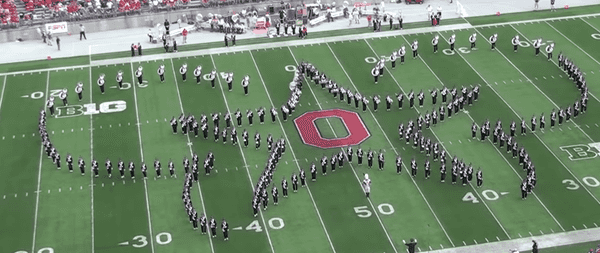
When most people think of baton twirling, the image of a majorette and marching band on the football field pops into their mind. However, there is a whole new world in the sport of competitive baton twirling. I have spent countless weekends in a school gymnasium or sports center competing with my teammates at an individual or team level. These diverse locations allow for different types of twirling, with the hardwood floor of a gymnasium as an advantage for bigger tricks. These two environments are both enjoyable for twirling, but very different. In addition, baton twirling can be found worldwide. We would often travel the country throughout the year for various competitions, and recently, one of our studio members was eligible to compete at the world competition in Italy. This wide range base displays that baton twirling is not only popular in my small studio, but can be seen in a menagerie of locations.
2. Baton twirling is physically demanding.
When I first began my career as a twirler, I honestly didn’t know what I was getting myself into physically. I soon found myself not only enrolled in baton lessons, but also core strengthening workshops to build endurance and basic gymnastic lessons to increase my flexibility. These were skills that were secondary to my twirling abilities, but fundamental to helping me be the most successful I could be. Baton routines are a short period of time (typically about three minutes), in which you must impress the judge to the best of your ability. When you have a large variety of skills, that’s a small time frame to cram in everything you’d like to showcase, and can be tiring early in the morning or after a long day of multiple performances.
3. Baton twirling involves a coaching staff.
I don’t know where I would have been without the encouragement, support, and love of my coaches throughout my time as a competitive twirler. I had multiple team and individual practice sessions each week, where my coaches would initially teach us the routine, then help us perfect it. My coaches also brought in guests from across the country to help us with our routines and alter them in ways they saw fit. This incredible network helped create beautiful performances. While I may have been frustrated with their strict attitudes at times, I could not be more thankful for my coaches’ push and drive to help not only myself, but our entire studio become improved and better twirlers.
4. Baton twirling involves practice.
I have probably put in hundreds of hours over the years at team practice, private lessons, or my own personal time working on the routines I was given. Getting closer to large national competitions, my studio even hosted a daylong camp where I spent 8 am to 3 pm working in a gym with teammates. Without practice, one would never be able to build upon the basic skills they are given, and move up to more difficult tasks. As much as I felt exasperated to work on a particular trick, section, or entire routine at times, I’m glad I put in the work when I did. My devotion helped my performances be the best they could possibly be, and helped me build my skill set over time. Practice doesn’t make perfect, but my hard work definitely helped me improve over time.
5. Baton twirling enforces the idea of teamwork.
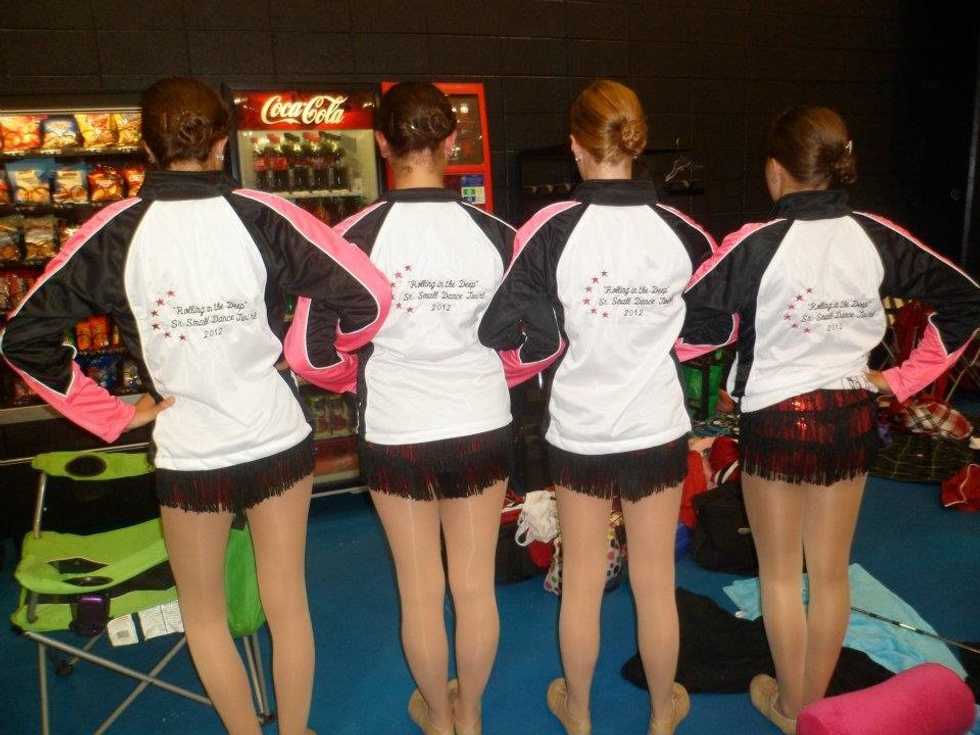
Team routines were one of my favorite parts of baton twirling, and I remained a team member long after my individual competition days were over. My teammates became some of my best friends, and I can honestly say that some of us still keep in touch today. Working on routines together requires each member to try their best, particularly for difficult exchanges or partner sequences. These girls pushed me to do my best even when I was feeling down, and always offered encouragement and support when I needed it. Walking onto the competition floor with them and offering some anxious smiles to each other before the start of a routine was one of the most thrilling moments for me, and I fed off of their energy and enthusiasm throughout the performance.
While I do not compete today, I look back on my time as a competitive twirler happily. While I may not have been athletic with mainstream sports, I found my home in a sport unlike any other, which has helped me grow into the woman I am today.