
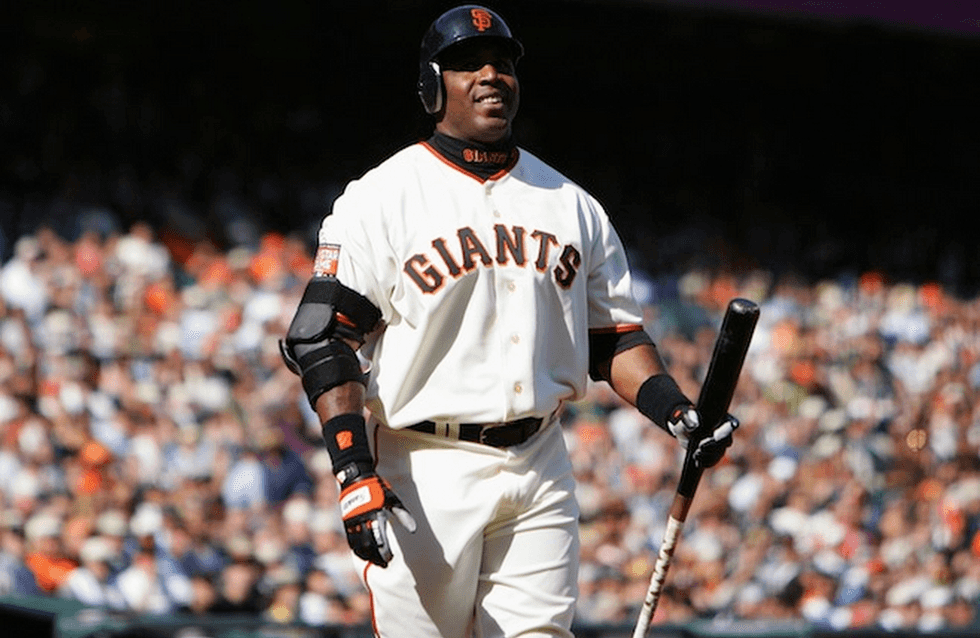
When I was in middle school, I remember going to a San Francisco Giants game only a few months after Barry Bonds set the all-time home run record. It was historic for baseball, but AT&T Park was left without a trace of Barry Bonds; there was no merchandise, posters, or anything that would have honored his greatness.
Over eight years later, the Baseball Writers Association of America (BBWAA) has given Bonds the same eraser treatment, going on a crusade by using the Hall of Fame ballot as their weapon to deny Barry the ultimate acknowledgement of his achievements. Undoubtedly some of the dislike is justified--after all, only very naïve fans could deny that Bonds cheated by using performance-enhancing drugs (PED). However, his denial into baseball’s Hall of Fame is not justice as some might claim: it is a convenient excuse to stick it to a hated player from a now-hated era. Barry deserves to go to the hall of fame even though he cheated and is hated.
Voters who vote against steroid-era players generally claim to be taking a moral stand to protect baseball’s history, but even if the Hall of Fame is a tool of justice instead of just an enshrinement of great players, there are inconsistencies in their ‘moral high ground.’ If its voters were consistent with taking a moral stance that PED users shouldn’t be in the Hall of Fame, there is no justification for a user like Mike Piazza receiving significantly more votes than Barry. Barry is not being kept out of the Hall of Fame because of strong ethical stalwarts: he is being kept out because of public opinion.
But an even worse inconsistency is the fact that managers who built their legacy during the steroid era with players who used steroids can be enshrined by the same Hall of Fame voters. Tony La Russa and Joe Torre were no doubt great managers deserving of enshrinement, but they sure did benefit from juicers like McGwire and Giambi. If voters can justify allowing La Russa and Torre into the hall because a little cheating does not trump their entire legacy, then that should also warrant Bonds’s induction to the Hall. After all, before the steroid use started in the 1998 season, Barry Bonds was already an incredibly special player. Before steroids, Bonds was a three-time National League MVP, eight-time golden glove award winner, and a home run champion and RBI champion in the NL.
The reality is that the entire era was dirty. The MLB players association and league created a culture in which steroid use was normal and covered up so that everyone benefited, but now some of the all-time greats are the only ones getting punished. The pitchers who pitched to him were guilty too, and even though it was unethical, it was the norm. That does not mean Barry is guilt-free, but to vilify Barry for his transgression in a murky ethical time in baseball history would be akin to keeping George Washington or Thomas Jefferson off of Mount Rushmore for owning slaves.
Of course I have my bias in growing up a Giants fan, but honestly a lot of the Giants faithful fans, including myself, are not Barry lovers. Many from the San Francisco Bay Area and beyond still hate Barry, and many would not mind seeing him fail to make the Hall of Fame. But the rationale for keeping him out is ethically inconsistent at best and hating him is not a reason to not honor what was a Hall of Fame worthy career.