The proud label “No Aspartame!” on many of our favorite goods at the supermarket appears to boast a sigh of relief for us all. While health kicks and new dieting techniques abound, it’s hard to tell what’s better for us, and especially what’s worse. All we seem to be sure of is that anything processed or artificially engineered is bad news.
Aspartame is one of the hottest subjects in conversation now, as we are told that it can cause cancer, lead to life-threatening diseases, and promote obesity and weight gain. But it is our responsibility as humans that have to ingest this food on a daily basis to know what exactly is in it.
Let’s start at a prime source of all the controversy.
Nancy Markle, have you ever heard the name? She’s the supposed author of an article written about aspartame being directly linked to “a number of toxicities” (FDA). She wrote specifically about its correlation with multiple sclerosis and seizures. This article was passed around for a while in the 90s after its surfacing, only to be, of course, discredited by the Food and Drug Administration.
Here’s another pot-stirrer: Dr. Mercola. You’ll find a number of articles he’s written about the dangers of aspartame by just searching his name on Google. (And since I know everyone will double-check all the information in this article as they go anyway, I’ll exclude the finer details.) Basically, this guy advertises himself as the savior for all those trying to be healthy.
Long story short there, we can’t deny that aspartame is criticized and widely unaccepted by many who cite its potential carcinogenic qualities and correlations to innumerable symptoms and diseases. Now, let me give you everything you need to understand it, in the form of quotes you might often hear from someone who believes aspartame is extremely dangerous, and the subsequent responses to these claims.
1. Aspartame causes [insert intimidating, well-known disease or frightening symptom, preferably associated with death, here].
Well, no. It doesn’t. First off, aspartame almost instantly breaks down into its three components after being ingested, so no one can truly be harmed by “aspartame poisoning”, whatever that is.
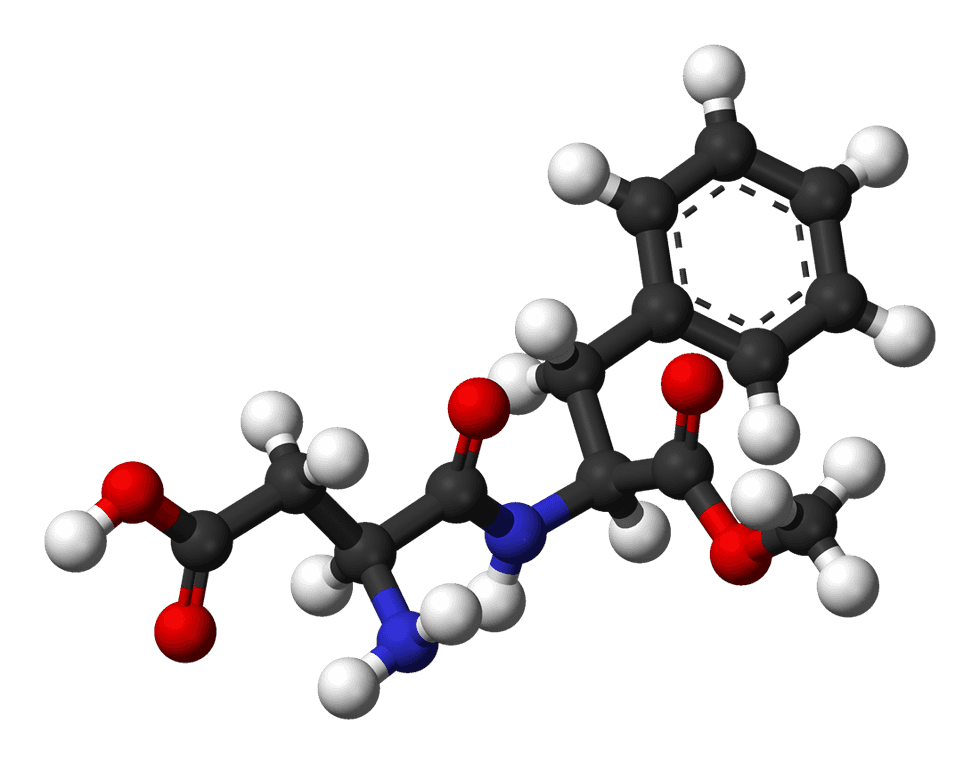
Let’s look at its composition here (thanks, Mercola!):
a. Phenylalanine (50 percent)
I’ve heard so much against this stuff. Really, guys? I bet you didn’t know until know that this scary-sounding mystery item is actually found in most warm-blooded animals’ breast milk, including humans. If it was as dangerous as it seemed, we probably would have all gone to dust when we were just pups.
There’s only one group of people that really needs to worry about it, and that’s the phenylketonurics. Don’t know what that means or who those people are? Well, you’re probably not one of them. In the US, there’s about a 1/10000 chance of a child being born with phenylketonuria (Examiner). If your baby is born with it, you’ll have to be careful about breastfeeding – but hopefully, if you’re soon-to-be mother, you will have already checked out the many, many, potentialities that come with being a baby mama.
b. Aspartic acid (40 percent)
This is simply a type of amino acid that actually produces itself in our own bodies daily (NLM). But if you’re looking for where else it can be found naturally, here’s a short, pleasant list you’ll enjoy: soybeans, walnuts, flax seeds, eggs, and almonds. Not so bad, huh?
c. Methanol (10 percent)
Here’s where it gets tricky, so read carefully. Yes, it’s dangerous and toxic in large amounts, but, again, small amounts of methanol are already naturally occurring in our own bodies (Andeal). And, it’s in fruit juice as well as tomatoes. The FDA has stated that an adult can consume 500 mg/day and still be safe. A regular can of diet soda has 20 mg of methanol in it. That means that you’d have to drink 25 cans of soda to even be near the cusp of exceeding your daily methanol intake (I’m not daring you, by the way). TL;DR: Methanol is potentially dangerous, but it’s already in our bodies. Don’t drink 25 cans of soda or liters of fruit juice a day, and it looks like everything will be fine for you.
(As Stewie from “Family Guy” once said, “I’ve read that starlight gives you cancer. Well, then again, what doesn’t nowadays?”)
2. Aspartame can cause obesity and over-consumption of sugar.
So can having a Starbucks planted on every street corner, leading to your inhalation of a grande Java Chip Frappuccino every morning.
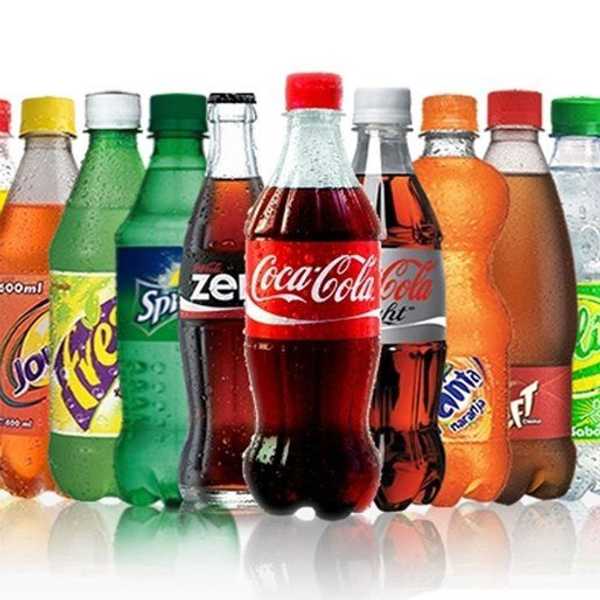
Aspartame is 200 times more concentrated than table sugar, meaning that you can consume less of it and feel as equally satiated with your sugar intake for the day (aspartame.org). The problem with this is not an actual health concern, but a slight mind confusion: you get your sugar, but there are no calories, so what you don’t get is the energy your body was looking for. Your brain ends up not quite satisfied in that area, which means you’re left feeling still hungry for your daily energy. That’s why you’re more likely to drink more diet Coke than you had originally wanted.
But let’s not joke around; at some point or another, we’ve all been victims of drinking more than we’d planned.
3. People claim to feel sick or have illness-like symptoms after consumption of aspartame.
Nobody is aspartame-sensitive, so get that out of your head.
A number of these (note: self-diagnosed) cases are caused by a very understandable concept: a vegetarian feels sick after eating meat, but only if they’ve adjusted to their meatless lifestyle. After not having it for an extended period of time, they feel sick because their bodies are no longer used to eating and digesting these proteins. The same goes for someone who has never had aspartame before, or especially children who have never had this artificial sweetener before in their life, literally. If you’re not used to something, your body isn’t going to like it at first, anyway.
However, many of these symptoms that people claim to have had are simply fake. It is actually all a mindset, and we’ve heard of this before: placebo effect. A 2015 study showed that 50 people who claimed that they felt sick after eating a cereal bar with aspartame also claimed that they were sick after eating an identical bar with no aspartame or artificial sweeteners (“Aspartame Sensitivity?”). The other 50 people, the control group, consumed some amount of aspartame on a daily basis, and complained zip when they ate their two cereal bars. It is the illusion and the precursory knowledge of it that causes the brain to essentially trick itself. This concept is most easily identifiable in cases of the placebo effect (e.g. when a person is unknowingly given sugar pills instead of painkillers, but their pain subsides nonetheless), or on a greater scale, mass hysteria (e.g. when a small group of people are enclosed in one space; one person says they are sick, and then, everyone’s suddenly sick).
What’s there to take away from this short article? While we’re all afraid of eating something that was created by man and not found naturally, we don’t always have to be so fearful. Aspartame in your yogurt definitely won’t be giving you brain cancer, that’s for sure.
As with anything, it’s important to alternate and moderate what we eat. All the anti-aspartame sources you’ll read will likely say that it “can” do this or it “may lead to” that, and so can everything else! We should all know by now that too much of anything is not good for you. The same goes for artificial sweeteners, as well as the same table sugar we bake our cookies with. I’ll leave you to decide as you please in the end, but if there’s anything to impart, it’s that you should just know what you’re eating.
If you’re evermore curious and want to check out the sources, here they are:
http://www.cancer.org/cancer/cancercauses/othercarcinogens/athome/aspartame
http://www.methanol.org/Health-And-Safety/Safe-Handling/Methanol-Health-Effects.aspx
http://www.andeal.org/topic.cfm?cat=4089
http://www.nlm.nih.gov/medlineplus/ency/article/002234.htm
http://www.examiner.com/article/attachment-parenting-101-can-you-breastfeed-a-baby-with-pku
http://hoaxbusters.org/aspartame.html
http://journals.plos.org/plosone/article?id=10.1371/journal.pone.0116212