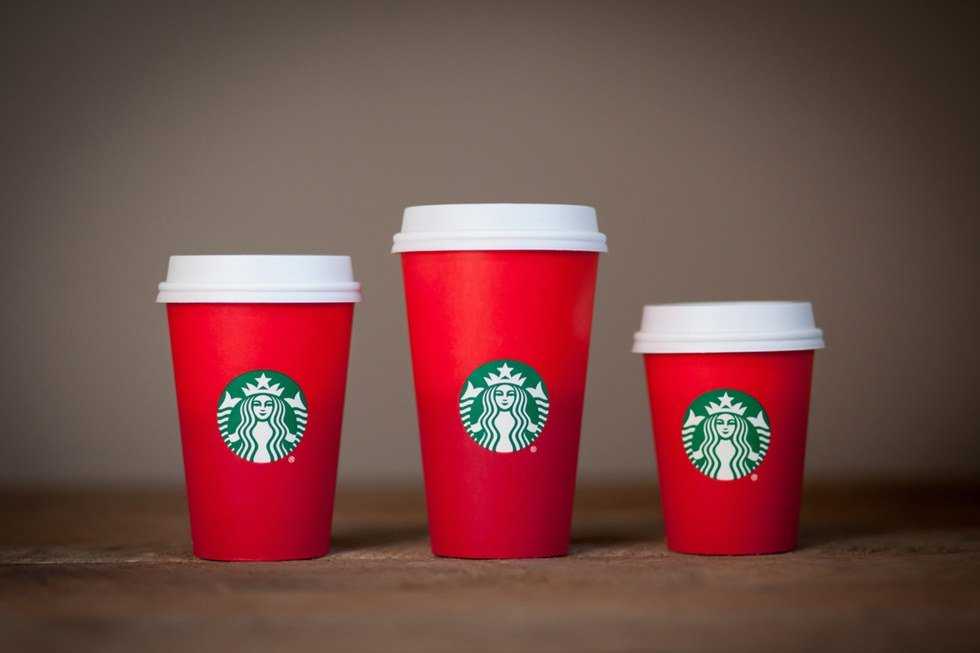
If you're on Facebook or Twitter, you've probably seen the trending hashtag #MerryChristmasStarbucks within the past few days. This social media movement began days ago with people voicing their opinions over the new Starbucks winter cup design. In years past, the red cups were decorated with symbols typically associated with Christmas. The new design features a more minimalist approach to unbiased festivity -- an ombre design with cherry red at the top, and a deeper red at the bottom.
This movement has sparked the "War on Christmas" argument that seems to occur every year around the start of the holiday season. As people begin decorating for the holidays, others get upset over the lack of Christian holiday symbolism.
Let's address the "War on Christmas" issue by first taking into account that the United States has no official religion, and while Americans predominantly identify with a sect within Christianity, that does not mean that we should automatically default to Christianity as the norm. Allow me to pose this question: Do you see Jews trending #ChagSameachStarbucks with the argument that there is a "War on Hanukkah?" Do you see the black community trending #HappyKwanzaaStarbucks with the argument that there is a "War on Kwanzaa"? I didn't think so. These people celebrate their respective holidays in peace. They do not require corporations to do something as trivial as decorate their cups with poinsettias, reindeer, and snowflakes. (You're just going to throw the cup away, anyway. Right?) Want to celebrate Christmas? First, learn what the true meaning is, because it's not your overpriced cup of coffee.
Here's another question for you: Do you know how that coffee got into your cup? No, I'm not talking about how the barista made your coffee. I'm talking about how Starbucks, and many other coffee chains, got that coffee in the first place. According to the Organic Consumers Association, "only 8.4% of the company's coffee purchases in 2013 were certified fair trade." An overwhelming majority of their coffee is produced by victims of human trafficking -- more specifically, labor trafficking, a modern form of slavery. According to the United States Department of Labor, coffee is produced by child laborers across the world.
My last question for you: Is the design of the new Starbucks cup the real issue at hand? My answer is a big, fat "heck no." Instead of whining about your privilege to drink overpriced coffee, maybe you should be complaining about human trafficking? This red cup fiasco is going to end after the holidays, but human trafficking won't stop until we do something about it. Educate your friends and family on the labor practices behind their cup of Starbucks coffee. Write to the CEO of Starbucks and question their labor ethics. Stop buying Starbucks. If you stop buying it, you won't even have a red cup to complain about.