
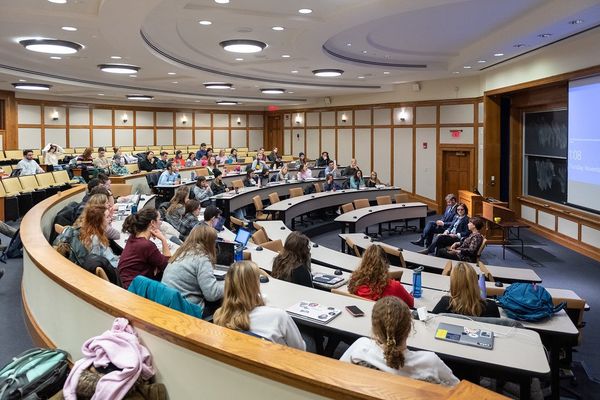


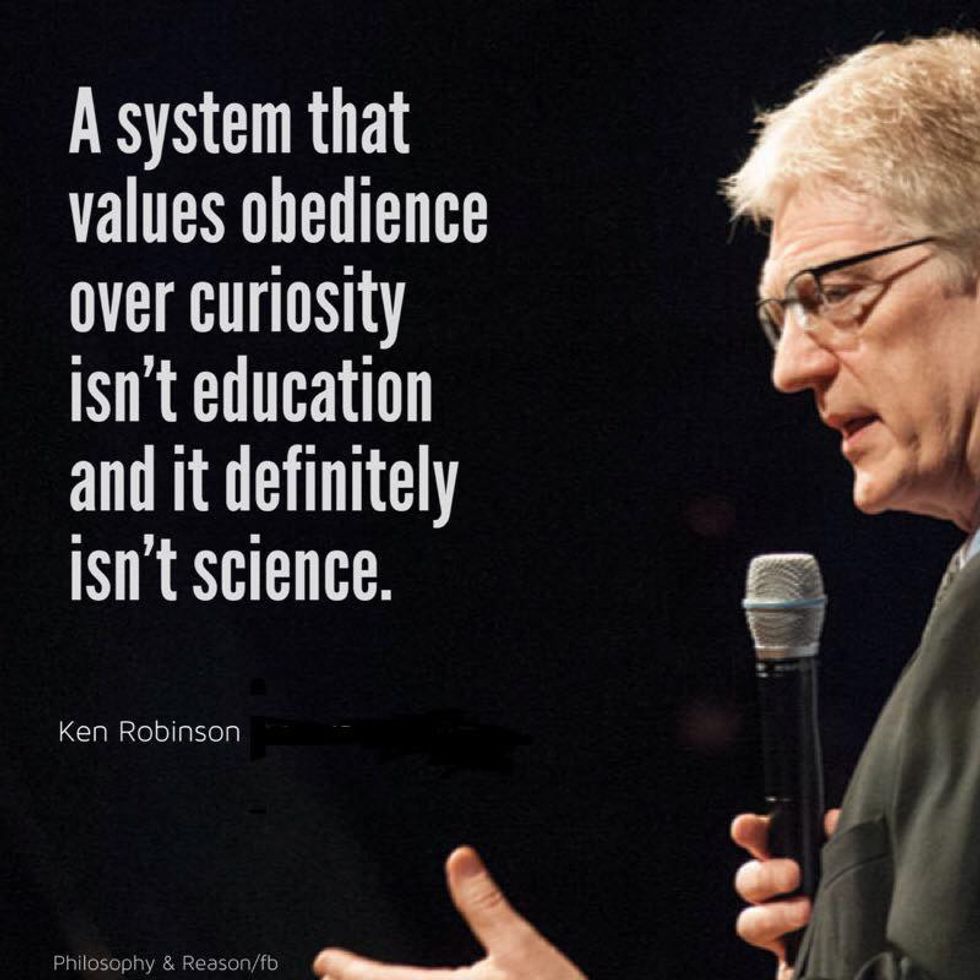
The American school system is causing a societally threatening decline in innovation because it is failing to recognize diverse intelligence, developing knowledge boundaries, and causing a false notion that the people with a stronger right-brain hemisphere are not as important or eligible for success as left-brain students. An education scholar Ken Robinson gave an interesting TEDTalk over the topic, suggesting the idea that schools are not honoring creative minds as equally when it comes to measuring success in schools. This statement is seriously unrecognized and needs to be analyzed further.
The left and right brain hemispheres can be defined as the way one gives directions according to researchers at UCMAS. If one uses specific geographical terms to give direction, for example, “Thirty miles north,” they probably have a stronger left brain hemisphere which means their natural way of thinking is from a logical standpoint. If another person gives directions by saying “Take a left at the stoplight by the drug store and then turn right at the stop sign,” they have a natural thought process that leans toward the right brain hemisphere, meaning they process information creatively.
The hemisphere in which the brain chooses to think is influenced by life experiences inside and outside of the classroom. If one is exposed to a more mathematical and logical foundation of learning in school at an early age, then it is more likely that they will develop that left side faster and become comfortable with using that side enough to the point where it is the basis of all thinking. Conversely, if one is introduced to education by using visual methods like picture books, television shows, and physical demonstration, they will adapt to the creative aspect. The prominent hemisphere can also be inspired by one’s geographical location, activities, and family history- anything that influences action, influences the mind. Because of diverse influences and multiple methods of learning, it is impossible to judge one’s overall intelligence based on logical academics that favor the left side of the brain.
Schools need to implement change to the system so both strengths are weighed equally when it comes to determining “success.” The act of educating has become so robotically clung to blatantly teaching kids formulas to apply to math equations, formatting how to write an essay paragraph by paragraph, and memorizing vocabulary terms. Unfortunately, the ability to solve a math problem by memorizing a formula is prioritized over the ability to paint a picture. If one is not involved in humanities, no exam is required because “it isn’t their fault” that they are not artistically suited. What about the creative kid? Shouldn’t it be that “it isn’t their fault” for not being logically suited for the complexities of quantum physics? There is a recipe for lesson plans that nobody dares to add ingredients to.
For more people to actually thrive in the future, they need to be pushed in their natural direction of talent, yet also pushed slightly in the opposite direction of their talent for challenge and deeper understanding. Schools need to add more creative content to the lesson plans and exercise the importance of the arts as core subjects needed to pass all students. This will come as more are aware of the dynamic between the left and right hemispheres of the brain. For now, budget cuts on the arts programs are being executed which is the last that should occur. The kids with creative thought processes are not being given the fullest opportunity that they could be receiving and are being told that they are not enough to be successful in the outside world. These minds are being exited from the educational system either from failing classes or failing state required standardized testing. Admission to further education is based off of these test scores, so as a result, creative kids with unrecognized ability are being denied a pathway to a degree because they can play the Violin better than they can solve the Quadratic formula.
Creativity needs to be highlighted throughout our school systems. Learning methods need to be deeply analyzed and suggestions for switching up traditional core content should be considered. These shifts will make an immense difference in every classroom and lead to more opportunities for all kinds of minds. Ultimately, it is in our generation's hands to brainstorm strategies for making the changes a reality; only time will tell.