Materials. We can’t seem to live without them. Our society relies heavily on trends. From the latest version of the iPhone to the newest style of a dress, consuming goods is the American way. We buy new clothes and new technology because it feels good. Consuming more and more feels good. We easily clear out our closets, donate or sell our clothes, and fill them back up with more "feel-good" items.
But have you ever thought about the work that goes into making the clothes that we consume with such ease?
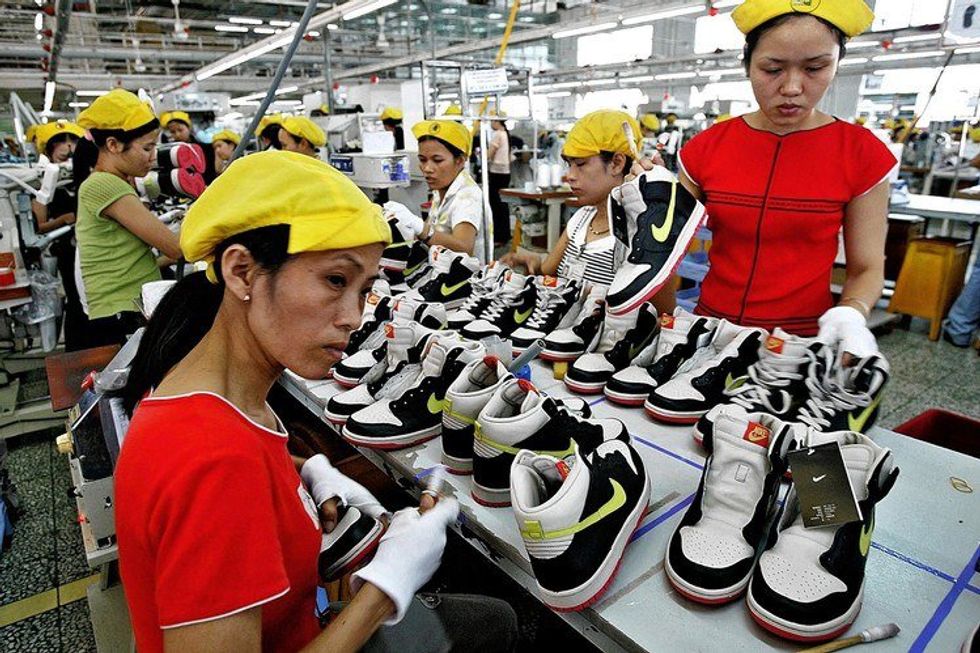
In Bangladesh right now, there are women with bleeding fingers and sweaty skin sewing together pieces of skimpy fabric a mile a minute for brands like Gap and H&M. The workers are mainly women from 18 to 20 years of age. They earn roughly 22 cents per hour and work approximately 100 hours a week. Not only are these wages too small to be considered living wages, they are overworked day in and day out with only two days off per month. In addition to the low wages, the buildings these workers spend their days in are faulty.
In April 2013, the biggest disaster hit the apparel industry. The Rana Plaza in Bangladesh collapsed due to the hazardous condition the apparel factory was in. With large cracks in the walls and a shaky foundation, the eight-story building tumbled down, killing over 1,200 workers. The workers knew the building was unsafe to work in, but the company owner brutally beat them and forced them to enter the building. The clothing the majority of the workers died making was for H&M, one of the most unethical clothing companies today.
Because a majority of our society has become accustomed to a life of constant consumption, there is not a moment that crosses our minds about where our clothing is coming from. I am guilty of this as well. Many of us think that by donating our clothing to consignment stores, we are acting righteously. It is nice to donate the clothing you don’t wear, but buying clothing in mass quantities or in “hauls,” as a lot of people call them, is not helping our planet or our human race. The only ones benefiting from buying excessive amounts of clothing are the manufacturers.
Not many people know about how horrendous the apparel industry is. Styles and trends are constantly changing and evolving so the apparel industry is putting out new products at all times. Unfortunately, the usage of Bangladeshi, Indian, Chinese, and many other ethnic women to produce apparel is never talked about. And because the industry is flourishing, why change the way they produce their clothing?
These major unethical companies like Gap and H&M are flourishing with their reasonable prices and attractive styles. It is a well-kept secret that they are the most notorious for the mistreatment of their workers.
I always knew companies took advantage of their staff in foreign countries due to the currency exchange and thirst for work. But, in February of this year, I began researching further into the apparel industry. I was saddened to find out that a majority of the clothing I owned was manufactured in foreign countries and most likely made unethically. I was ashamed to find that I was supporting clothing stores that inhumanely treated their workers. I was also shocked to find that half of the clothing I own were articles I rarely ever wore. I was consuming more and more goods without realizing how unethical it was.
Spreading the word about this corrupt industry needs to be done. The more people know about it, the less customers these shops will have. A majority of us will simply take our business elsewhere. But awareness is one of the first steps to changing how our society thinks about consuming inexpensive and convenient clothing items and goods.
Awareness of this industry and awareness of how materialistic our society is will begin the process of changing the way we consume and spend money.