On March 11th, a rally for Donald Trump was cancelled when protestors and attendees traded insults and engaged in violent skirmishes. This evidently spooked Trump from speaking. Reaction has been mixed, commenters mostly diverging on whether or not the protestors had instigated violence and, if so, whether they had crossed the line in doing so by censoring an (admittedly contemptible) example of free speech. In fact, the Trump rally protest and responses to it indicate just how divided America, Chicago and even University of Chicago students have become over what free speech entails.
President Obama, for example, made an oblique reference to the rallies in a speech soon after in which he condemned, "vulgar and divisive rhetoric aimed at women and minorities and Americans who don’t look like us or pray like us or vote like we do," while at the same time calling attempts to limit such rhetoric "misguided" and asserting the importance of the right to free speech.
Writing for the socialist magazine Jacobin, Trish Kahle (who's working toward a PhD at the University of Chicago) derided this type of strict defense of freedom of speech. “Trump rallies are not some abstract site where speech occurs,” she writes. “They are venues of hate where dissenters are attacked (by Trump supporters and staffers alike), where violence is condoned, and where Trump spews toxic bigotry. This climate of hate and brutality has a pernicious impact, mixing with a nationwide environment in which assaults on people of color are growing amid an uptick in hate groups.”
Kahle’s problem with such an absolutist perspective on free speech stems from her belief that it is tone-deaf to the fact that a) free speech is not an abstract ideal but a messy and always active affair, and b) it ignores power differentials between the powerful and the oppressed. When Trump’s very speech encourages violence and inequality, its disruption is actually a preservation of free speech, she believes.
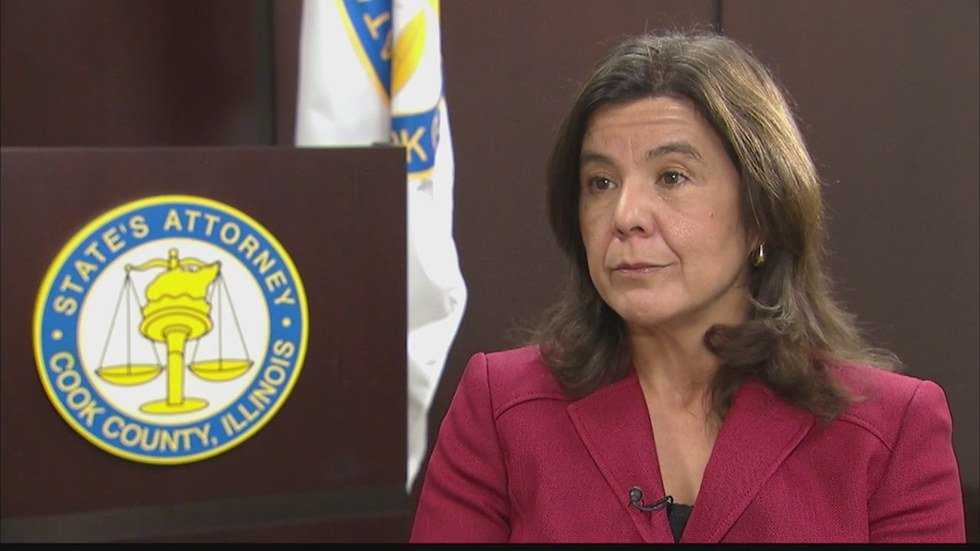
The same debate was run through earlier this year at the University of Chicago, when Cook County’s State’s Attorney Anita Alvarez was confronted with protesters at an IOP talk who drowned her out with (among other things) the chant, “Hey hey, ho ho, Anita Alvarez must go,” prompting Alvarez to leave. Many of the chants attacked her behavior around cases such as the murder of Laquan McDonald, in which she waited several months before indicting a responsible officer, or the arrest of Tiawanda Moore, a woman who recorded a pair of police officers when she came to report an incident of sexual assault from the CPD. You can watch part of the protest in a video online. While surely drowning out any other discussion during that time, the points brought up are precise and clearly voiced, contrary to some characterizations of the protest that I heard, and, if nothing else, the protesters made their presence known.
And so it begins: the IOP director David Axelrod kicked off a letter to the editor for the Chicago Maroon with the following leading question: “Do you believe in a society in which people simply shut down and silence those with whom they disagree? Can our democracy function that way?” Axelrod called the protesters "loud and profane," accused them of destroying a valid political discussion, and cited the IOP's role as a forum for diverse perspectives to debate under civil terms.
Four days later, Cosette Hampton, a member of one of the groups protesting (Black Youth Project) responded to Axelrod in her own letter to the editor in which she took Axelrod to task, writing, "Alvarez was the only one who failed to “engage in open discourse” on Wednesday—she showed that when she decided not to address my friends and instead left." Like Kahle, Hampton asserts the right of the oppressed to disrupt examples of public speech in an act almost of self-defense, especially if the environment in which such speech occurs is oppressive itself—for Kahle, rallies that engender and inspire violence against minorities; for Hampton, an institution that shuts out their voices.
At any rate, Anita Alvarez is no longer State's Attorney, defeated by Kim Foxx in the March 15th election.
There are a lot of particulars to sort out in these situations, depending on where you stand. Does shutting down a Trump rally really limit the possibility of violence inspired from his rhetoric, or might it only make Trump supporters, feeling attacked, more resentful, more radical? At what point does a public institution's policy, such as the IOP's, become imbalanced enough to justify such active intervention in its processes? Setting aside such distinctions, what both of these protests make clear is that Americans are operating off of vastly different ideas of free speech and the precedence it takes over other concerns. Surely, we need to resolve these different ideas if we are to move forward in a sensible way. But, either unfortunately or importantly, this will take a great deal of conversation and debate, clarification and argument. It's worth asking ourselves and each other: what are we talking about when we talk about free speech?