

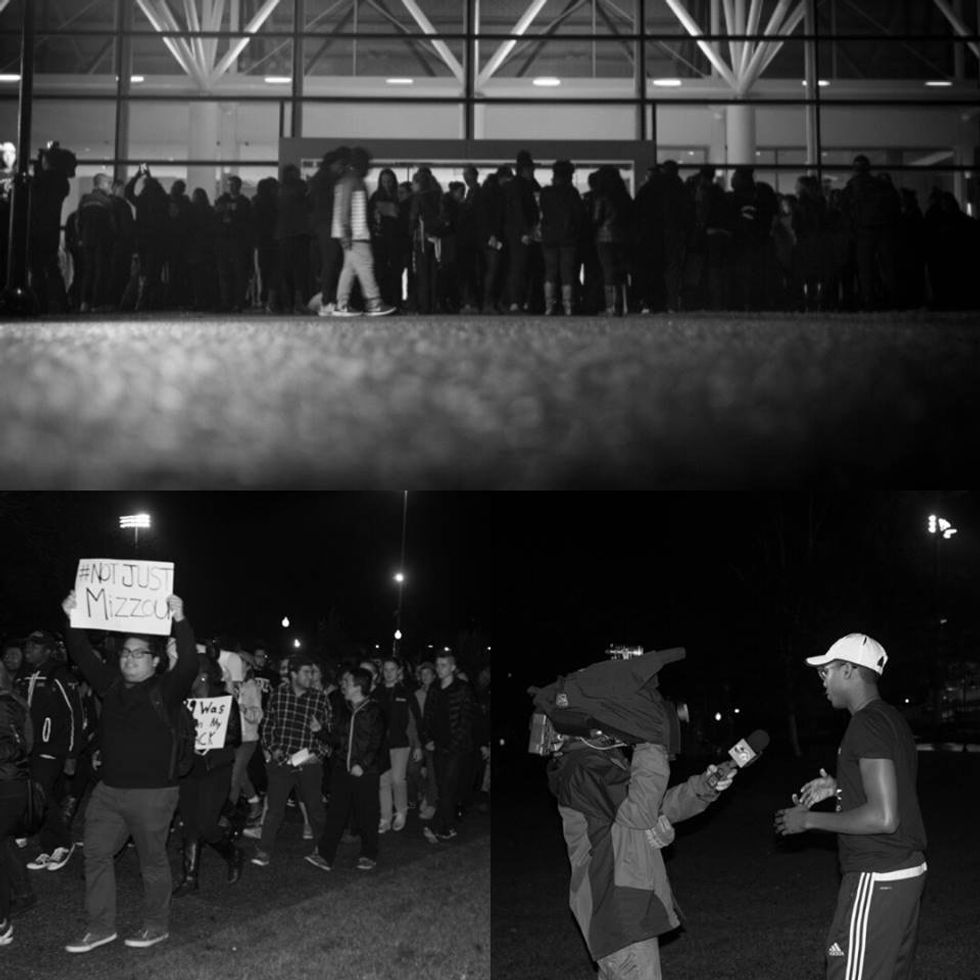
I’m a junior at Providence College this year, and I attended the PC Chapter’s NAACPs November 12 rally to support the victims of the ongoing racial discrimination and oppression at the University of Missouri. Having never attended a rally for any kind of social or political statement, I was surprised by a lot of the things people had to say.
I know that racial discrimination still exists in America, but I have to be honest and admit that I am ignorant about most of the incidents of hate crimes and racially motivated violence that happens in our country on a regular basis. While I know that it is my responsibility to be proactive and stay informed about social equality, I also feel that racial discrimination is overlooked in public media and therefore by many individuals of the white population. Often, even things we think we “know” about the history of social equality is distorted by textbooks. While it is true that social equality has made huge strides over the past decades, I think that in some ways it is easy to only see progress and ignore the issues that still exist.
This sort of “self-censorship” of our own world view and historical censorship by the education system lets us feel good about the fact that we have elected our first president of African American descent and ignore the statistic which states that African Americans now constitute nearly one million of the total 2.3 million incarcerated population.
What we need to remind ourselves is that only focusing on what is good does not make the bad just magically disappear, and teaching a sugar-coated version of history to American students doesn’t make this history true.
Thus, we arrive at my main point: #BlackLivesMatter. This movement started in 2012 following Trayvon Martin’s murder. One of the main goals of the #BlackLivesMatter movement is to spark action against and conversation about the ways in which people are marginalized and “left powerless by the state.” It is a way to bring attention to the injustice that continues in America.
At the beginning of this article, I said I was surprised by things I heard at the rally. My surprise is most likely due to my own ignorance of the racial discrimination that happens right here at PC. I love this school and what it stands for, but I was disillusioned by the negative and hateful comments that were made by PC students towards the rally and towards the #BlackLivesMatter movement. Furthermore, at the open forum that occurred following the rally, I listened to my own classmates relate racist experiences they had endured at PC. This surprised me even more.
I think the most important thing for white people to know about #BlackLivesMatter is that it does not imply that white lives (or any lives) do not matter. All lives matter. What the movement means is that Black lives matter too. Whether we choose to see it or not, individuals who belong to minority groups continue to be victims of marginalization, dehumanization, and “deprivation of basic human rights and dignity” despite huge strides in equality that Americans have made over the past several decades.
Basically, #BlackLivesMatter is doing what we all should be doing – recognizing injustice that nobody wants to acknowledge and doing something about it.

















