Dear public,
People always ask me what it is like to be blind. And to tell you the truth, it is not the easiest to answer or define. I am writing this letter to showcase my personal experience on being legally blind and what it has done to make me the person who I am today.
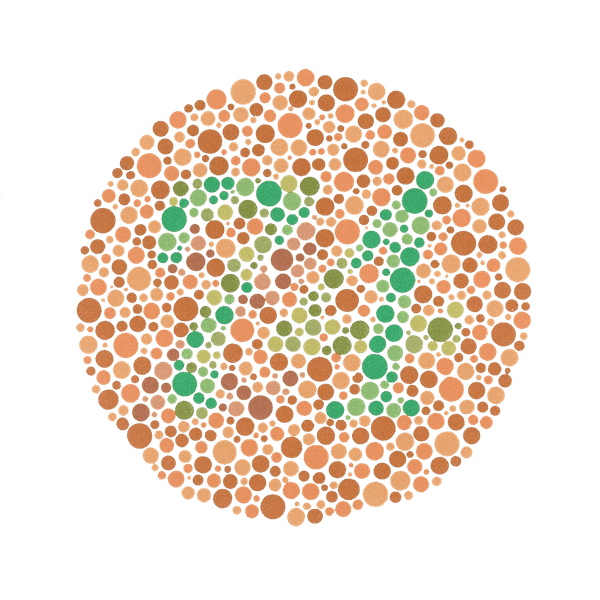
When I was a baby, my mother noticed something different about me. My eyes physically looked smaller, my eyes would move in all different directions, and I would walk into everything that was and was not in my path. After taking me to the doctor, they discovered that I had cataracts, a medical condition in which the lens of the eye becomes progressively opaque, resulting in blurred vision. This essentially means that I had cloudy vision. But that was the least of my worries. The next news I received changed my life. I was legally blind.
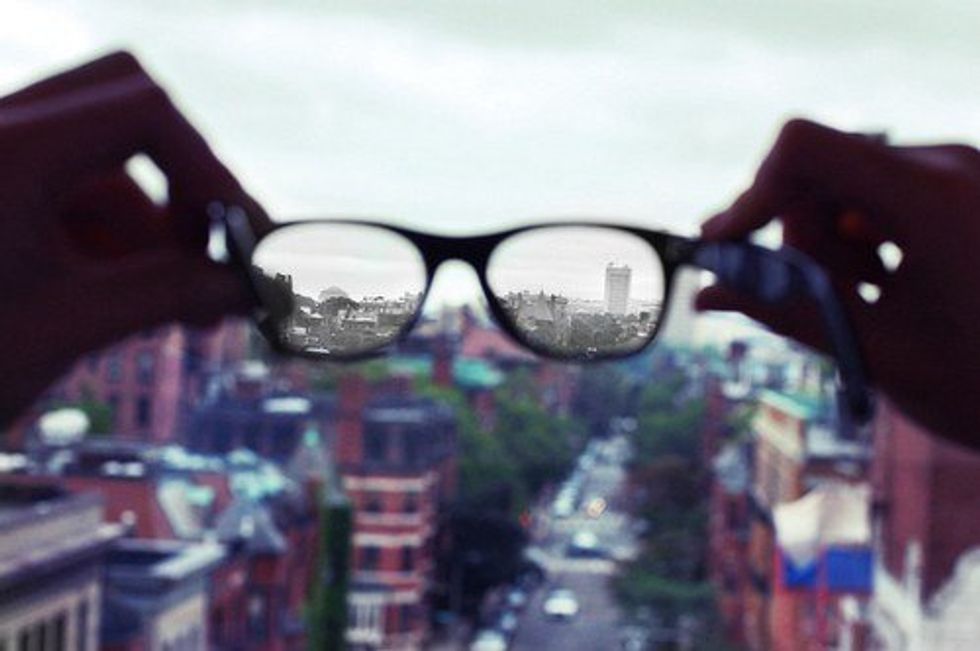
Currently, I am legally blind, I have Glaucoma and Nystagmus. Being legally blind occurs when a person has central visual acuity (vision that allows a person to see straight ahead of them) of 20/200 or less in his or her better eye with correction. Visual acuity of 20/200 means that what the legally blind person can see at 20 feet, the average person can see clearly at 200 feet. People seem to think blindness as binary: You're either completely sighted or completely blind. The truth is that what I see is unique to me and my condition. No other blind person will see as I do. Glaucoma is a condition of increased pressure within the eyeball, causing damage to the optic nerve, and gradual loss of sight. Luckily, I had a trabeculectomy, which means my doctor inserted a tube-like implant into my left eye to create a new channel to drain the fluid to help treat my condition. And finally, Nystagmus is a vision condition in which the eyes make repetitive, uncontrolled movements, often resulting in reduced vision. These involuntary eye movements can occur from side to side, up and down, or in a circular pattern. As a result, both eyes are unable to hold steady on objects being viewed.
I do not remember how I took this news of being blind, considering I was simply an infant. However, throughout schooling, I do remember that my peers, as well as my teachers, did not take this lightly, and not in a good way. I noticed some teachers and my peers looked at me differently as if I had some infectious disease that they would catch if they acknowledged my presence. People would say crude things behind my back, and sometimes to my face because people assumed that because I cannot see, apparently I cannot hear either. I felt as though being blind was a double-edged sword. On one end, I did not want to share my disability in fear of criticism and backlash, and on the other end I did not want to share in fear of overcompensation and being treated like I was a helpless child. In any case, I was afraid of what people thought of me, and the repercussions that would taunt me for the rest of my life.
People seem to act as if vision loss is a debilitating, black void filled with isolation and loneliness. And for a while I used to fall into that void, as if my disability was a tremendous weight that cannot be lifted off my shoulders.There seems to be this stigma towards people with vision loss that we are immoral, incapable, human beings that do not know how to do anything on our own. Because of this, I felt the pressure to assimilate into how society defines being legally blind, and that was just to simply ignore and keep to myself. I always felt the need to make sure that the people around me felt comfortable when, in fact, they were the ones that made me feel uncomfortable in the first place.
Once I reached college, however, I realized that I am not alone in this war of sight. I learned, through peers on campus like me, that we are not defined by our disability. I learned that having a disability can be a wonderful learning opportunity to see the world from a different perspective. I realized that I cannot be angry at myself for being legally blind, nor could I feel sorry for myself. Instead, I should accept the unique circumstances I face because it is much more work to wallow at your flaws, than to just accept them and embrace them. I decided that I would not let my challenges defy me and the person I know I am capable of being now. And to the people who think that they can define this for me, are sadly mistaken.
I admit, being blind has its challenges. But like any challenging times in anyone's life, you will overcome it, or, in my case, learn to live with it. And I hope by reading this, people are not apprehensive to share their story, too.
Sincerely,
"That blind girl"