
Warning: Spoilers ahead.
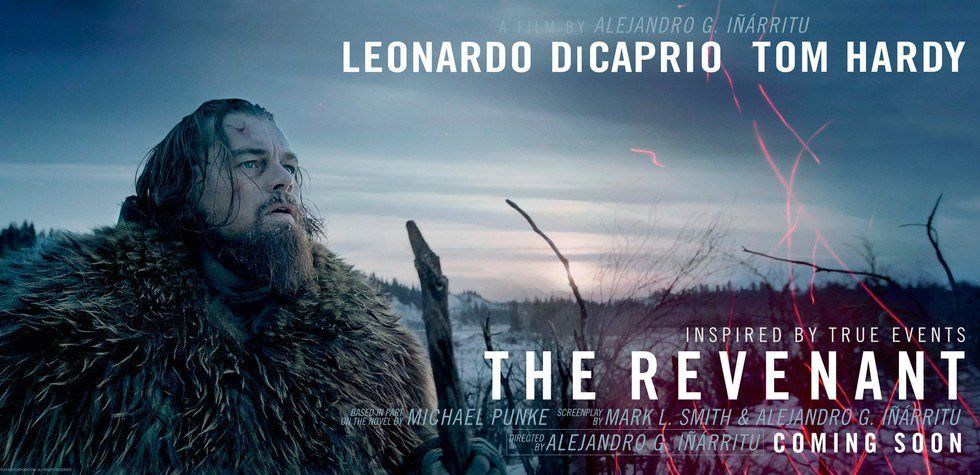
Whether or not “The Revenant” won Best Picture this past weekend at the Oscar’s, it’s a film that everyone should see. Not only is it visually stunning with its amazing use of cinematography, but its plot addresses multiple, universal themes that are personified by the amazing Leonardo DiCaprio and Tom Hardy. Don’t get me wrong, the whole cast does a fantastic job of bringing this story to life but DiCaprio and Hardy shine. DiCaprio plays the lead role of Hugh Glass while Hardy takes on the role of John Fitzgerald. Another thing that makes this film so great is the subtlety of what actually happens.

The film opens by having us join these two men and their hunting party as they are on the search for fur. They are ambushed by a group of Native Americans and have to leave the journey early. After fighting them off the best they can, the hunting party flees and starts to head back to where they came from. Glass separates himself from the rest of the group and is subsequently attacked by a bear. He survives, but the group is unable to carry him all the back to their destination. They discuss and Fitzgerald, Glass’ son Hawk (played by Forrest Goodluck) and Bridger (played by Will Poulter) stay with Glass and wait for help to return. One thing leads to another and Fitzgerald kills Hawk in cold blood as Glass watches. Fitzgerald convinces Bridger they must leave Glass behind or they’ll get killed by the surrounding Native Americans and that Hawk will be ok. Before they leave though, they hurriedly bury Glass as their hunting captain ordered them to when the time was right. From there, Glass somehow manages to crawl his way back to the fort to find Fitzgerald.

When watching this film, it seems to be pretty straightforward what happens: hunting trip goes wrong, Glass sees his son killed and then against all odds he makes it back to Fitzgerald. Honestly though, that doesn’t really make for a great film. What does make for a great film is the thought that Glass dies on his journey to hunt down Fitzgerald, his spirit unable to leave earth until he seeks his revenge. I’m proposing that Glass dies when he wakes up from sleeping in the horse’s corpse. There’s a brief moment where Glass is standing and looking around and the background behind him has a surrealistic and eerie distortion to it. After this scene, the next time we see Glass he is being found in the woods by the men of his hunting party. They return him to the fort, and he immediately wants to go out looking for Fitzgerald. His old captain says that he’ll die if he goes back out into the woods to which Glass replies, “I ain’t afraid to die anymore; I done it already.” Remember too that throughout his voyage back to Fitzgerald, Glass is writing Fitzgerald’s name down repeatedly, letting us know how truly obsessed with killing him he actually is. So much so that not even death could stop him. This is a bold theory, no doubt, but there are some compelling points.
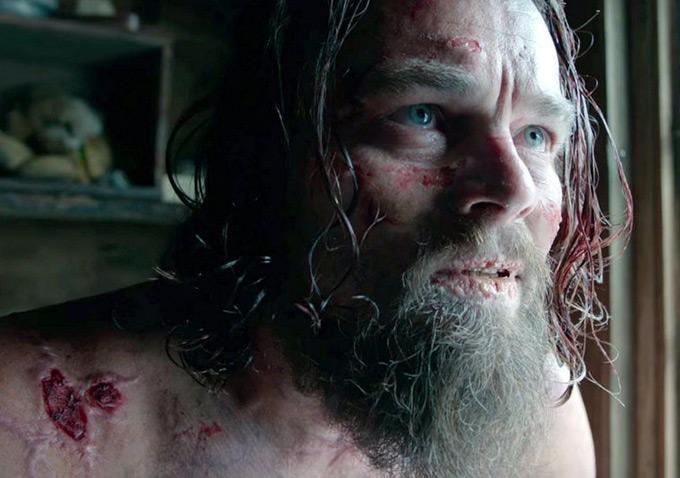
First of all, look at the title of the film itself. “Revenant,” as defined by Google, means “a person who has returned, especially supposedly from the dead.” Other definitions state its meaning as a person who returns after a long absence, but the most common definitions involve a returning spirit or ghost.
Now consider this: how many ghost stories have someone at some point saying that ghost are a manifestation of a spirit that has some unfinished business on earth and that is why they are here doing whatever it is they’re doing? This motif has been used to fuel horror/gothic fiction stories for as long as there has been horror/gothic stories being told. Here we see another example of that, just not so obviously.

Also take into consideration what the film is based on. “The Revenant” was originally a book written by Michael Punke who tells the tale of the real life man, Hugh Glass. However, the book is the straight forward tale of the bear attack, being left for dead, and return of Hugh Glass. Yes, Fitzgerald was also real and left him for dead, but that’s pretty much the only similarities the book and the film have in common. In the book, there is no Native American that saves him, he doesn’t sleep inside of a horse and, most importantly, he doesn’t have a son. The book is centered around Glass wanting to get his stuff that Fitzgerald stole from him, while the film uses the murder of Hawk by Fitzgerald as the source of Glass’ revenge. I don't know about you guys but seeing my only son get murdered would be enough to convince me that I had unfinished business that needed to be taken care of before I crossed over into the afterlife. Changing Glass’ need for revenge from trivial possessions to avenging his son is what makes this theory so much more convincing. By creating a need for revenge for something so heartbreaking and tragic, it completely makes sense that this is a ghost story.
While this film may seem like a standard revenge western, it is much more than that. Glass’ need for revenge on Fitzgerald after mercilessly killing his son transcends the realms of reality as we know them, causing a man to be unable to rest peacefully until his son was avenged.