With the recent bout of Norovirus in Chipotle's restaurants, people have started to question the basis of what is being called "fast casual" food in America. This term defines the group of restaurants that does not offer table service but still promises a higher quality of food than fast food. This includes places like Chipotle, Five Guys and Subway. Even when serving foods traditionally considered unhealthy, like burgers and fries, these restaurants create an image that their food is healthier and of a higher quality than your traditional fast food options, such as McDonald's Big Macs and Wendy's Chili. Most patrons exit fast casual restaurants feeling as if they made a positive, health-conscious choice. Compared to other options available in the fast food market, they have. Still, the reliance that people, especially Millennials and members of Generation Z, need to better understand where their food comes from not only at restaurants but also in the home. A burrito at Chipotle can have as many calories and as much fat content as a fast food burger, and nachos at Moe's can have just as many calories. Yet this is not even the scariest part of eating out at fast casual restaurants. Sodium content in all restaurant food, and portion size, still ensure that dining out is at its basis unhealthy.
It is true that most restaurants offer low calorie options, but few offer low sodium ones. And they are needed, as home-cooked meals contain much less sodium than meals bought at any restaurant. It makes sense though. Salt is needed as a spice and as a preservative. It helps keep food longer and does improve the taste. But it also offers disastrous health effects, such as hypertension (high blood pressure). Even though these healthier restaurants offer the ability to eat healthier foods in terms of being locally sourced, free of GMOs, and having low-calorie counts, more is needed to ensure that food is healthy. Sodium induced hypertension is a leading problem in America. Of course, eating a lot of salt is not the only way to cause the the issue, but it needs to be addressed. With so many Americans turning over their responsibility to ensure their food is healthy to corporations, we haven't went far enough to ensure that all repercussions of our consumption habits are understood.
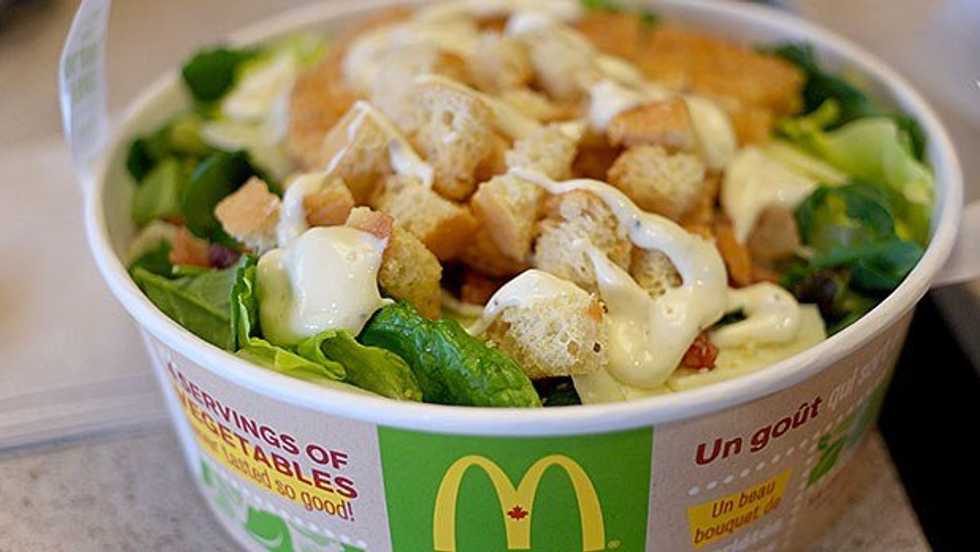
Fast casual restaurants use "healthified" menus to entice consumers. They do so by watching trends in our food industry. For example, American interest in superfoods (foods heavily saturated with nutritional content) like kale and salmon, and our transition to healthier grains like quinoa and Ezekiel breads, have been examined by marketing companies and mutated for personal gain. Perhaps the most notable souring of superfoods is McDonald's kale salad, which was recently added to Canadian menus. Unfortunately, the salad has as many calories as a Big Mac, an item that is synonymous with the restaurant's unhealthy menu. This appropriation highlights the sodium problem in restaurants, especially because McDonald's has released information about its new salad's sodium content. It rests at 1400 mg, which is over half the recommended amount for one day's intake. The chain, like others, started hiding unhealthy food under a healthy guise and a promise to be responsible in food consumption.
Of course, for a person who eats out few times a year, or even a month, this guise may be negligible, but for people that rely on dining out because of geographic location or out of habit, this information needs to be understood. Past calories, and where our food comes from -- Americans must worry about all aspects of fast food's nutrition. Hidden killers like sodium continue to plague us as a serious health risk that is not understood for many reasons, one such being that doctors are not required to take dietary classes and get little training on how to teach patients to eat. Dietitians are often not covered by insurance, and information available to consumers about nutrition is often contradictory, and like CPR procedure, changes far too quickly to keep up with. Until America understands the hidden horrors of fast food, our responsibility for our health will take a toll.