
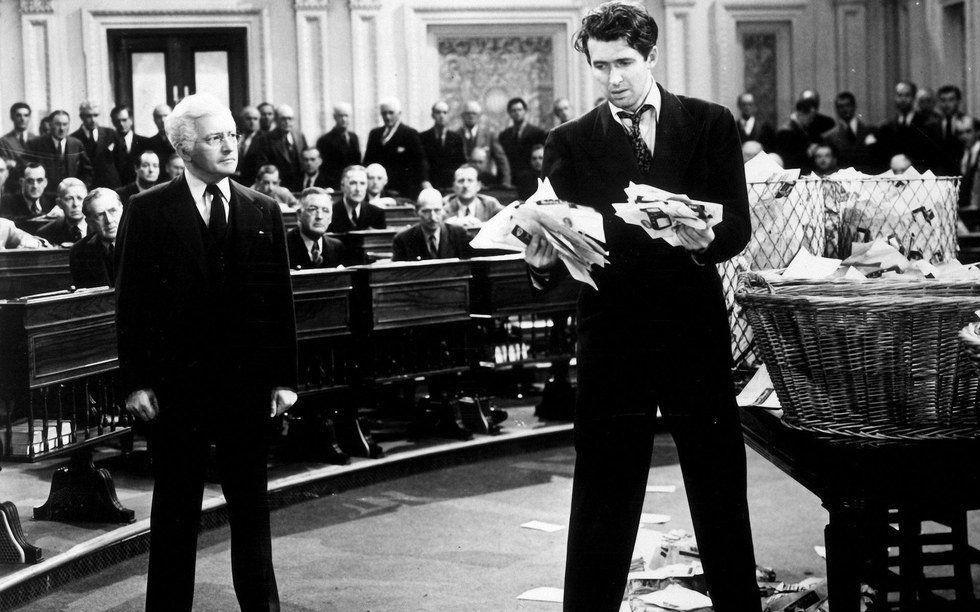
Last week, the President of the United States named his nominee for the vacant Supreme Court seat left by the passing of Antonin Scalia. Right now, I don't much care to talk about my thoughts on Judge Neil Gorsuch (though I'm sure observant people could probably guess based on my last two articles), or his chances of getting through the confirmation process. What I do want to talk about is a phrase that's gotten much more prominent in our politics in the last couple of days: the Nuclear Option. What is it? Should anybody be worried? Is this some sort of Cold War era, Cuban Missile Crisis-style sign of the apocalypse?
The short answer is: Senate intrigue, yes(ish), and absolutely not.
In general, the Nuclear Option is a general proposal to change the rules of a legislative body in a sudden and rather dramatic way; specifically here, it's a change to the rules of the Senate eliminating the ability of Senators to filibuster Supreme Court nominees. In 2013, Harry Reid, who was at the time the Senate Majority Leader, actually exercised the nuclear option and took away the Senate's ability to filibuster nominees to positions in the executive branch and almost all judgeships. That meant no more recreations of Mr. Smith Goes to Washington over the Deputy Assistant Secretary of State for Latin American Policy, specifically to stop Republican senators from continuing to block former President Obama's judicial nominees. But in a shockingly short-sighted move, Leader Reid left out Supreme Court justices from the rule change.
Now, Senate Democrats are threatening to filibuster Judge Gorsuch's nomination to the Supreme Court to signal their displeasure with how Senate Republicans treated the nomination of Judge Merrick Garland last year. In case you missed it, former President Obama nominated Judge Garland to the Supreme Court when Justice Scalia died, and Senate Republicans proceeded to throw themselves to the ground and have what amounted to a 300 day temper tantrum over the fact that Obama had the audacity to fulfill his Constitutional duties with respect to vacancies on the Supreme Court, and subsequently never acted on that nomination. Those same Republicans are now threatening to end the filibuster for all judicial nominees, or maybe even get rid of the filibuster for everything. So if you haven't gotten enough of the Trump era representing a break from traditions that have sustained our republic thus far, here's one more change to prepare for.