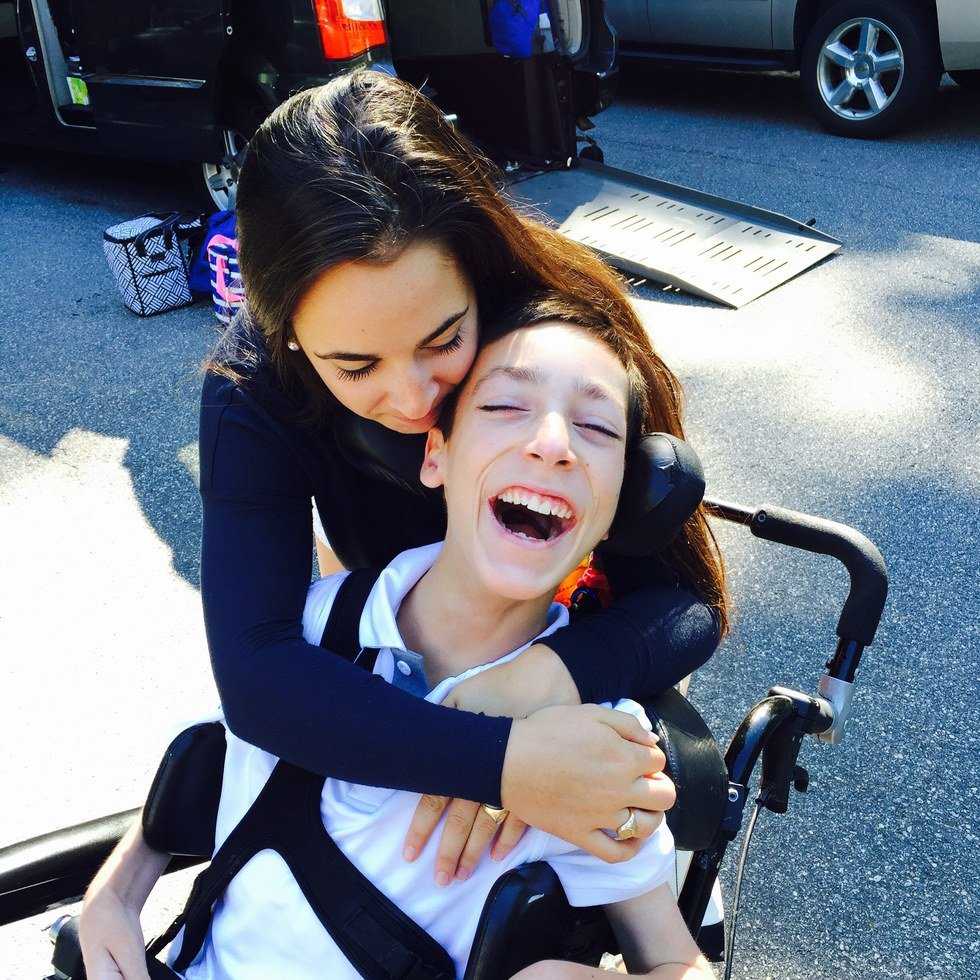
Since I can remember, our family situation has always been the same. My brother, Buck, was born with cerebral palsy and has never been able to walk, talk or even feed himself. I’ve never known anything different, and neither has he.
When I was younger, I could only acknowledge the more selfish hurdles I was presented with. Every time we left the house there was a 30-minute preparation process of gathering all of Buck’s things, making sure he was dressed, had food palatable enough to consume, getting him changed, getting him into the car, etc. To elaborate on the process of feeding him, that alone was another hour. Leaving the house for something as small as a trip to the grocery store was a commitment.
When we went into public spaces, I hated the way people looked at him. I hated the way people talked to him. I hated when little kids would point and ask their mother’s what was wrong with the boy in the wheelchair. I hated when adults reached out to shake his hand and waited for a reciprocation that would never come. When they asked him a question and waited with a look of confusion as to why there was no response to follow. It ripped a hole in my heart because I always assumed it hurt him even more than it hurt me.
When explaining my family situation, people often feel the need to apologize or offer sympathies. What is misunderstood is that there is no need for pity or apologetic remarks. There is no reason in reminiscing on what could have been or what should have been. Nobody is to blame for my brother’s disability, and it took me almost 18 years to come to terms with this idea.
Growing up, I felt an immense amount of guilt that I carried all throughout my teenage years. I constantly questioned why I had opportunities that were robbed from my brother since birth. Further, entirely bothered by the fact I could do nothing to help change his situation. It wasn’t until the loss of a family member that I began to understand the true impact that Buck has on the people around him.
When my cousin, Garrett, passed away my family came together to grieve. In the beginning, there were times where we all expressed guilt, blame, anger, hurt, forgiveness, sadness and a variety of other emotions. As many may understand, following the loss of a loved one there is a place of darkness and hopelessness. My brother, fully understanding of the situation, was the one who brought my family out of this inevitable rut.
Unable to use words, he sat quietly in his wheelchair, smiling and looking up. Surrounded by the grief, the tears, and the loss, my brother reminded us all that Garrett was in a better place. That despite the heart ache and tragedy, it was possible to go forward with a smile. The same strength and inspiration that Garrett always embodied, I began to see take shape in my brother.
Buck is a remarkable reminder that even in the seemingly worst of situations, a complete constraint of mobility and independence, there is still always a good reason to smile. If you were to ask him if he would change anything, if he could walk or talk, he would shake his head. My brother loves life, loves who he is and never wastes a moment wishing he was someone else.
For most people, we seek a life bigger and more extravagant than who we are. This exhausting cycle of seeking an unobtainable perfection only ever leads to disappointment. I encourage everyone to use my brother as not just an inspiration but a reminder that no matter your situation, in the darkest of times, there is always good reason to smile.