
Syria: A Forgotten Account of Atrocity
On August 21st of 2013, the entire world watched in an unmitigated shock as horrific images of chemical weaponry were being streamed to television sets everywhere. These attacks in Ghouta, Syria killed nearly 1,730 innocent civilians of whom performed no wrongdoing outside of having the misfortune of being born into an authoritarian regime that was notorious for its oppressive nature. Images of fathers and mothers grasping their dead children, images of young men and woman foaming out the mouth, images of blameless people screaming in sheer terror – the heartache that these images attached to them were nothing compared to the actual torment that these families endured. Following the attacks, President Barack Obama accurately stated that:
“The situation profoundly changed, though, on August 21st, when Assad’s government gassed to death over a thousand people, including hundreds of children. The images from this massacre are sickening: Men, women, children lying in rows, killed by poison gas. Others foaming at the mouth, gasping for breath. A father clutching his dead children, imploring them to get up and walk. On that terrible night, the world saw in gruesome detail the terrible nature of chemical weapons, and why the overwhelming majority of humanity has declared them off-limits – a crime against humanity, and a violation of the laws of war.”
In the days and weeks immediately following these unlawful war crimes, the international community temporarily unified in denouncing the appalling nature of the actions taken by the Assad regime against its own people. But this hopeful glimmer of collaboration quickly faded and the situation only worsened. In fact, the rambling proclamations of denunciation were nothing more than creative rhetoric, as even to this day, chemical attacks are still underway in Syria.
When examining the disgraceful civil war still underway in Syria, once begs to ask the question: How did we get to this point? The answer to this question is simple. After years of oppression and maltreatment by their own governments, the people of some of the world’s most crooked and unjust nations – Tunisia, Libya, Egypt – began a movement that has consequently changed the entire geopolitical landscape of the Middle East: the so-called “Arab Spring.” Despite the rather quick overthrow of their totalitarian leaders in each of these three nations, Syria has turned out to be a different story. Inspired by the initial successes of the Arab Spring and tired of nearly twelve years of despotism, the people of Syria took to the streets to demand change – something that can be compared to the very beginnings of the movement in Boston that subsequently led to the creation of the United States. But after Assad’s forces opened fire on peaceful protests, killing hundreds and wounding thousands, a group of determined and outraged Army officers took defected and formed the Free Syrian Army. Shortly thereafter, thousands of equally angered citizens linked up with causes such as this in order to counteract the abysmal nature of the Assad regime and to finally get their voices heard.
But, not surprisingly, the taking to arms only deteriorated the situation even further, as the Syrian civil war soon became nothing less than a proxy war between differing Shia (Iran and Hezbollah) and Sunni (Gulf states, such as Saudi Arabia) factions. Also, several months into the war, Islamic State in Iraq leader Abu Bakr al-Baghdadi began sending agents into Syrian guerilla groups in order to expand his organization there. The extreme pace of the Islamic State’s rise can be largely attributed to the extreme brutality of the Assad regime against its own people. According to one ISIL defector, the people of Syria had been “pushed into Daesh by hunger.” This source also told The Washington Post that ISIL provided the people of war-torn and economically deprived areas (where starvation and poverty were the norm) with a means of financial stability, and thus, a means of living. Of course, this only complicated things further. It is notable that presently, there are reports of chemical weapon attacks being used by both the Assad regime and ISIL.
According to the Syrian Observatory for Human Rights (SOHR), as of August of 2015, over 240,000 people have lost their lives in the ensuing conflict. In addition from the death toll, one-third of Syria’s population, or nearly 7.6 million people, have been internally displaced; while an additional 4,283,224 Syrians have become refugees attempting to escape the barbarous onslaught. Moreover, to once again complicate the issue even further, there has been a total of 8,573 air strikes by US and coalition forces under Operation Inherent Resolve; all of which have amounted to 16,075 destroyed targets and the spending of approximately 5,200,000,000 US tax dollars (or $11,000,000 per day). These figures obviously do not account for non-coalition airstrikes from nations such as Russia. Between the airstrikes of the US and Russia combined, at least 650 civilians have been killed. Conjointly, it is reported that in the first six months of 2015, government forces had killed nearly 8,000 civilians, at least a 1,000 of which were children. In fact, it is reported that for every Syrian that ISIL kills, the Assad regime kills 7 more. Civilian deaths have also been amounting from the activities of Kurdish and rebel forces as well. Despite only briefly mentioning a few of the many factors plaguing the hopes for peace in Syria, it is more than evident that the power struggle in the ongoing civil war is beyond complicated.
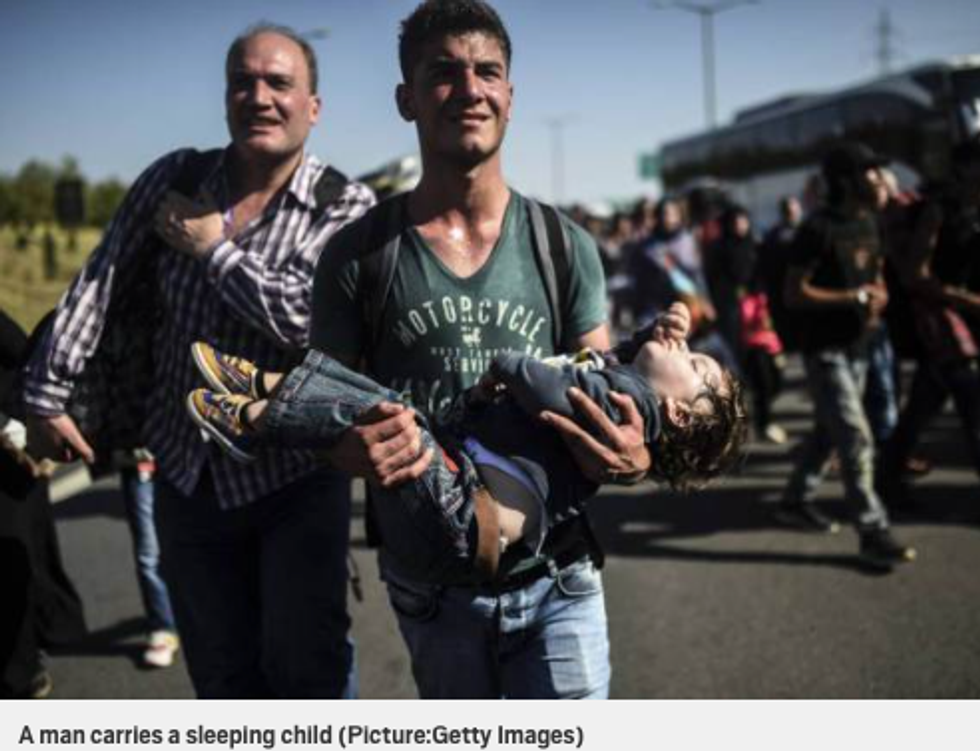
But more importantly, stuck in the middle of this mess of a situation are the defenseless civilians of Syria that chose peace over war. The reality is that at least 11.8 million people have been forced to leave their homes and families due to the absolute Hell surrounding them. These civilians are stuck in the middle of a brutal, convoluted conflict in which the rules of war do not apply. Chemical weapons are being thrown around as if we have not learned the horrifying lessons from the First World War; while, at the same time, thousands of airstrikes are raining down a firestorm from all sides. Yet, many people in differing countries around the world, including in the West, have the audacity to assume these refugees are seeking to bring conflict to foreign lands. This vastly held belief is simply ignorant to the absolute misery these people have encountered within the past few years.
We do not control where we are born. The reality is that whatever country this happens to be in, tends to be the place in which we stay to live out the remainder of our lives – and why wouldn’t it be? This is where our families are, our cultures are, and our languages are. The 4.2 million Syrian refugees are seeking one thing: peace. In fact, the desire for peace is to a large enough extent where they decided to risk everything in order to pack up and leave the land of their ancestors; and in this case, the land of the birth of civilization itself. These people are fleeing war – they are not trying to spread it into the nations in which they are seeking asylum.
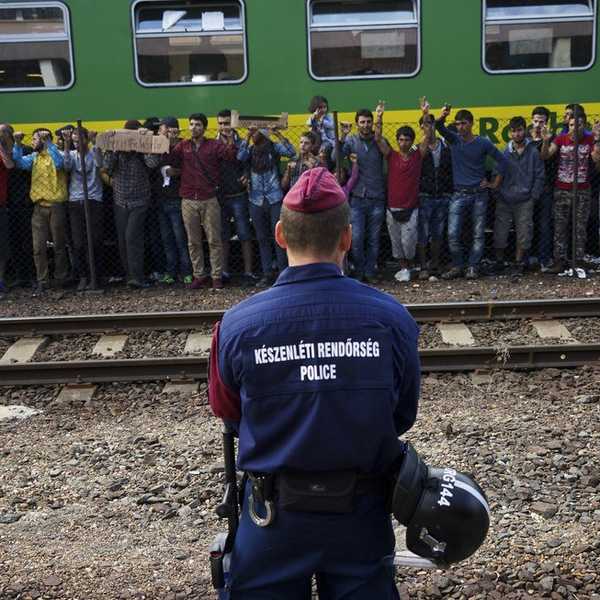
Moreover, it is important to realize that this trend is only increasing as the situation in Syria is stagnating at best. During the summer of 2015, Europe experienced the largest influx of refugees since the Second World War. During this time, nearly 8,000 refugees crossed into Europe daily (5,000 of these crossing through Greece). Also, in July alone, it is reported by the EU that more than 100,000 Syrians entered Europe. Since then, Germany has pledged to take in 800,000 of these refugees; which amounts to nearly 650,000 more than the number that currently resides in the country. Other countries have made similar pledges, although not to the same degree. France, for example, reiterated its pledge to take in 30,000 Syrian refugees in the aftermath of the Paris attacks, while Canada recently pledged to take in another 25,000. Interestingly enough, countries such as Saudi Arabia, Qatar, Bahrain and United Arab Emirates have pledged to take in a whopping zero refugees; although this is probably a good thing when considering the human right abuses that also occur in states such as Saudi Arabia. Additionally, it is important to note that the United States has only taken in 2,290 Syrian refugees, and has only “pledged” to take 10,000 more over the course of the next few years. This low number of refugees can be derived from low public support and the increasing fear of ISIL infiltration. In fact, 31 out of 50 US governors have openly stated that Syrian refugees “are not welcome” in their states.
The main route taken by the refugees during the massive summer influx of 2015 was through the Mediterranean Sea, where scenes of chaos and oftentimes death-by-drowning circulated the media outlets. It became clear that these people would do anything to escape the carnage encapsulating their homeland. When navigating the Mediterranean route, 751,873 refugees made their landfall in Greece, 144,100 in Italy, 3,592 in Spain, and 105 in Malta. In total, 899,670 refugees have made their way across the sea, but only to met by asylum waitlists of up to four years. This is important because according to the EU, refugees cannot work until given asylum – meaning many of these people will have no source of income for years. Moreover, it is expected that by the year 2017, nearly 3 million asylum requests will be submitted to the European Union. Interestingly enough, nearly 40% of these asylum requests have been to Germany where an “open-arms” policy has been instituted, while another 18% have been located in Hungary, where approval ratings for the asylum of refugees is only 12.3%. Many in the EU are concerned with the sudden influx due to the utter unpreparedness of the EU for the amount of asylum requests and the apparent “inability” to support these people. Additionally, many fear major demographic shifts among Muslim populations in countries such as France and Germany.
But perhaps even more troubling than the situation in the EU is the situation in the nations surrounding Syria that are also harboring refugees. A prime example of this is Lebanon; a nation with a population of only 4,151,234 that currently harbors 1,078,338 Syrians inside its borders, which is equal to nearly 25.5% of the total Syrian refugees. In these camps, refugees are living off of $13.50 per month, which equates to nearly $0.50 per day. Moreover, in Jordan, more than 80% of Syrian refugees are living below the local poverty line. Turkey, too, has taken in a vast percentage of Syrian refugees, as numbers there are now reaching 2,181,293, or 51.6% of the total Syrian refugees. In fact, simple math will show you that Lebanon, Jordan, and Turkey alone have harbored up to 91.7% of all Syrian refugees. While this may seem like these refugees are being harbored, it is important to note that the vast majority of them are located in camps and living in poverty. Worldwide there has only been 104,410 resettlement places, which accounts for only 2.9% of the total number of Syrian refugees.
Due to the fact that Syrians only comprise about 20% of the world’s refugee population, many seem to think the crisis is overstated. If it is true that most refugees are not Syrian (as during the Mediterranean influx alone, only 51% of refugees were Syrian, while 20% were Afghani), then why are they to be deemed as any more “dangerous” than others? It is interesting that 31 out of 50 US governors specifically stated that Syrians were unwelcome, meanwhile an even larger amount of refugees from other deranged parts of the world, such as Afghanistan and Somalia, are also attempting to seek asylum in these very same states. Since 9/11, the United States has taken in approximately 784,395 refugees and only 3 (0.00000382%) of these individuals have been arrested on terrorism charges. In fact, thanks to messages of fear in the media outlet, the absurd notion that immigration is somehow linked to crime is running rampant throughout the United States. But in reality, it is common knowledge (or at least should be common knowledge) that no such correlation exists.
Despite this, the refugee influx is a major problem that will spread across the world, and in particular the EU, in the coming years. Many of the countries the refugees are currently being held in, such as Lebanon, Jordan and Egypt, just simply lack the economic capacity to support these people. Moreover, there is an unequal distribution of refugees in countries providing asylum. For example, Germany has taken in 75% of the total EU Syrian refugees. While it is true that some countries, like Germany, need an influx of younger, working-age individuals (as more than 50% of Syrian refugees are below the age of 18 and 97% below the age of 60) to offset the growing age of their population, a massively unequal distribution will only increase the risk of upsetting demographic boundaries and even disrupt socio-economic foundations. It is for this reason that a broad coalition of willing countries must come together and distribute the resettlement of these refugees accordingly into a system that is not based off of human-bias; but into a system that makes logical and mathematical sense.
For too long the world’s “leaders” have sat back and watched the oldest cities of human civilization burn to the ground. For too long the world’s “leaders” have watched idly as thousands of innocent civilians are gassed to death while still clutching their loved ones, who blister in pain for dear life. For too long the world’s “leaders” have watched millions of wartime refugees, wanting only to escape genocide, starve and suffer. It has been nearly five years since the start of the Arab spring that initiated the Assad regime to murder unarmed protestors attempting to cry out for freedom; thus, sparking the bloody and ongoing conflict in Syria – five years and what has been accomplished? The reality of the situation is simple: Innocents are dying as the international community wallows in fear and self-interest.
The inability for the world’s “leading” governments to genuinely act on the refugee crisis only symbolizes the ignorance and sheer hypocrisy we all share; for it was only two years ago that Americans were demanding the Obama administration help the Syrian people after the deadly gas attacks at Ghouta. Obama’s rather thin “red-line” has been crossed one hundred times over and yet there has been no real action to make a difference. In his address immediately following Assad’s chemical attacks, Obama talked of crimes against humanity – well, likewise, it is very well justified to deduce that the world's leaders’ inability to act under a united flag in times of great peril is a crime against humanity in itself.
* * *















