
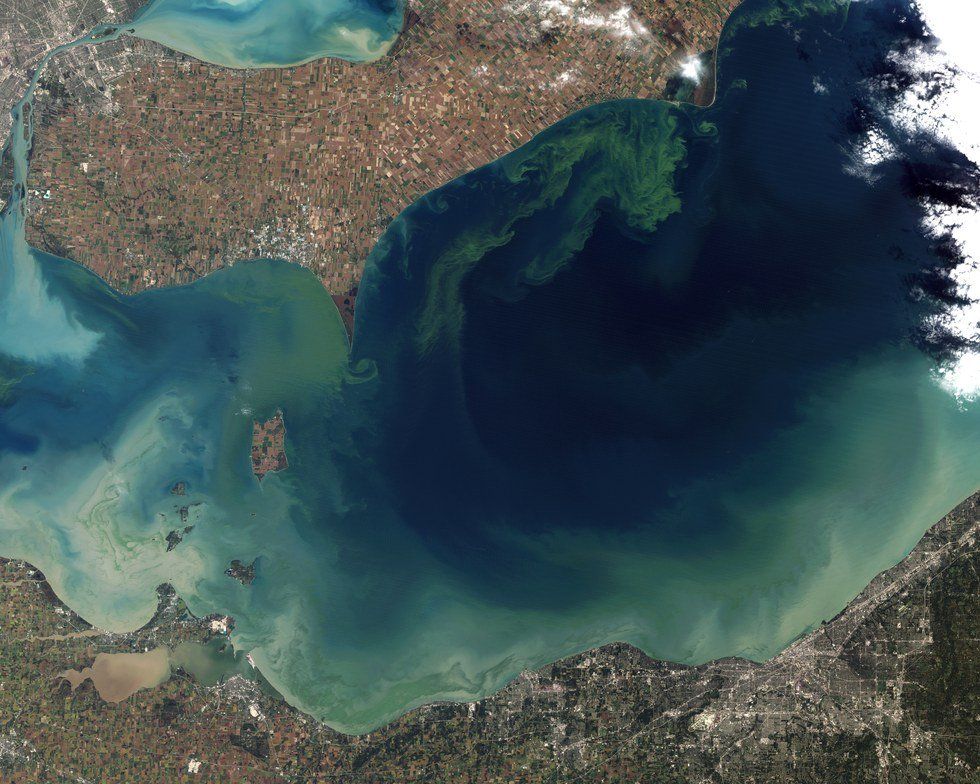
As I write this, I can look out a plane window and see shimmering water, but unfortunately, our water here in the United States is not always shimmering like it used to. Lake Erie offers a perfect glimpse of what our water is becoming.
In 2014, for the residents of Toledo, Ohio, and the surrounding areas, tap water was undrinkable. The cause of the problem was Microcystis, a toxin produced by certain freshwater cyanobacteria such as blue-green algae. This algae is not unheard of in Lake Erie, but it has never appeared at such dangerous levels. The rapid increase in the size of the algae blooms is the result of increases in nutrient-rich runoff and the combined sewer systems of cities like Detroit; however, there are ways to combat these causes.
First, fertilizer and other nutrient-rich compounds must be properly applied. The proper application of fertilizer has benefits for both the environment and for the farmers themselves. The ecosystem also benefits because there is less nutrient rich runoff when fertilizer is properly applied. This is due to the fact that the nutrients that fertilizer has, are all absorbed into the plant. In this way nutrient laden runoff is reduced, therefore helping the environment. Farmers are also helped by the proper application of fertilizer due to the cost of the fertilizer. When a farmer puts on too much fertilizer, they need to purchase more fertilizer which cost more money. By applying fertilizer correctly, farmers are reducing the amount they need to spend.
The second way in which algae blooms can be reduced is by replacing outdated combined sewer-storm drain systems. In these systems' sewage, which are nutrient rich, nutrients can flood out in to bodies of water when heavy rain occurs. This puts more nutrients in the water, which leads to increased algae blooms. The only problem with this plan is the cost. Much funding is needed to replace these systems, so they will need to be replaced in pieces.
Our environment is hurting and there is a way that we can prevent it. We must learn to properly apply fertilizer, and we must replace outdated sewage systems. Doing these two things will not solve the problem at hand, but they will help the environment in a significant way.