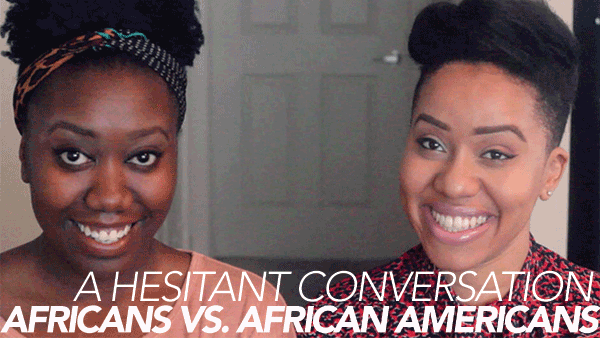
A heated conversation with a much older family member of mine about the relationship between Africans and African-Americans left me frustrated and annoyed. I initiated the conversation in attempts to educate and soften this person’s heart on the issue, but instead the conversation became divisive and I wished I had never even brought it up. It reminded me essentially of how rigid, judgmental and unwillingly to change their stance, some traditional West Africans can be. I essentially started the conversation around how I felt some Africans contributed to the rift between our African American peers. I stated that often times we could be judgmental about their culture, about their mass incarceration rates and their attitudes based solely on our experiences with them in the community or in the work field. I sought to explain to her that a lot of the conditions that plague the African American communities are the results of slavery and institutionalized racism. I sought to explain that sometimes our own feelings and experiences with our AA peers need to be secondary to our understanding of their plight and patience for their struggle.
This family member of mine shut me down in a matter of seconds and stated that when she first immigrated to America her expectations of the reception she would receive from other black people was different from what she experienced. She expected to be welcomed by other brown people with open arms instead she was insulted, alienated and disrespected by these same people. She was told “go back to your country,” called dirty, told she was poor and pretty much any/every other false stigmatization of Africa and what the continent and people were like was used as an insult against her. She stated that when she first arrived here the AAs she met not only disrespected her, but they also felt they were better than her. She goes on to explain that in the several jobs she had held in many different fields her AA peers expressed that they didn't want to and shouldn't have work, that they deserved reparations for the horrors inflicted on their ancestors and that essentially set the tone for the kind of attitude they came into work with every day. Said that in all her years in this country she had met very few that weren't that way and that in her opinion most of them were mean, lazy, ignorant and unwilling to help themselves out of their own circumstances.
Of course, after that, the conversation went left and came to an abrupt halt. There was no rebutting or conversation that could be had without me losing my temper and coming off as disrespectful so I ended it. Now, growing up in Harlem brown faces are the majority. I admit that in school I was severely bullied for my name, my complexion and my culture by African-Americans and my self-esteem has been through the trenches because of it. Years later my self-esteem ability love myself is recovering and healing but even better so is the ability to empathize and forgive. Africans in school often get bullied by African Americans, this is not something that new or shocking but it is a conversation that needs to be had. When you look at American media in general and even go on to look at how American curriculum teaches what the African continent is like they never do us any justice. Feed the children commercials, the overuse of words like “wild” “jungle” “safari” “tribal” “uncivilized” and “indigenous” all insinuate an underdeveloped and destitute Africa that for the most part hasn't caught up to the 21st century. We, of course, know that this is false, we have 54 or something (don't quote me) beautiful countries and countless cities with amazing infrastructure and booming economies. There are of course places that are underdeveloped but even those places are nothing like the jungle and the people are far from Tarzan. As African people, we know this, but for African-Americans who garner their information from skewed media and biased American education systems, they do not. It is difficult to say and exercise but patience goes a long way and so does educating your peers. Most people will scoff "they aren't stupid they should do their research” but really it isn't that simple and understanding that they were taught to hate us as a way to hate themselves will have you thinking first before you catch feelings and write them all off.
My issue with Africans who critique African Americans on how they hurt, and how they deal with their hurt is simply that they do not know what it is like to be in their shoes. Africans, of course, have experience with colonization and imperialism but being torn away from your home, culture, language, and blood is another beast. They created a culture here for themselves in spite of everything, they built this country brick by brick and endured unimaginable horrors and while their conditions have improved they are still held at the lowest levels of American society. They weren’t allowed own homes, to read, to write, to better themselves,to build futures for future generations, or to learn to love themselves. In turn, there are black communities all across the country breeding turmoil from the institutionalized oppression of what they have the potential to be. Understanding why and how black on black crime is a direct result of black youth being denied equal opportunity and the American culture of hyper-masculinity and violence is important.
Understanding that black people have been scorned and forced to the bottom economically and socially which in turn disables them from getting equitable educations which allow them to compete with non-P.O.C students across the country is important. Understanding how that disadvantage from the very beginning coupled with the injustices in their communities breeds conditions that ensure that they often times lag behind non-P.O.C for jobs, resources, and opportunities are important. Understanding that their men, brothers, uncles, and fathers are incarcerated by the thousands leaving their children fatherless and mothers tasked with the burdens of raising families alone is important. Understanding how these children grow up without their fathers and their mothers are often too busy to be as hands on as they should be is important. Understanding that Equality and Equity aren't the same is important. Understanding that NOT A SINGLE condition that plagues African Americans cannot be traced and tied back to race, slavery, or oppression is important. And understanding most of all that MANY of them climb, reach, and break through these barriers despite these conditions is monumental.
They are far from lazy, they are survivors, always have been and always will be. And if they believe they deserve reparations , exactly who are we to say that they don't? They absolutely deserve reparations because almost 150 (don't quote me) years after the abolishment of slavery and 48 years after the passing of the civil rights AAs are still systematically oppressed. When an entire body of people, manage to survive extermination, create their own culture, food, vernacular, and livelihood understanding, respect and empathy make all the difference.
It’s easy to make it us against them and say “they started it” but truly ask yourself if your few experiences with AAs can possibly be representative of them all. Better yet ask yourself if you even understand their plight before you expect to be accepted with open arms. Understanding and respect from both sides are key here. We have to be able to ask questions, hold each other accountable while also empathizing with one another. Refusing to acknowledge someone story or struggle because of how they made you feel upon first interaction isn't progressive and hinders the ability to forgive and forge new lines of understanding. African immigrants have their own stories, culture, and things to teach their peers but they want to feel respected and accepted. African Americans have their own culture, stories, and things to teach their peers but they don't want or need to be judged or painted with a single stroke. This article merely scratches the surface of the dynamics of the relationship but I hope it acts a small lightbulb of empathy for someone reading.