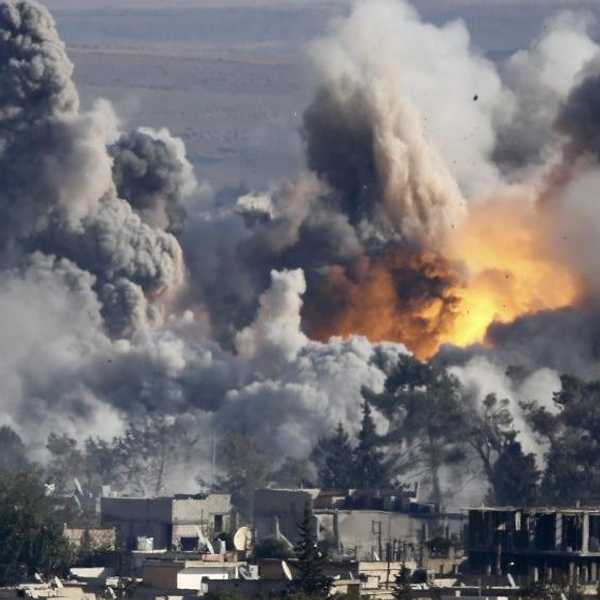

By last February, the official death count in Syria had hit 450,000, 50,000 of which are dead children. I can’t pretend to know everything that’s happening politically in a country far away. I could do several days-worth of research and then write this article, claiming to be some kind of “expert,” but I would be lying. I’m not an international diplomat, and I’m not a politician. It is not my job to inform the masses, convince the masses, or protect the masses.
I only know the empty emotional response to the numbers 450,000 and 50,000. I know the disbelief. I know the emotional separation, not born of a lack of concern, but as a coping mechanism.
One death is impossible to fathom. One death cannot be swallowed. I’ve spent so many days at funerals, in churches or funeral homes, numb.
You can’t swallow grief. It just sits in your throat like a lump, forcing a delayed emotional response. The attack comes later, like a tidal wave, the result of building pressure. The aftermath is hard to handle.
You can’t do anything about grief. You want to, but you usually can’t. Nothing will bring that person back; nothing will fix the hurt.
Governments are built to try anyways. If you look at almost every major conflict in history, it starts with a sadness, a grief, an emotion that can’t be swallowed back. Troy was a fight over a woman, WWI was a battle for a dead duke, and the Iraqi war was, at least in part, a response to 9/11.
The government’s responsibility is acting on the feelings of the people, but do those actions help people?
On June 11th of 2016, Christiane Vadnais, a fifty-year old resident of Montreal, was mauled to death by a large dog, probably a member of one of the many breeds referred to as ‘pit bulls.’
Montreal’s government responded, as governments are want to do, and its city council passed a by-law banning Staffordshire bull terriers, American pit bull terriers, American Staffordshire terriers, and any dog with similar characteristics from the city. Christian Cotroneo of The Dodoreported on the details of this “breed-specific legislation,” explaining that any pet owner in the city who wishes to keep their pet, must be subject to a full criminal background check, must obtain a special license, and must sterilize, vaccinate, micro-chip, and muzzle their animals.
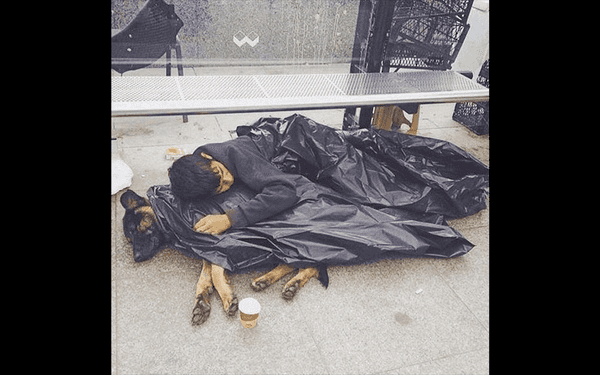
Many families and shelters will no longer be able to afford the sheer number of resources required to own ‘pit-bull’ in Montreal. Those animals will either relocate, or be forcibly euthanized.
Montreal’s new legislation shocks me. I love dogs. I’ve owned to, one of which was quite large and intimidating to my friends. It didn’t make him any less of a kind and gentle animal, a protector and playmate of my cats when they were mere kittens and an intermediate in any sibling altercation. Dogs are family. According to Ian Sample of The Guardian, when an owner looks into his or her dog’s eyes, both the dog and the human experience an increase of oxytocin, the same hormone that increases in the mind of a mother when she gazes into her child’s eyes.
Dogs are highly valued members of society. They serve humans in the war, sniffing out bombs, and after wars, to help humans cope with PTSD. They help children with autism and adults with anxiety. Some dogs eat at the dinner tables, or have their own parties. In many ways, dogs are considered kinder, simpler versions of ourselves.
When I think about all the dogs whose lives will end if Montreal’s legislation holds, it makes me sick, but perhaps that is part of the job we expect of the government. A tragedy occurred in Montreal, and the government responded in the way it saw fit. It addressed the grief of a population. It handled a feeling impossible to handle.
Did the government handle grief well? Did the government help its people? Will sacrificing these dogs protect the safety of citizens in the future, and if so, does that prevention justify so great a loss? I don’t know. It’s an impossible question.
I find Montreal’s decision sickening, but I don’t live in Montreal, and I don’t know Montreal’s pain. I do know the pain of loss. I’ve experienced loss personally; I also read it in the faces and stories of people all over the globe. Loss is indescribable and universal. It permeates the lives of everyone at one point or another, and it’s almost impossible to face, much less cope with.
Governments are expected to respond to this loss. They are expected to fix it, by making sure loss never happens again, but such a thing isn’t possible. Suffering is a part of life.
In the meantime, we have governments doing their jobs and acting on the pain of the people, causing war and spreading suffering. Is this violence effective? Does it vindicate citizens? Does it protect their futures? I don’t know. It’s an impossible question, but I would guess that in the long-run it merely causes more problems.
So what do we do? What should we expect governments do? Shall they sit in silence in the face of tragedy? Shall they sit quietly by as 450,000 people, 50,000 of them children, die in Syria?
I can’t claim to understand what’s happening in the UN right now any more than I can claim to be an expert on the situation in Syria, but I know that at its recent summit, our government sat through negotiations and yelled at Russia for its actions in Syria.
Will this yelling aid the people dying in Syria? Probably not. Would our government stepping in out of grief for Syria’s people pause the tragedy? It’s hard to say, but actions are often violent, and violence means loss.
How can we respond to the unspeakable? Is it better to swallow back a retort, or spit it out? What do we do when tragedy strikes, and what is the government’s responsibility in responding to what can’t be uttered much less addressed?
The truth is, I don’t know. I don’t know the answers, but I do know that these are the things the U.S. should be thinking about when voting in a new leader this fall. Tragedy is inevitable, and we need a leader who will respond with thought, care, and cautious action, because when governments act without responsibility, the results are catastrophic and impossible to stomach.